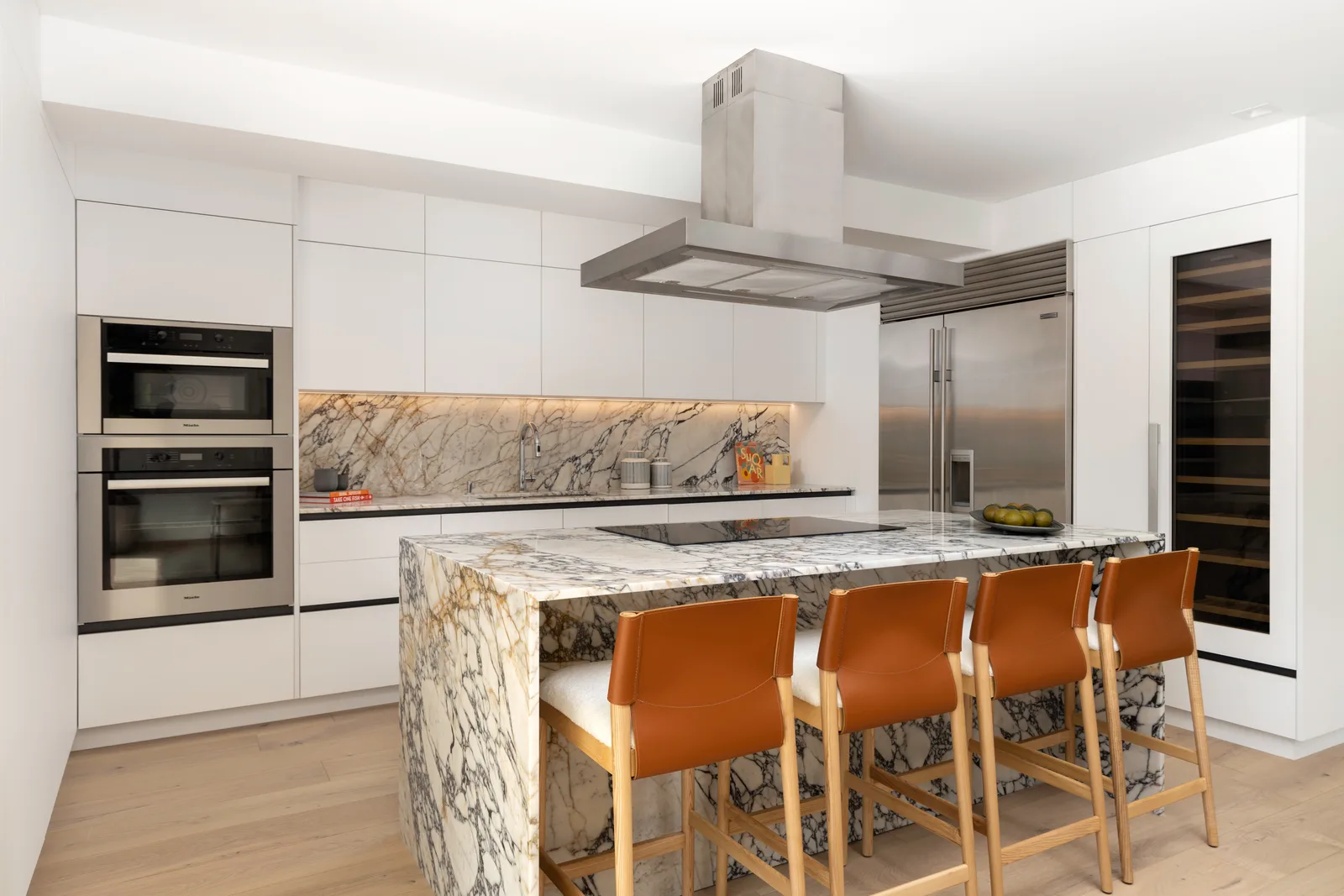
Choosing stone: quartzite, marble, and travertine
A working guide to natural stone countertops. How quartzite, marble and travertine differ in hardness, look and upkeep, and when each is the right choice.
Luxom Studio · LUXOM Developments
· 4 min read · Last reviewed
Key takeaways
- Natural stone countertops come down to a trade between hardness and look. Quartzite is the hardest and most durable, marble is the most prized and the most reactive, travertine is the softest and most textural.
- Quartzite resists scratching and etching better than marble, which makes it the practical choice for a hard-working kitchen that still wants real stone with movement.
- Marble is unmatched for veining and light, but it etches with acids and scratches more easily, so it suits owners who accept patina or use it where wear is lower.
- Travertine is porous and best sealed and used honed, so it reads warmer and more matte, better suited to bathrooms, vanities and lower-traffic surfaces than a busy kitchen.
- All natural stone is a slab decision: view the actual slab, plan the veining and seams, and seal to the material, because no two blocks are identical.
Editor's note
Natural stone is the surface people most want and most misunderstand. The instinct is to pick a color from a small sample and move on. The reality is that each stone is a different material with a different temperament, and the right choice depends entirely on where it goes and how it is used. Quartzite, marble and travertine are the three we specify most, and they sit at three different points on the same trade: hardness against look.
This is the hub of our stone guides, a place to decide which stone is yours before you go deeper on any one of them. The rule underneath everything that follows is simple. Match the stone to the room, view the actual slab, and seal to the material.
The one trade that decides everything
Every stone choice is a negotiation between hardness and beauty. The harder a stone, the better it shrugs off knives, acids and daily wear, and the more forgiving it is in a working kitchen. The softer and more porous a stone, the warmer and more characterful it tends to look, and the more care it asks in return. There is no stone that maximizes both, which is why there is no single best answer.
Once you see the choice this way, the decision gets easier. Ask how the surface will be used before you ask what color you want. A kitchen island that cooks every night has a different brief from a powder room vanity, and the same stone that is wrong for one is often perfect for the other.
Quartzite: the durable one
Quartzite is a metamorphic stone made largely of quartz, and it is the hardest of the three by a clear margin. It resists scratching from knives and cookware, and, crucially, it does not etch when acids touch it, which is exactly the failure mode that makes people nervous about marble. That combination makes quartzite the practical choice for a hard-working kitchen that still wants a real, natural surface with movement and depth.
It is worth knowing that quartzite is sometimes confused with softer stones sold under similar names, so buying from a fabricator who can verify the material matters. Specified correctly, it gives you most of the look people love about marble with far more resilience. We cover selection and care in quartzite countertops.
Marble: the prized one
Marble is the stone the others are measured against. Nothing matches its veining, its translucence, or the way it handles light across a large slab. It is also the most reactive, because it is calcium carbonate: it etches when acids like lemon, wine or vinegar touch it, and it scratches more easily than quartzite. Sealing slows staining but does not stop etching, which is a chemical reaction with the surface itself.
None of that disqualifies it. The most admired kitchens in the world are often marble that has been allowed to age, and the trick to living with it is to accept patina as character, choose a honed finish so marks read softly, and use it where you value the look above the wear. If you love marble enough to live with its marks, choose it deliberately, as we explain in marble countertops.
Travertine: the warm one
Travertine is the softest and most textural of the three, a stone with a naturally pitted surface that, honed and filled, reads warm, matte and quiet. Those qualities make it a poor match for a busy kitchen and a beautiful one for a bathroom. On a vanity, a shower surround, a bath deck or a floor, it gives a room depth and tactility that harder, glossier stones cannot, and it ages into real character when sealed and kept away from harsh acids.
The lesson travertine teaches is the whole guide in miniature: a stone is not good or bad, it is suited or unsuited. Put it in the right room and it is exceptional. We explore its bathroom uses and how to seal it in travertine in the bathroom.
Buying stone the right way
Whichever stone you choose, natural stone is a slab decision, not a sample decision. No two blocks are identical, so you view the actual slab that will become your counter, plan how the veining runs across the surface, and lay out the seams before anyone cuts. This is where a beautiful stone becomes a beautiful counter, and where a rushed choice becomes a mismatched one.
Seal to the material, clean with pH-neutral products, and reseal on the interval your fabricator recommends. Done this way, natural stone outlasts almost any manufactured surface and gains character instead of dating. If you want help choosing and laying out stone for a specific home, our material and interior service is the place to begin, and you can see it in our built work on the projects page.
Pull quote
You do not choose a stone from a sample. You choose the actual slab, because the block is the design.
Filed under
Questions about natural stone countertops
01What is the best natural stone for countertops?
There is no single best stone, only the right stone for how a surface is used, and the choice comes down to a trade between hardness and look. Quartzite is the most durable of the three we specify most often, resisting scratches and acid etching well, which makes it the practical pick for a hard-working kitchen that still wants natural movement. Marble is the most beautiful and the most reactive, prized for veining and the way it handles light, but it etches with acids and marks more easily, so it rewards owners who accept patina. Travertine is the softest and most textural, warm and matte when honed, and better suited to bathrooms and lower-traffic surfaces than a busy kitchen. Match the stone to the room and it will be right. We break each down in marble countertops, quartzite countertops and travertine in the bathroom.
02Is quartzite better than marble for a kitchen?
For a hard-working kitchen, quartzite is usually the more practical choice, while marble is the more romantic one. Quartzite is a metamorphic stone made largely of quartz, so it is genuinely hard: it resists scratching from knives and pans and, importantly, does not etch when acids like lemon or wine touch it, which is exactly where marble is vulnerable. That means a quartzite counter can look considered years into daily cooking with far less anxiety. Marble still wins on pure appearance, with veining and translucence quartzite rarely matches, and many owners choose it knowing it will develop a patina. The honest rule is: if you cook hard and want to forget about the surface, choose quartzite, and if you love the look of marble enough to live with its marks, choose marble. We go deeper in quartzite countertops.
03Does marble stain and etch, and can I still use it?
Marble does etch, and it can stain, and you can absolutely still use it if you understand what that means. Etching is the dull mark left when an acid, lemon, vinegar, wine, some cleaners, reacts with the calcium carbonate in the stone, and it is different from a stain, which is a substance soaking in. Sealing slows staining but does not stop etching, because etching is a chemical reaction with the surface itself. The way to live happily with marble is to accept a degree of patina as part of its character, use a honed rather than polished finish so marks show less, seal it well and wipe spills promptly. Many of the most admired kitchens in the world are marble that has aged gracefully. If you want the look without the reactivity, quartzite is the alternative. We cover the care fully in marble countertops.
04Where should travertine be used instead of a kitchen counter?
Travertine is at its best in bathrooms, on vanities, and on lower-traffic surfaces rather than a hard-working kitchen counter. It is a softer, more porous stone with a naturally pitted texture, and honed and filled it reads warm, matte and calm, which is exactly the mood a spa bathroom wants. Those same qualities make it less ideal next to knives, hot pans and acidic food, where a harder stone like quartzite holds up better. Used in the right place, sealed properly and kept away from harsh acids, travertine ages into a beautiful, tactile surface with real depth. Think vanity tops, shower surrounds, bath decks and floors rather than the main cooking zone. We explore its bathroom uses and how to seal it in travertine in the bathroom, and our material service covers how we place each stone.
05Do natural stone countertops need sealing and special care?
Most natural stone countertops benefit from sealing, and the frequency depends on the stone and the finish. Sealing fills the microscopic pores so liquids have less chance to soak in and stain, which matters more for porous stones like travertine and marble and less for dense quartzite, though even quartzite is usually sealed for peace of mind. Sealing does not make stone bulletproof: it slows staining but does not prevent etching on calcium-based stones, which is a chemical reaction, not absorption. Day to day, clean with a pH-neutral product, avoid abrasive pads and acidic cleaners, and wipe spills rather than letting them sit. Reseal on the interval your fabricator recommends for the specific slab. Cared for this way, natural stone outlasts almost any manufactured surface and gains character instead of wearing out. To scope stone for a specific project, reach us through the projects page.
Explore the portfolio
Projects to see


Talk to the studio
If this belongs in your home, our studio will draw the plan.
Initial conversation, 30 minutes. We listen to the brief and respond with a scoped proposal within five working days. You can also read the services page for typical timelines and fees.
Written by Luxom Studio · LUXOM Developments
The design and development studio behind LUXOM residences in Coconut Grove, Miami
Keep reading
From the journal
Materials · Jul 27, 2026 · 3 min
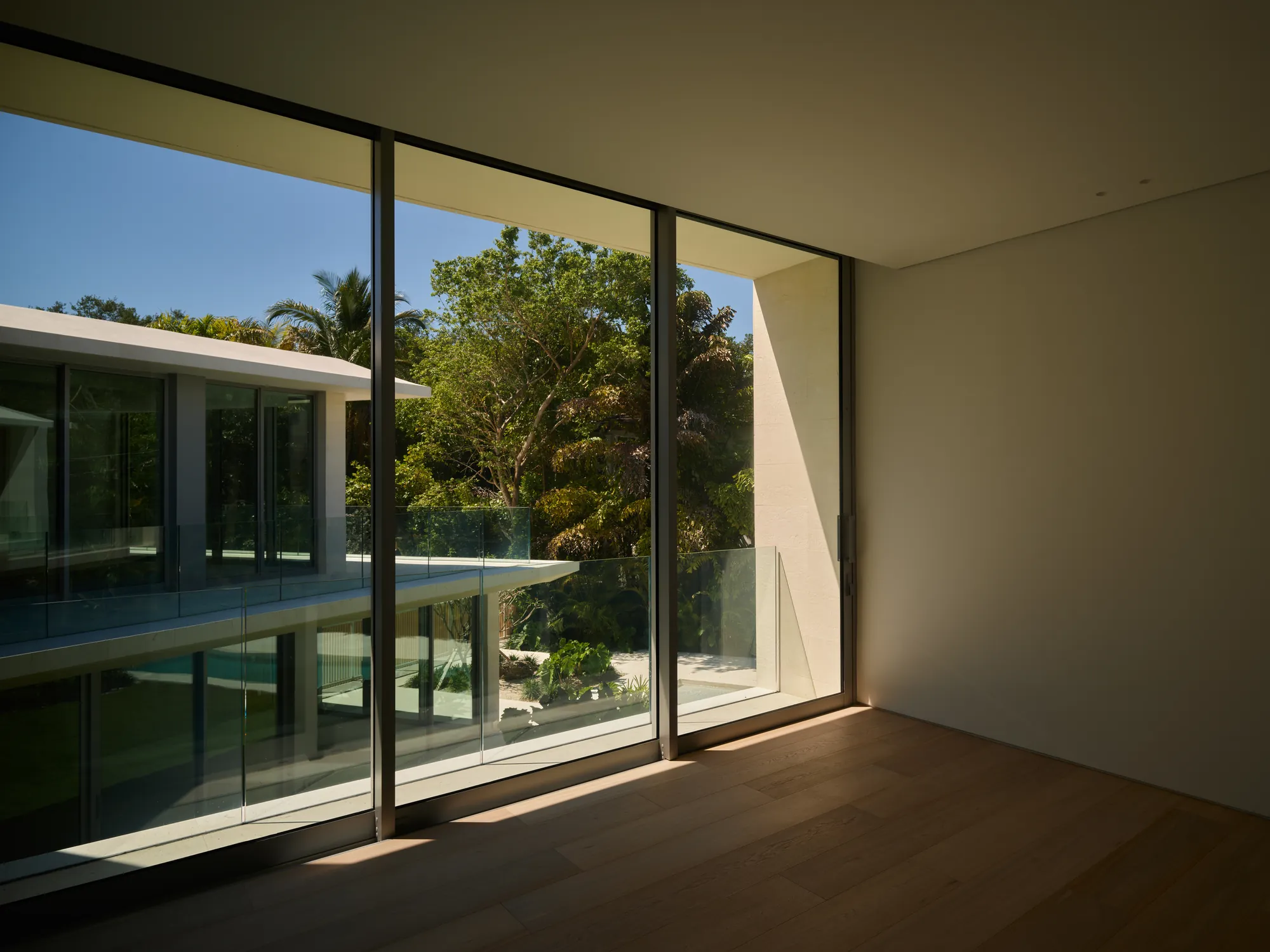
Quartzite countertops: the hardwearing stone for real kitchens
Why quartzite earns its place in kitchens that get used: how the stone behaves, where it beats the alternatives, and what to know before you specify it.
Materials · Jul 25, 2026 · 3 min
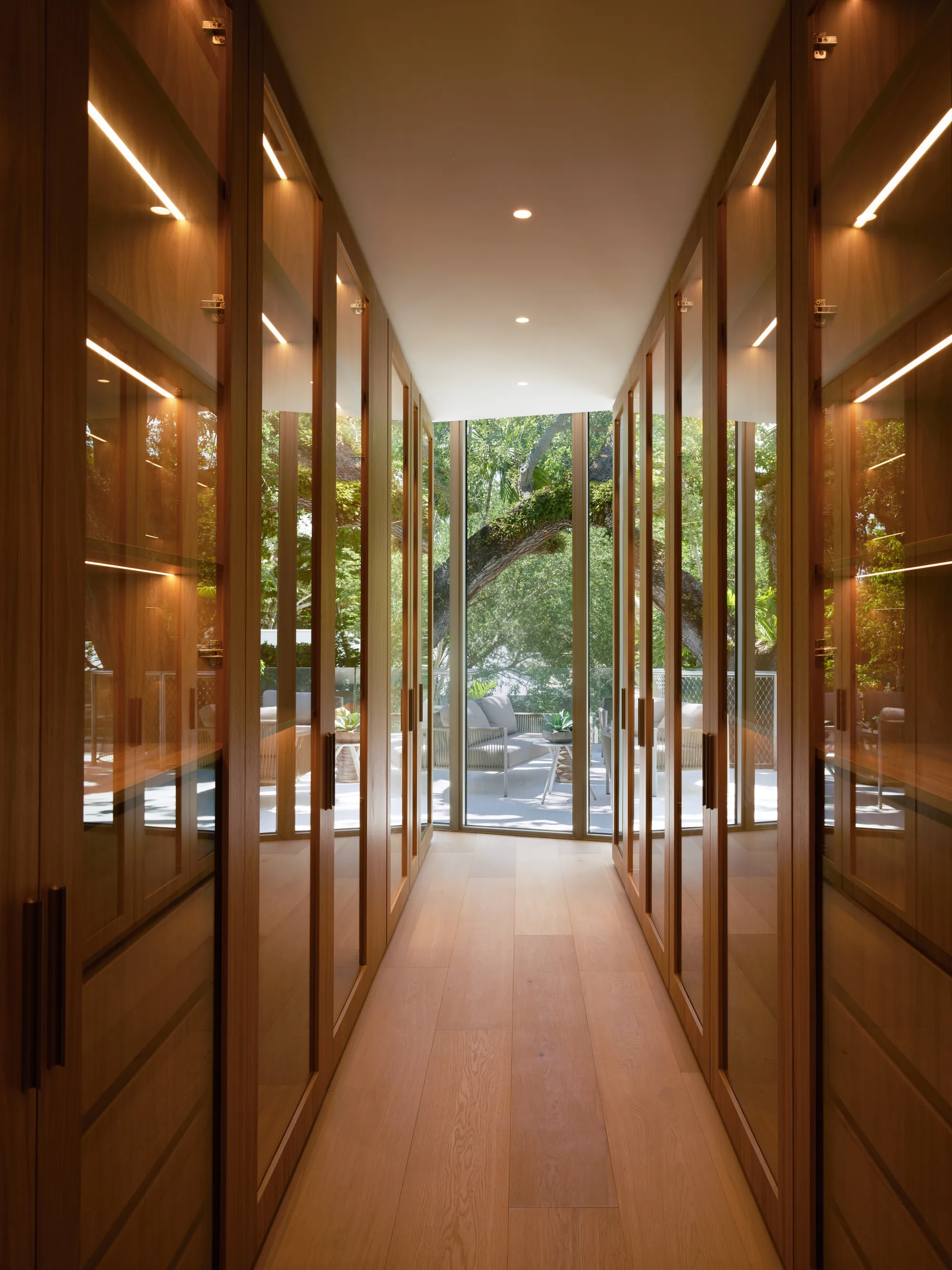
Fluted wood: texture as architectural detail
How fluted wood panels turn a flat surface into an architectural detail. Where to use them, which species and finishes work, and how to keep the effect quiet rather than busy.
Materials · Jul 22, 2026 · 3 min
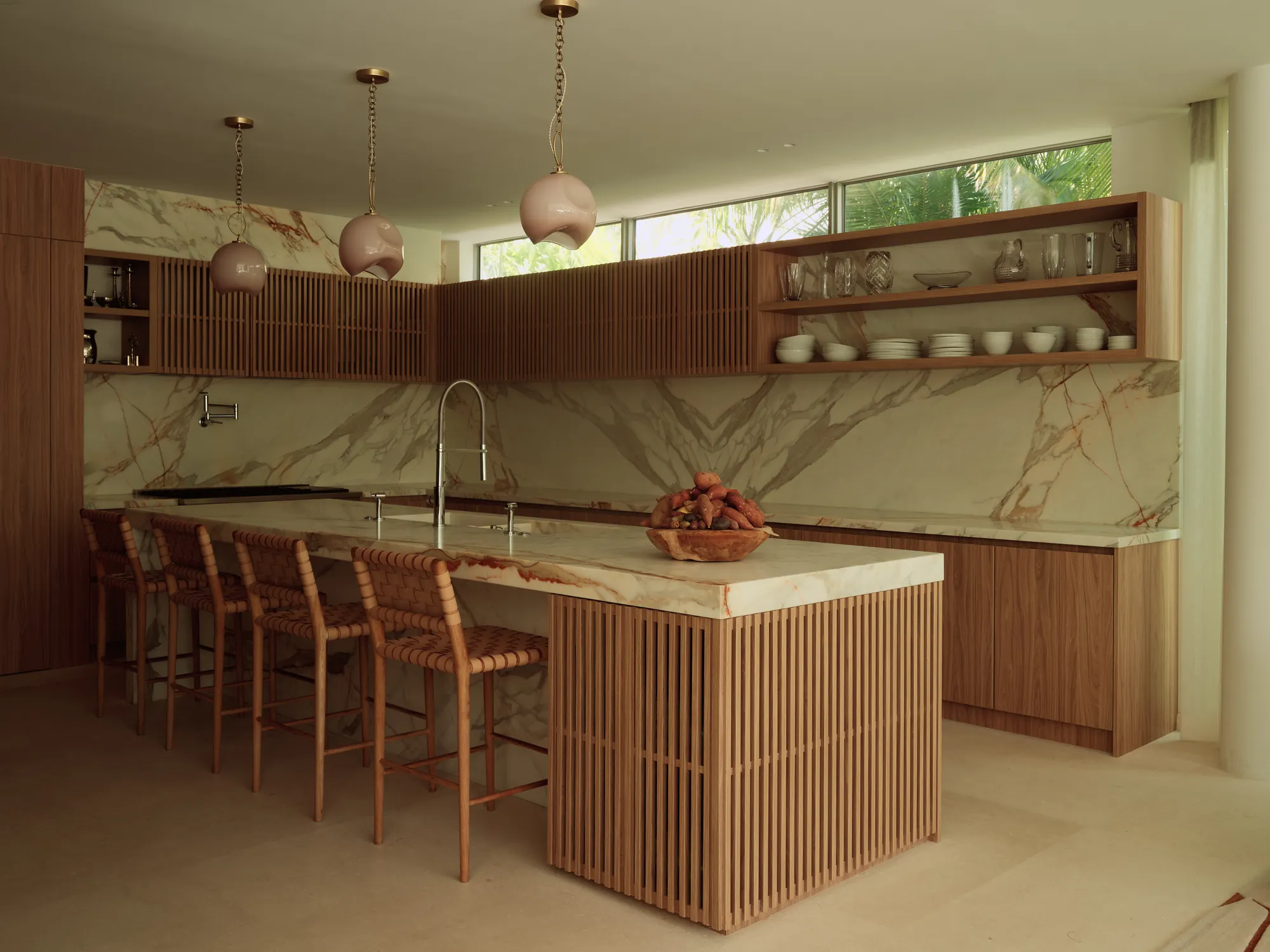
Marble countertops: types, care, and where they belong
A clear guide to marble countertops: the main types, what the stone will and will not tolerate, and the rooms where marble earns its place rather than becoming a maintenance problem.