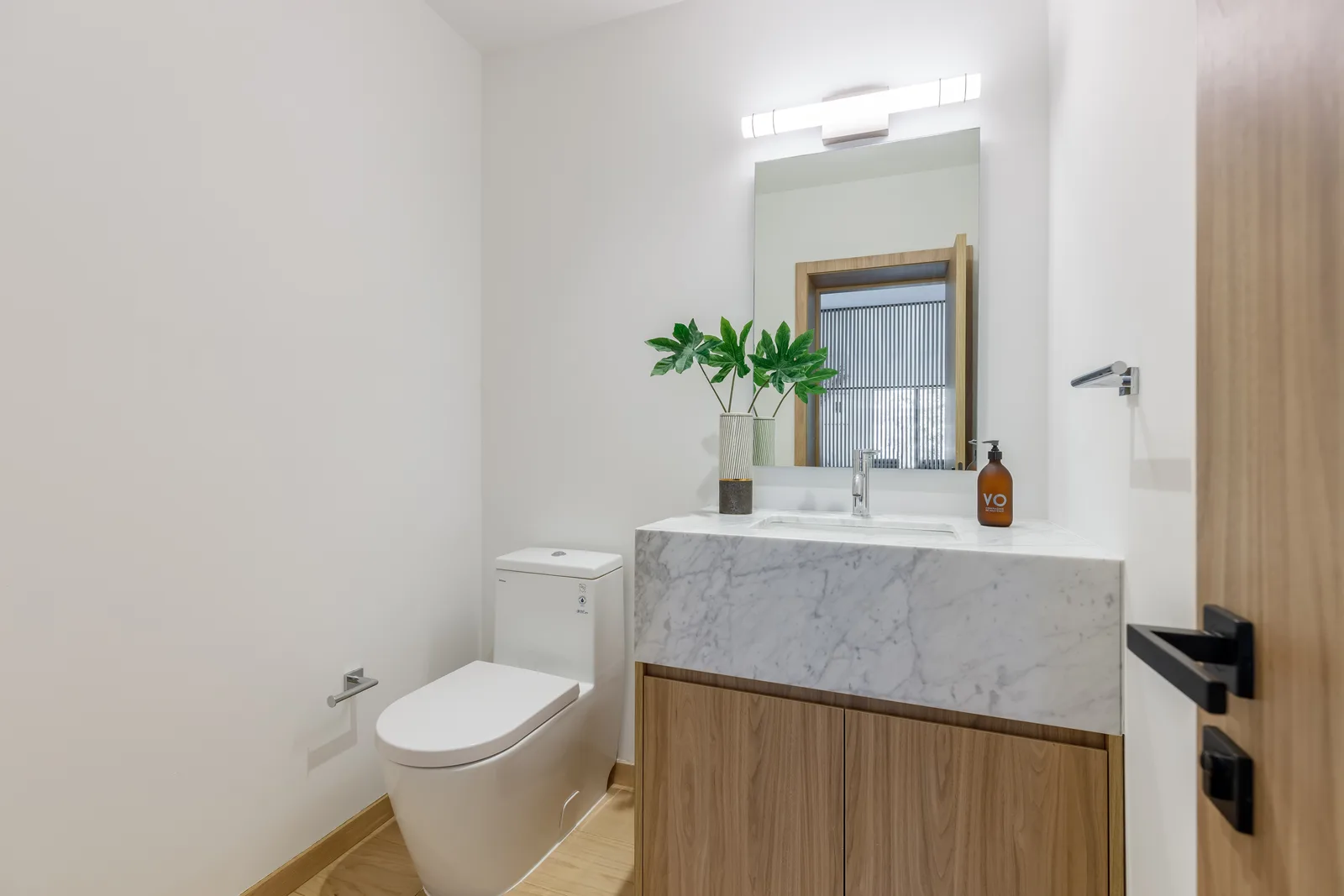
Hardware Finishes: Five Metals and the One That Ages on Purpose
Unlacquered brass, polished nickel, matte black, chrome and bronze. How each hardware finish wears, which ones date, and why unlacquered brass is the one that gets better with use.
Luxom Studio · LUXOM Developments
· 5 min read · Last reviewed
Key takeaways
- All hardware dates, because every finish belongs to a decade. The useful question is how a finish wears: a coating that wears looks worn, a living finish that wears looks used.
- Unlacquered brass is solid brass with no protective coat. It darkens and warms with time while the places you touch stay brighter, so it records how the house is lived in. That is why it improves with use.
- Polished nickel is the warm, classic alternative to chrome. Chrome is the hardest wearing and easiest to clean, but it never changes and reads cool and utilitarian.
- Matte black hides fingerprints but shows water spots and limescale, and it is strongly tied to the last decade. A bronze finish is usually a darkened coating over brass that wears through at contact points.
- Use one dominant finish per room and no more than two or three in total. Near salt air, choose solid brass, bronze or marine grade stainless over plated steel.
From the feed
The reel we posted showed five metals and said that one of them ages on purpose. The caption made the stronger claim: all hardware dates, and only one finish gets better while it does. Hardware is the part of a house you touch most, every door, every faucet, every drawer, thousands of times a year, so the way a finish wears matters more than how it looks in the showroom. This is the hardware guide we promised: unlacquered brass, polished nickel, matte black, chrome and bronze, how each one ages, and how to choose.
Every finish dates. The question is how
Hardware trends move in cycles. Polished brass belonged to one era, satin nickel and oil rubbed bronze to another, matte black to the last decade. Any finish you choose will eventually place the house in time. That is not a reason to avoid finishes; it is a reason to think about what happens to each one after years of use.
There are two kinds of finish. A coating, a plating, powder coat or lacquer applied over a base metal, looks its best on day one, and when it wears through at the places you touch most, it looks worn. A living finish, solid metal left to react with air and hands, changes from the first day, and when it wears it looks used, in the way a good leather chair looks used. Of the five finishes in the reel, only one is a living finish.
Unlacquered brass: the one that ages on purpose
Unlacquered brass is solid brass with no protective lacquer. Brass is an alloy of copper and zinc, and left uncoated it slowly reacts with air, water and skin. Over months it darkens from bright gold toward a warmer, softer brown, while the places you touch, the end of a lever, the top of a faucet handle, the edge of a pull, stay brighter. The result is a finish that records how the house is lived in.
That is why it improves with use. It also never needs replacing because the coating failed, since there is no coating. If you prefer the original shine, it polishes back. In wet areas and near salt air the patina develops faster, sometimes with small spots of green verdigris, which some owners love and others polish away. It suits warm interiors, stone, walnut and white oak, and it is the finish we would choose for a house that should look better in ten years than on the day it is handed over.
Polished nickel: the warm classic
Polished nickel is nickel plated over a brass body, with a soft, slightly warm glow that sits between chrome and brass. It has been used in good bathrooms and kitchens for about a century, which is why it reads as classic rather than current, and it is especially comfortable next to marble and cream walls.
It is softer than chrome, shows fingerprints, and can warm slightly over the years. It does not develop a true patina the way brass does, so it is closer to a coating than a living finish, but a well made polished nickel fixture ages gracefully rather than dating abruptly.
Matte black: the decade's finish
Matte black, usually a powder coat or a physical vapor deposition finish, became the defining hardware look of the last decade: graphic, crisp against white walls and pale wood. It hides fingerprints well.
It shows almost everything else. Water spots and mineral deposits leave pale marks that are obvious on a black surface, and on lower quality hardware the coating can chip at edges and contact points, revealing the metal underneath. Its bigger risk is time: matte black is so closely tied to its moment that it is the finish most likely to date a house first. Used sparingly, on a door lever or a single light fitting, it is a useful accent. Used everywhere, it is a timestamp.
Chrome: the hard wearing default
Chrome is plated over nickel on a brass or metal body, and it is the hardest wearing and easiest to clean of the five. It resists scratches, it does not tarnish and it is the default finish for good reason.
It also never changes. Chrome reads cool and slightly blue, and in a warm interior it can feel utilitarian, the finish of a hotel bathroom rather than a home. In a crisp, white and stone bathroom it is completely right. The test is the rest of the room: chrome wants cool companions.
Bronze: a coating that wears through
Most hardware sold as bronze is an oil rubbed bronze finish: a darkened coating applied over a brass body, sometimes designed to wear through to coppery highlights at the places you touch. It suits traditional and rustic interiors, and it is strongly associated with the warm, heavy kitchens of the early 2000s.
Its wear is the wear of a coating, uneven and difficult to restore. Solid, uncoated bronze is a different material, an alloy of copper and tin that patinas much like brass, and it is an honest alternative where you want a darker living finish, particularly outdoors.
Pull quote
Brass does not resist the house. It absorbs it. Every hand that opens a door leaves a little light on the lever.
How to choose, and how to mix
Start with the architecture and the palette. Warm interiors, stone, walnut, white oak and plaster, suit unlacquered brass and polished nickel. Cool, white and gray interiors suit chrome. Use one dominant finish per room and no more than two or three in the house, and group them by job: all the plumbing in one finish, door and cabinet hardware in another if you want contrast. Buy solid metal bodies rather than plated zinc, because the body is what you feel in the hand for decades.
Near salt air, the choice matters even more. Plated steel corrodes quickly on the coast, while solid brass and bronze have been used on boats for centuries and marine grade 316 stainless holds up outside. These are small decisions with a long life, and they are exactly the kind of detail you only notice in person. If you are choosing finishes for a kitchen or bathroom and want them to age well, talk to us.
Pull quote
A finish that only looks good on the day it is installed is a finish you will spend years apologizing for. Choose the one that looks better the more you use it.
Filed under
Questions about hardware and fixture finishes, including unlacquered brass
01What is unlacquered brass?
Unlacquered brass is solid brass hardware sold without the clear lacquer coat that most brass fixtures receive at the factory. Brass is an alloy of copper and zinc, and when it is left uncoated it reacts with air, water and the oils from your hands. Over months it darkens from bright yellow toward a warm, softer brown, while the places you touch most, a lever, a faucet handle, a cabinet pull, stay brighter. That uneven, lived in patina is the point: it records how the house is used and looks better with age rather than worse. Lacquered brass, by contrast, stays shiny until the lacquer wears or scratches, and then tarnishes in patches that are hard to repair. If you prefer the original shine, unlacquered brass can always be polished back. Our section on unlacquered brass explains how it behaves over time.
02How do you care for unlacquered brass?
Mostly by leaving it alone. Day to day, wipe it with a soft, damp cloth and dry it, the same as any fixture, and avoid harsh or abrasive cleaners that strip the finish unevenly. Let the patina develop on its own. If you want to bring back some shine, a brass polish will restore the bright color, and you can polish as much or as little as you like, a full restoration or just the most handled areas. Expect faster change in wet areas such as showers and kitchen faucets, and near salt air, where brass can also develop small green or blue spots of verdigris, which come off with polish if you do not like them. There is no wrong way to live with it, which is part of its appeal: it is a material you choose, not one you protect.
03Which hardware finish is the most timeless?
No finish is entirely free of its era, but some date more gracefully than others. Finishes tied to a single trend, such as the satin nickel of the early 2000s, the oil rubbed bronze of the same period or the matte black of the last decade, tend to place a house in time. Polished nickel and chrome have been in continuous use for around a century and read as classic rather than current. Unlacquered brass goes a step further, because it changes with the house: a patinated brass fixture looks settled rather than old. The most timeless approach is less about the finish itself than about consistency and quality, solid metal bodies, one dominant finish per room and a finish that suits the architecture. See how every finish dates for the full argument.
04Can you mix metal finishes in a kitchen or bathroom?
Yes, and it often looks more considered than matching everything. The rule of thumb is one dominant finish per room and no more than two or three in total. Group finishes by job: keep all the plumbing, the faucets, valves and shower fittings, in one finish so the water reads as one system, and let cabinet hardware or lighting take a second. Keep the tones related, warm with warm or cool with cool, unless the contrast is deliberate. Buy each finish from one manufacturer where possible, because two companies' versions of the same named finish rarely match exactly. The same logic of a dominant material and a controlled contrast applies to timber, which we cover in our piece on mixing wood tones.
05What is the difference between polished nickel and chrome?
Both are bright, reflective plated finishes, but they differ in color and character. Chrome has a cool, slightly blue white tone and a mirror like shine. It is very hard, resists scratching and is the easiest finish to keep clean, which is why it is the default on so many fixtures. Polished nickel is warmer, with a faint yellow or champagne cast, and a softer glow that sits more comfortably next to marble, warm wood and cream walls. It is a little softer than chrome and can warm slightly over the years. Chrome suits crisp, contemporary rooms and hard working bathrooms; polished nickel suits classic bathrooms and kitchens where a little warmth matters. Whichever you choose, check that every fixture in the room is from the same finish line, because nickel and chrome side by side make each other look wrong.
Explore the portfolio
Projects to see


Talk to the studio
If this belongs in your home, our studio will draw the plan.
Initial conversation, 30 minutes. We listen to the brief and respond with a scoped proposal within five working days. You can also read the services page for typical timelines and fees.
Written by Luxom Studio · LUXOM Developments
The design and development studio behind LUXOM residences in Coconut Grove, Miami
Keep reading
From the journal
Materials · Aug 8, 2026 · 5 min
The Details You Only Notice In Person
Joinery, lighting and stone are easy to list and hard to fake. Here is how a Luxom home builds each one by hand, and why a walkthrough proves it in a way no photo can.
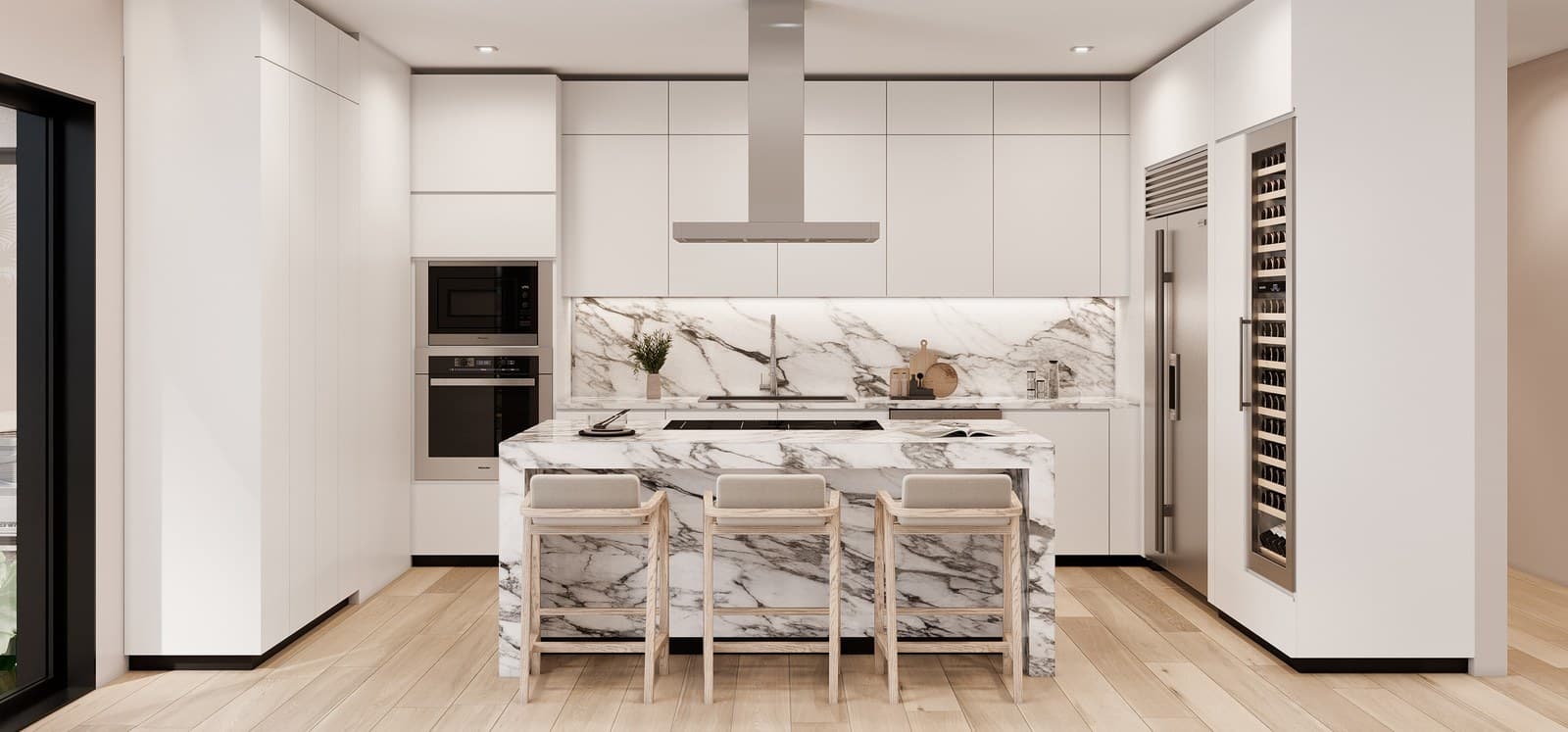
Interiors · Aug 6, 2026 · 4 min
High-end kitchen design: the principles that hold up
The expensive kitchen and the enduring kitchen are not the same thing. The principles behind a high-end kitchen that still works in fifteen years: materials, ergonomics and restraint.
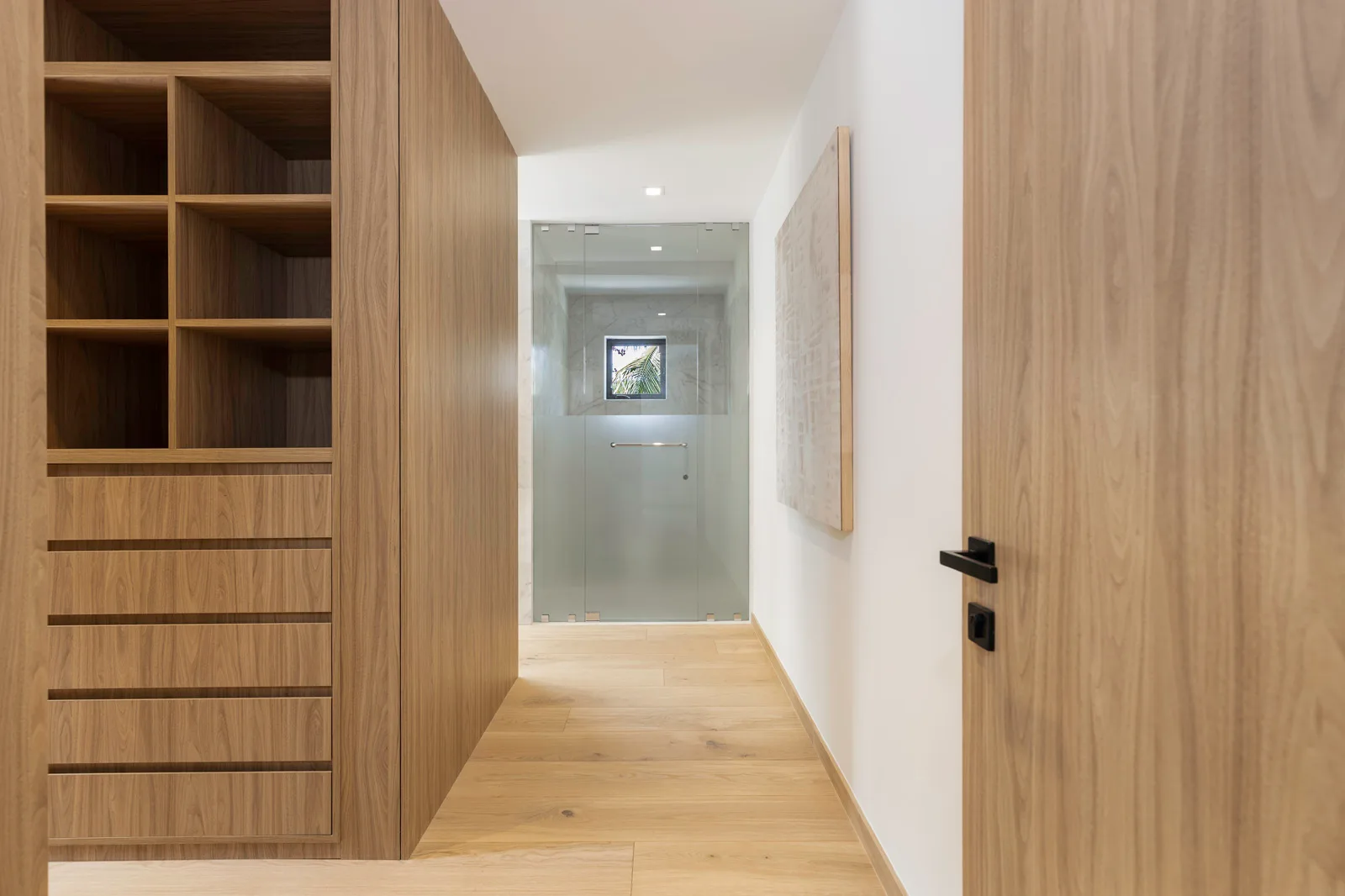
Interiors · Sep 13, 2026 · 5 min
Three Rules for Mixing Wood Tones Without Getting It Wrong
Never let every wood match, pick one lead wood, and watch the undertone. Two or three tones is enough, and here is what that looks like built into a real Luxom hallway.