Quartzite countertops: the hardwearing stone for real kitchens
Why quartzite earns its place in kitchens that get used: how the stone behaves, where it beats the alternatives, and what to know before you specify it.
Luxom Studio · LUXOM Developments
· 3 min read · Last reviewed
Key takeaways
- Quartzite is a natural metamorphic stone, harder than marble and closer to quartz on the Mohs scale, which is why it resists scratching and etching in a working kitchen.
- Unlike quartz composite, quartzite countertops are cut from solid stone, so every slab is unique and the material handles heat far better than a resin-bound surface.
- Quartzite is not marble and not engineered quartz: the names confuse buyers, but the behavior in a real kitchen is closer to granite in durability with the look of marble.
- Sealing matters. Most quartzite needs periodic sealing to resist staining, and the density varies by slab, so test the specific stone before you commit.
- For a kitchen that gets used daily, quartzite countertops give the veined, stone look of marble without marble's softness and etching risk.
Editor's note
Quartzite is the stone people reach for once they have lived with marble's anxieties. It carries the same quiet veining and pale, luminous grounds, but it does not flinch at a squeezed lemon or a dragged pan. In a kitchen that actually gets cooked in, that difference is not cosmetic. It is the whole point.
The confusion around the name has not helped it. Quartzite is not quartz, and it is not marble, though it is regularly mistaken for both. This is what the stone is, how it behaves under real use, and what to check before you specify it for a kitchen you intend to use hard.
Quartzite is solid stone, not a composite
Quartzite begins as sandstone and is transformed under heat and pressure into a dense, quartz-rich rock. That natural origin separates it cleanly from engineered quartz, which is ground mineral bound in resin and poured into uniform slabs. Quartzite is quarried and cut, so every slab is unique, with veining that runs where geology put it rather than where a factory printed it.
The practical consequence of being solid stone is heat tolerance. A resin-bound surface can scorch or discolor under a hot pan, while quartzite shrugs it off. It is the same reason no two quartzite counters ever match, and why choosing the slab is a design decision rather than a catalog order.
The hardness is why it survives real use
On the Mohs scale, quartzite sits high, well above marble and among the harder materials you can put on a counter. That hardness is what resists the scratching and knife marks that quickly dull a softer stone. Just as important for a kitchen, quartzite is far more resistant to acid than marble, so a splash of wine or citrus is much less likely to etch a permanent dull patch into the finish.
This is the trait that makes quartzite worth the trouble. It gives you the veined, marble-like look most people actually want, with durability closer to granite. The one honest caveat is variability: because it is natural, density differs slab to slab, and some softer stones are sold as quartzite when they are closer to marble. Buy from a supplier who can confirm the stone.
Sealing is the maintenance that matters
Hard does not always mean non-porous. Most quartzite benefits from a penetrating sealer on install, refreshed periodically, so spills sit on the surface long enough to wipe rather than soaking in and staining. How often to reseal depends on your specific slab and how hard the kitchen works, which is why a fabricator's advice for your stone beats any generic rule.
Beyond sealing, the upkeep is light. Mild soap and water for daily cleaning, no harsh acidic or abrasive products that attack the sealer, and a cutting board to spare your knives. For an owner who wants natural stone without marble's fragility, that combination of hardness and low maintenance is the argument.
Where quartzite fits the kitchen
Quartzite earns its place in a kitchen that leans calm and material: pale grounds, soft veining, honed rather than polished so the surface reads quiet under daylight. It suits the same interiors that want marble's mood but cannot live with marble's softness, which describes most working family kitchens at this level. Against granite, the choice is usually aesthetic, since both are durable; quartzite wins when you want the veined, luminous look, granite when you want bolder movement.
Specified well, quartzite is one of the surfaces you never think about again, which is the highest compliment a countertop can earn. If you are weighing it against other stones for different surfaces in the home, our guide to choosing natural stone sets out where each material belongs, and our approach to high-end kitchen design shows how the counter fits the room around it.
Pull quote
Quartzite is what people want marble to be: the same quiet veining, none of the anxiety about the next glass of wine.
Filed under
Questions about quartzite countertops
01What is quartzite and how is it different from marble and quartz?
Quartzite is a natural stone formed when sandstone is transformed under heat and pressure into a dense, quartz-rich rock. That origin is the whole story. It is much harder than marble, which is a softer calcium-based stone that scratches and etches easily, and it is a solid natural material rather than engineered quartz, which is ground quartz bound in resin. The names cause endless confusion because quartzite and quartz sound identical and quartzite often looks like marble. In a kitchen, what matters is behavior: quartzite gives you the flowing veined look people love in marble, with durability closer to granite. It is cut in unique slabs, so no two counters match, and it tolerates heat that would mark a resin surface. For how it fits a full scheme, see our guide to high-end kitchen design.
02Are quartzite countertops durable enough for a busy kitchen?
Yes, which is the reason to choose it. Quartzite sits high on the Mohs hardness scale, well above marble, so it resists the scratching and knife marks that plague softer stones. Because it is acid-resistant relative to marble, an acidic spill such as lemon or wine is far less likely to etch a dull mark into the surface. It also handles heat well, since it is solid stone rather than a resin composite that can scorch. The practical caveats are two: quartzite still needs sealing to resist staining, and hardness varies from slab to slab because it is a natural material, with some softer stones sold as quartzite that are really closer to marble. Buy from a supplier who can confirm the stone, and test the actual slab. Handled that way, quartzite is one of the most robust surfaces you can put in a working kitchen.
03Does quartzite need sealing, and how do you maintain it?
Most quartzite should be sealed, and maintenance beyond that is light. Quartzite is hard but not always non-porous, so an unsealed slab can absorb oil or wine and stain over time. A penetrating sealer applied on install, and refreshed periodically, closes the pores and lets spills sit on the surface long enough to wipe away. How often to reseal depends on the density of your specific stone and how hard the kitchen is used, so follow the fabricator's advice for your slab rather than a generic rule. Day to day, quartzite asks for very little: wipe with a mild soap and water, avoid harsh acidic or abrasive cleaners that can degrade the sealer, and use a board for cutting to protect your knives, not the stone. That low upkeep, combined with its hardness, is why quartzite suits owners who want a natural stone without marble's fragility.
04Quartzite or granite: which is better for a kitchen countertop?
Both are hard natural stones that stand up to a working kitchen, so the choice is usually about appearance and character. Quartzite tends to read softer and more marble-like, with flowing veins and pale, luminous grounds, which is why people who want the marble look without the softness reach for it. Granite offers a broader range of speckled and dramatic patterns and is often slightly more forgiving on price and porosity. In durability the two are close: both resist heat and scratching far better than marble, and both benefit from sealing. If your kitchen leans toward a calm, veined, quiet palette, quartzite is usually the better fit; if you want bolder movement or a specific granite color, granite may win. For the wider question of which stone suits which surface, see choosing natural stone.
05How do you choose a good quartzite slab?
Choose the physical slab, not a sample, because natural stone varies across a single block. Visit the yard, view the full slab under good light, and look at how the veining runs so you can plan where seams and the sink fall. Ask the supplier to confirm the stone is true quartzite, since softer material is sometimes mislabeled, and if durability is the priority, a simple scratch or acid test on an offcut settles it. Check the thickness, the finish (honed reads quieter than polished), and whether there is enough material from the same block to keep your counters consistent. Because each slab is unique, the selection is a design decision, not just a purchase, and it rewards seeing the stone in person. Our team handles this selection as part of every kitchen we build; see our approach to high-end kitchen design.
Explore the portfolio
Projects to see


Talk to the studio
If this belongs in your home, our studio will draw the plan.
Initial conversation, 30 minutes. We listen to the brief and respond with a scoped proposal within five working days. You can also read the services page for typical timelines and fees.
Written by Luxom Studio · LUXOM Developments
The design and development studio behind LUXOM residences in Coconut Grove, Miami
Keep reading
From the journal
Materials · Jul 25, 2026 · 3 min
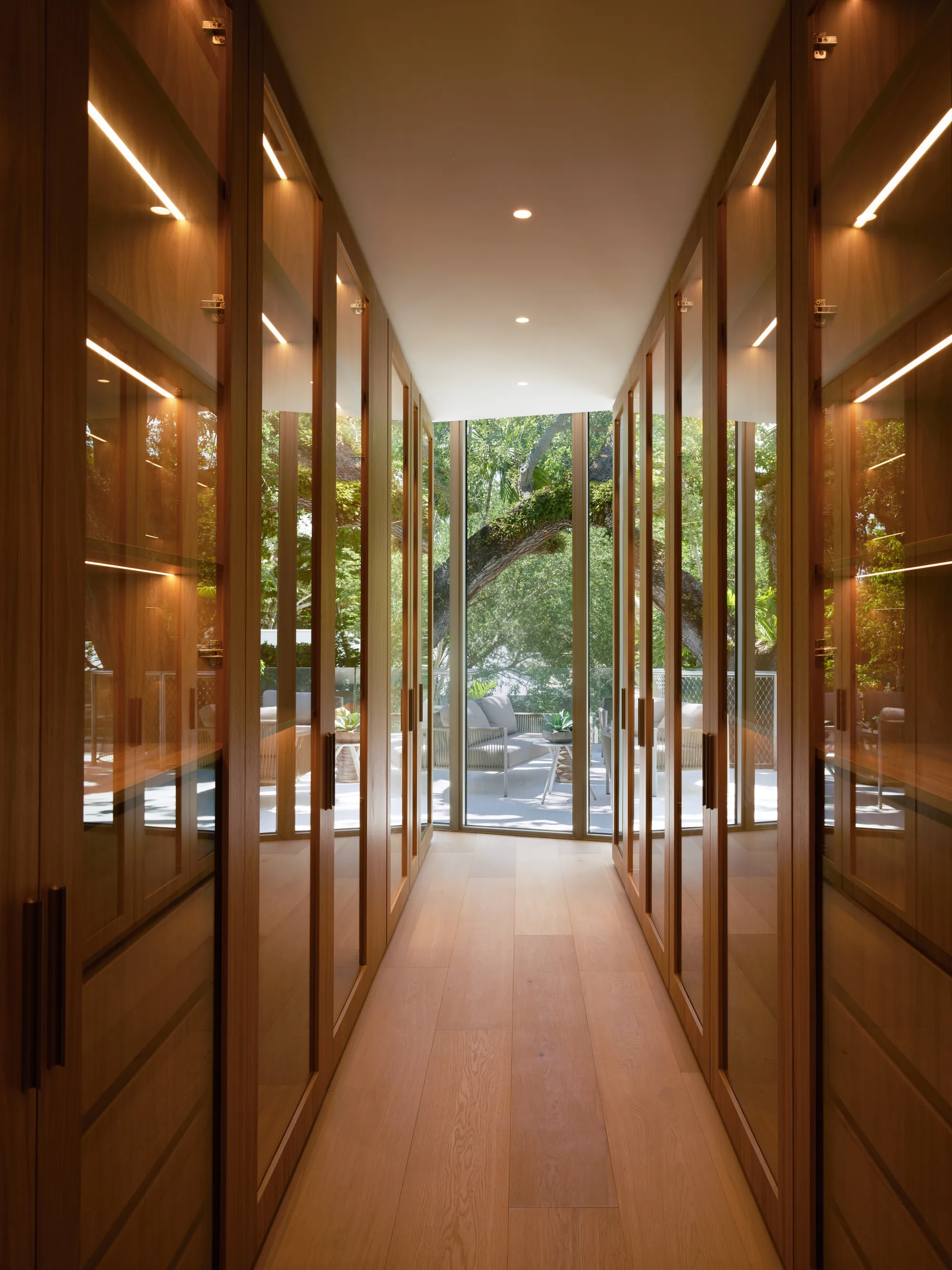
Fluted wood: texture as architectural detail
How fluted wood panels turn a flat surface into an architectural detail. Where to use them, which species and finishes work, and how to keep the effect quiet rather than busy.
Materials · Jul 22, 2026 · 3 min
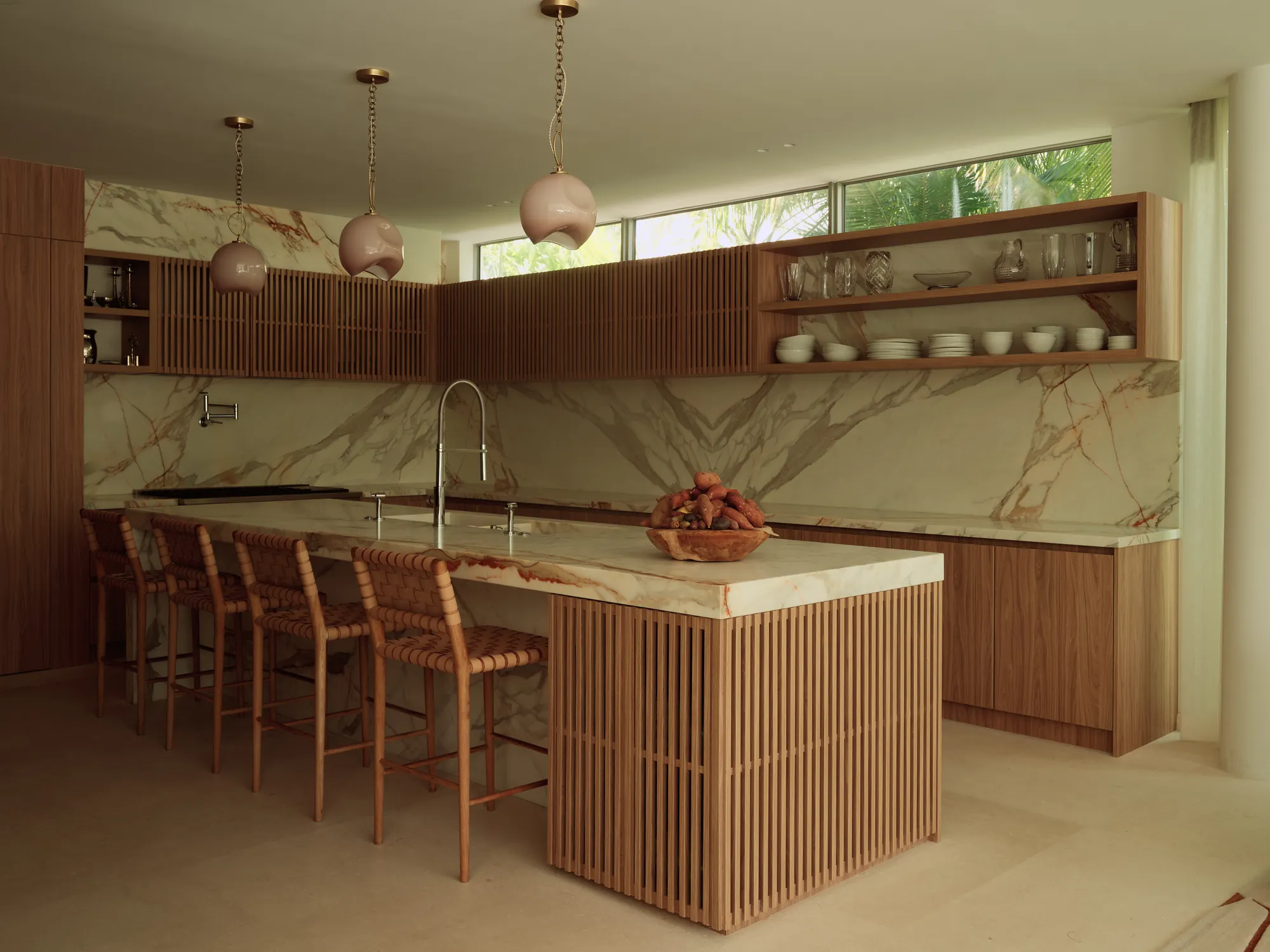
Marble countertops: types, care, and where they belong
A clear guide to marble countertops: the main types, what the stone will and will not tolerate, and the rooms where marble earns its place rather than becoming a maintenance problem.

Materials · Jul 21, 2026 · 3 min
Limewash on brick: refinishing exteriors the quiet way
How limewash transforms a brick exterior into a soft, mineral finish that ages into character. The process, the durability, and the restraint that keeps it looking right.