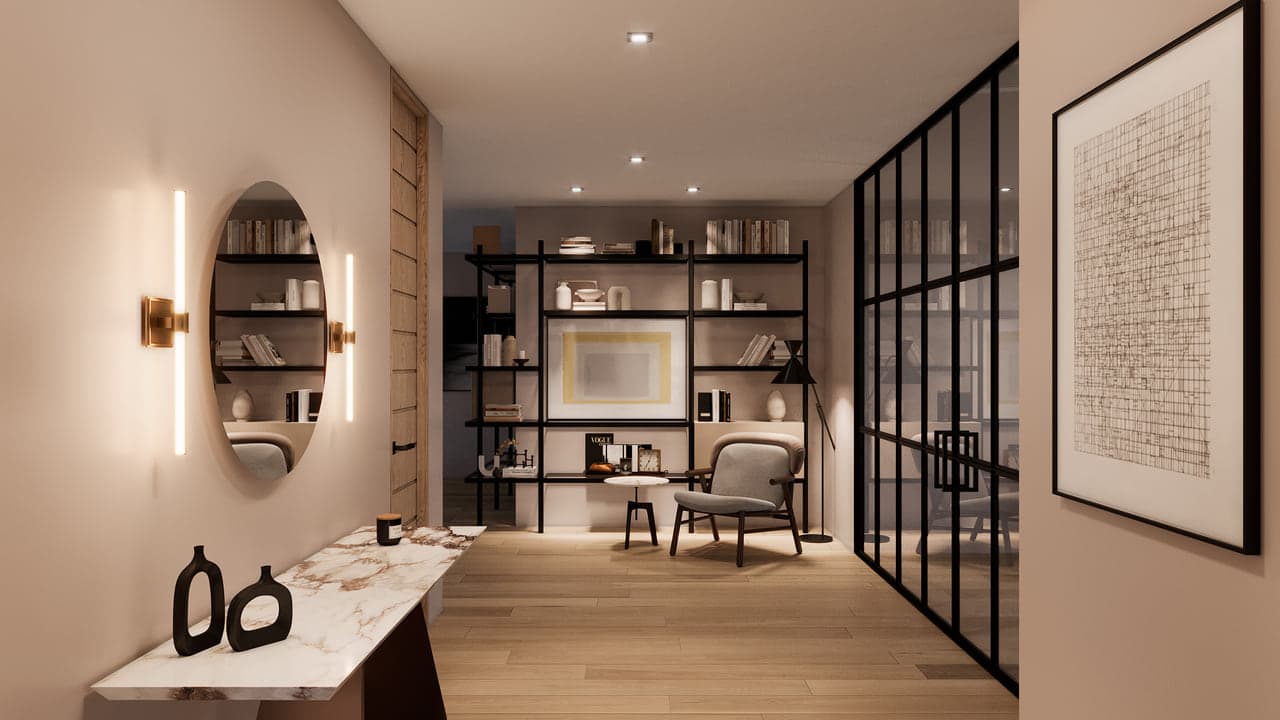
How to Choose a Warm Wood Floor (and What It Should Pair With)
A warm wood floor is an undertone decision, not a stain color. Species, finish, plank width and the Miami humidity question, and how the floor is matched to the rest of the room rather than picked alone.
Luxom Studio · LUXOM Developments
· 5 min read · Last reviewed
Key takeaways
- A wood floor reads warm or cold through its undertone, not its lightness. A pale floor with a gray undertone still reads cold, and a mid-tone floor with a honey or amber undertone reads warm even in a bright room.
- Flooring guides that rank for this question are retailer color catalogs: they name warm tone families but never show the floor decided alongside the walls, joinery and furniture it has to share a room with.
- At Luxom the floor is chosen as the lead wood for the whole home, before furniture, the same undertone discipline that runs a matched white oak and walnut program through closets, doors and panelling.
- In Miami's humidity, solid and engineered wood are not interchangeable by taste. Engineered flooring's layered construction resists the expansion and contraction that a humid, air-conditioned climate puts solid wood through.
- Plank width and pattern change the temperature of a floor as much as color does. Wide plank reads calmer and warmer; herringbone reads busier and, in a cool species, can tip a room cold.
From the reel
We shared a look at a warm wood floor design in one of our Coconut Grove interiors on Instagram, and the question it raised was simple: what actually makes a wood floor read warm, rather than just light or dark. This is the answer, and what the floor has to be chosen alongside to work.
What makes a wood floor read warm, not just light or dark
Most people shop a wood floor by lightness: pale versus dark, like a dimmer switch. That is the wrong axis. Warmth lives in the undertone, the cast underneath the color, not in how light or dark the floor sits. A pale floor with a gray or pink undertone still reads cold in a sunlit room, while a mid-tone floor with a honey, amber or golden-brown undertone reads warm even under cool daylight.
The test is the same one that governs mixing wood tones anywhere in a house: hold a sample next to warm materials you already know, a piece of oak furniture, a travertine slab, in the same light, and look past value straight to the cast. Yellow, orange and red-brown casts read warm. Gray, pink and ash casts read cold no matter how dark the plank is stained. That single check decides more about how a floor feels underfoot than any trend list of this year's popular colors.
Species and grain: white oak, walnut and what each carries underfoot
Species sets the ceiling on how warm a floor can read before a finish is ever applied. White oak is the field-wood standard for a reason: a dense, tight-grained hardwood long valued in flooring and cabinetry for its durability, with a straight, consistent grain that carries a natural honey undertone without needing a heavy stain to get there. It is why white oak covers the most floor area in a Luxom build, the same lead-wood logic that runs a matched species program through a whole home rather than a single room, detailed in how to mix wood tones.
Walnut rarely covers a floor the same way. Its dark, rich heartwood reads warm but heavy, so it tends to work better as the anchor wood on doors, a closet run or panelling, the pairing we cover in one timber, fourteen rooms, than as the wood underfoot across an entire home. A floor that leans on walnut as its field wood needs the rest of the room kept lighter to avoid tipping dark rather than warm.
Pull quote
A warm wood floor is not a stain color. It is the lead material the rest of the room has to agree with.
Finish and sheen: why matte beats gloss on a warm floor
Finish decides whether a warm undertone actually reads, or gets flattened by reflection. A matte or satin oiled finish lets light sink into the grain rather than bounce straight off the surface, which is what makes the honey or amber cast visible as you move through a room. A high-gloss lacquer does the opposite: it throws hard, even reflections that compete with the floor's own color, so a genuinely warm species can end up reading cooler and more generic under gloss than it does under oil.
Oiled finishes carry a second advantage in a lived-in home: they can be spot-refreshed, re-oiling a worn hallway run without resurfacing an entire floor, the same maintenance logic that keeps a timber joinery program looking considered a decade in rather than tired.
Plank width and pattern: wide plank versus herringbone
Pattern changes the temperature of a floor almost as much as color does. Wide plank, run in long, continuous boards, reads calmer and warmer: fewer seams means fewer lines breaking up the honey or amber cast, so the color reads as one continuous warm field rather than a pattern. Herringbone and other angled patterns add visual energy and a more traditional, formal note, but every additional seam is a place where grain direction shifts and light catches differently, which can read busy, and in a paler or cooler species, cold, even when the wood itself is a warm tone.
Neither pattern is wrong. A wide-plank white oak floor is the calmer, warmer default for most rooms in a Luxom home; herringbone earns its place in a foyer or a formal room where the pattern itself is meant to register as a design decision, not just a floor.
Solid or engineered: what Miami's humidity decides for you
This is the one decision a warm-floor color board never answers, and it matters more in Miami than almost anywhere else in the country. Solid wood expands and contracts with humidity and temperature, and a climate that swings between humid outdoor air and air-conditioned interiors puts real, repeated stress on a solid plank, stress that shows up over years as gapping, cupping or cracking.
Engineered wood flooring is built from layered plies, grain alternating direction layer to layer, under a solid wood wear layer on top. That cross-layered core resists the expansion and contraction solid wood goes through, while still being a real wood floor, not a laminate, since the surface you see and refinish is genuine white oak or walnut. It is why engineered construction, not solid plank, sits under the warm wood floors in Luxom's own builds: the warmth comes from the species and finish above, the climate reliability comes from the construction below.
Pairing a warm wood floor with walls, joinery and stone
A warm wood floor does not work in isolation. It is the field material the rest of the room's undertone has to agree with, the same whole-home discipline behind Luxom's white oak and walnut joinery program. Travertine, limewashed plaster and warm white walls read naturally against a honey or amber floor because they share its undertone rather than compete with it, the same warm-material logic behind warm minimalism.
Texture does the same work as color. A fluted wood feature wall or a walnut cabinet run in the same warm family as the floor reinforces the room instead of introducing a second, competing wood decision. The floor is chosen first, as the lead wood; everything else, paint, stone, a second species on doors or panelling, gets checked against it rather than the other way around.
If you are planning the floor and the material program for a Coconut Grove build at the same time, get in touch with Luxom and we will walk through the species, finish and construction decision with you before the first plank is ordered.
Pull quote
A warm wood floor is not a stain color. It is the lead material the rest of the room has to agree with.
Filed under
Questions about warm wood floor design
01Are warm wood floors in style?
Yes, and the shift is away from the cool, gray-washed floors that dominated the last decade toward honey, amber and golden-brown tones. But style is the wrong lens for a floor that is meant to last the life of a house. What makes a warm floor work has less to do with following a color trend and more to do with undertone discipline, covered in what actually makes a wood floor read warm, the same check that keeps a floor from dating the way a trend color eventually does. Oak stays the dominant species behind the warm-floor trend because its straight, consistent grain carries a honey undertone without needing a heavy stain to get there.
02What is the rule of 3 in flooring?
The rule of three is a wood-pairing discipline, not a flooring-specific rule: keep a room to two or three wood tones at most, let one act as the field wood covering the most surface area (almost always the floor), and let the others appear with intention on doors, cabinetry or one piece of furniture rather than scattered at random. We cover the full version, including the undertone check that matters more than counting tones, in how to mix wood tones. A warm wood floor is usually the field wood the rest of that rule is built around, which is why it gets chosen first.
03What color hardwood floors are in style for 2026?
Honey, amber and golden-brown tones in a natural or lightly oiled white oak are leading, replacing the cool gray and whitewashed floors of recent years. The species matters as much as the stain: a dense, tight-grained hardwood like white oak carries a warm cast naturally, so it needs less artificial tinting to read warm than a paler, straighter-grained species does. Plank width plays a role too, covered in plank width and pattern, where wider boards in a natural oil finish are reading as the more current, warmer choice over a narrow strip floor.
04What colors complement warm wood floors?
Warm neutrals and the other warm materials in the room, not colors chosen in isolation from the floor. Travertine, limewashed plaster and warm white walls sit cleanly against a honey or amber floor because they share its undertone rather than fighting it, the same discipline covered in pairing a warm wood floor with the rest of the room. A cool gray sofa or a cool white wall can still work, but only if the room has enough warm material elsewhere, stone, timber joinery, textiles, to anchor it; a floor cannot carry the whole room's warmth alone.
05Is solid or engineered wood flooring better for a humid climate like Miami?
Engineered wood is the more reliable choice in Miami. Engineered wood flooring is built from layered plies with the grain running in alternating directions under a solid wood wear layer, which resists the expansion and contraction that humidity and air conditioning cycles put solid wood through. Solid wood floors can still be specified in climate-controlled interiors with the right acclimation and subfloor, but engineered construction removes most of that risk by design, which is why it is the default under a warm white oak floor in Luxom's own builds. We cover that same solid-versus-engineered decision in more detail in solid or engineered.
Explore the portfolio
Projects to see


Talk to the studio
If this belongs in your home, our studio will draw the plan.
Initial conversation, 30 minutes. We listen to the brief and respond with a scoped proposal within five working days. You can also read the services page for typical timelines and fees.
Written by Luxom Studio · LUXOM Developments
The design and development studio behind LUXOM residences in Coconut Grove, Miami
Keep reading
From the journal
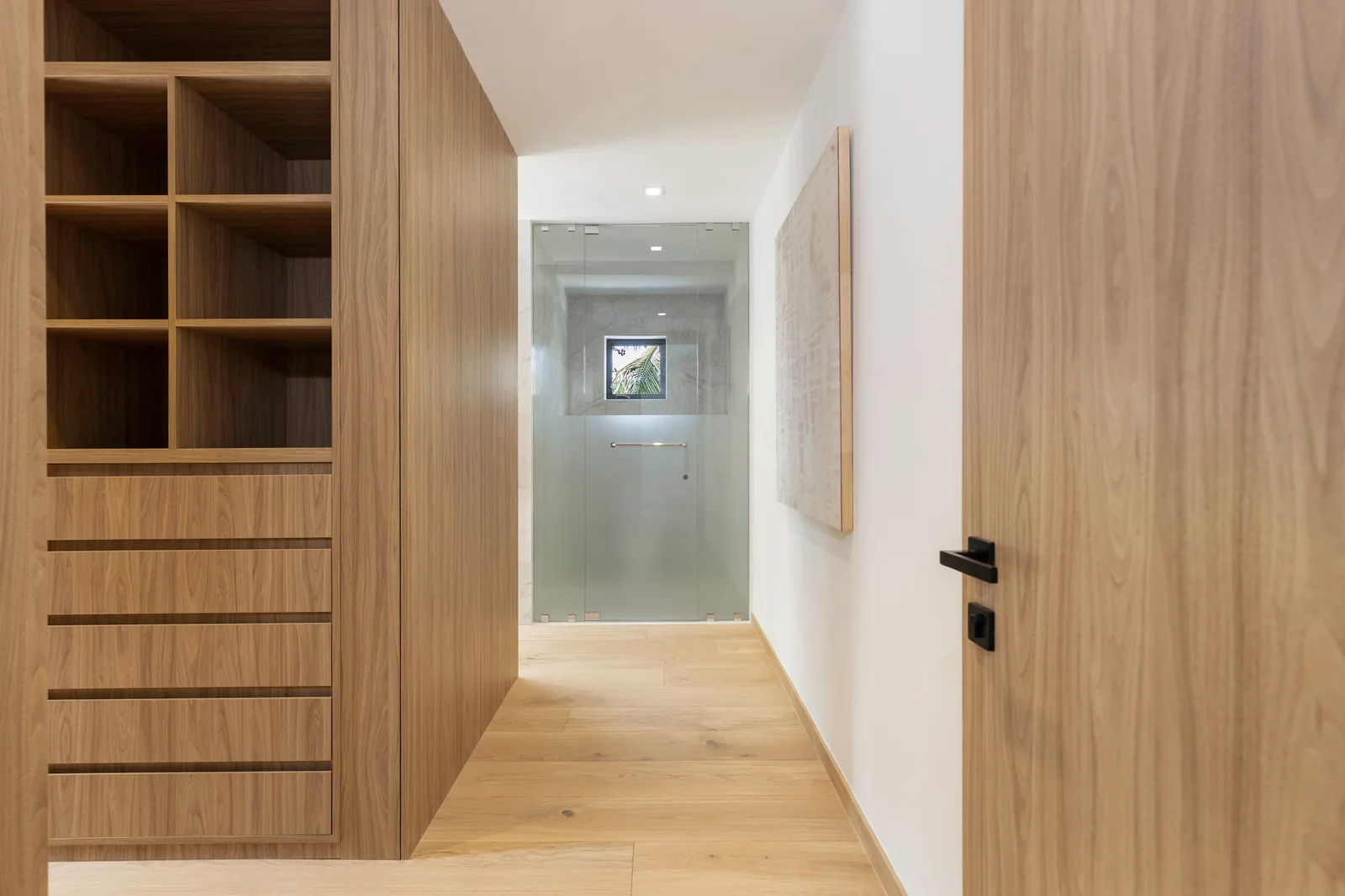
Interiors · Sep 13, 2026 · 5 min
Three Rules for Mixing Wood Tones Without Getting It Wrong
Never let every wood match, pick one lead wood, and watch the undertone. Two or three tones is enough, and here is what that looks like built into a real Luxom hallway.
Materials · Sep 1, 2026 · 5 min
One Timber, Fourteen Rooms: White Oak and Walnut Joinery
Why timber is the one finish that improves with use, and how a single white oak and walnut joinery program runs through closets, panelling, doors and ceilings in one Luxom home.
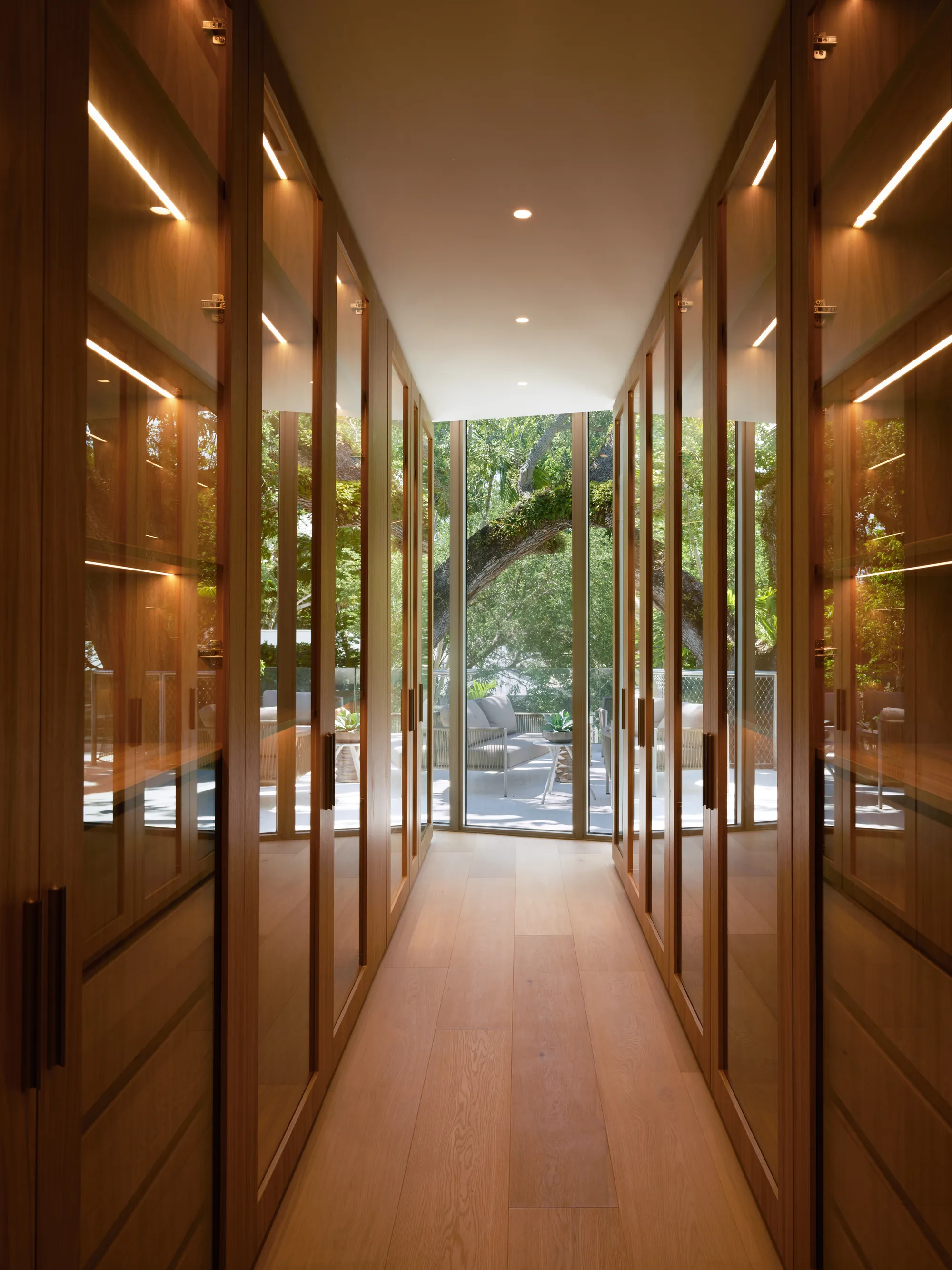
Materials · Jul 25, 2026 · 4 min
Fluted wood: texture as architectural detail
How fluted wood panels turn a flat surface into an architectural detail. Where to use them, which species and finishes work, and how to keep the effect quiet rather than busy.