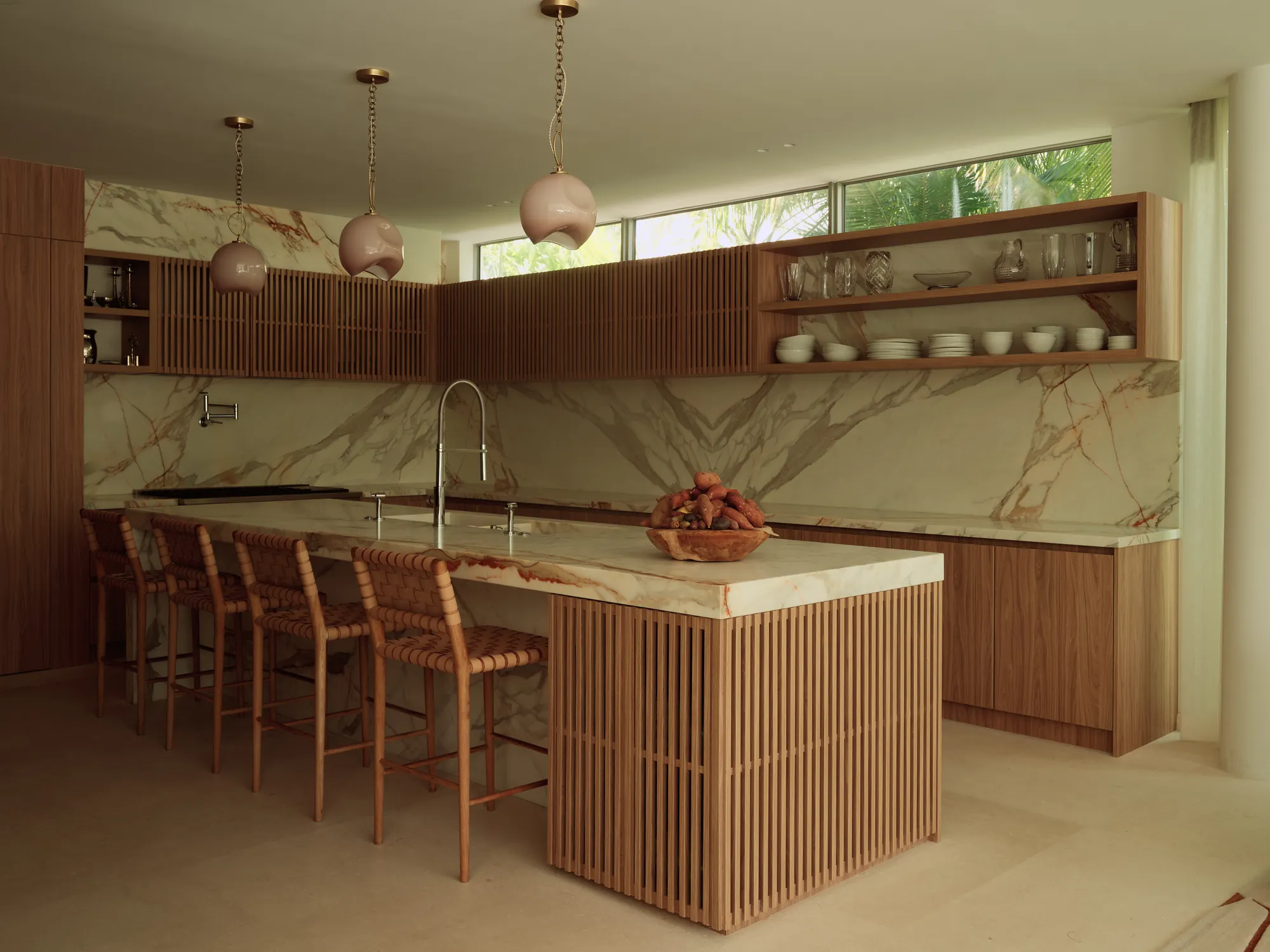
Marble countertops: types, care, and where they belong
A clear guide to marble countertops: the main types, what the stone will and will not tolerate, and the rooms where marble earns its place rather than becoming a maintenance problem.
Luxom Studio · LUXOM Developments
· 3 min read · Last reviewed
Key takeaways
- Marble is a soft, porous natural stone. It is prized for its depth and veining, but it etches with acids and can stain, so it asks for tolerance of a living, aging surface.
- The best-known types are Carrara, Calacatta and Statuario. They differ mainly in background tone and veining, with Calacatta the whitest and boldest and Carrara the greyest and most subtle.
- A honed finish hides etching and wear far better than a polished one, which is why most marble kitchen countertops that age well are honed rather than glossy.
- Marble belongs where its behavior fits the use: baths, vanities, fireplace surrounds and pastry stations. In a hard-working kitchen it will patina, and you have to want that.
- Sealing reduces staining but does not stop etching, since etching is a chemical reaction with the stone itself, not a stain sitting on top of it.
Editor's note
Marble is the stone people picture when they picture luxury, and it is also the stone most often regretted. Both facts come from the same source: marble is soft, porous and reactive. It gives you depth and veining that no engineered surface can imitate, and in exchange it asks you to accept a surface that changes.
This is a guide to specifying marble honestly. Which types differ how, what the stone will and will not tolerate, and the rooms where it earns its place rather than becoming a daily worry. It sits under our wider stone guide, and is meant to be read alongside it.
What marble is, and why it behaves the way it does
Marble is metamorphosed limestone, composed mostly of calcium carbonate. That single fact explains almost everything about how it behaves. It is relatively soft, so it scratches and abrades more easily than granite or quartzite. It is porous, so it absorbs liquids and can stain. And because calcium carbonate reacts with acid, it etches: any acidic contact eats a dull mark into a polished surface.
None of this is a defect. It is the nature of the material, and it is inseparable from the qualities that make marble worth having. The depth, the translucency at the edges, the way veining moves through the slab: these come from the same soft, mineral structure that also makes the stone reactive.
The main types, briefly
Most marble countertops come from a small group of white Italian stones. Carrara is the greyest and most subtle, with soft feathery veining, and it is usually the most affordable. Calacatta is whiter with bolder, often warmer veining, rarer and more expensive. Statuario sits nearby, prized for a bright white ground with strong linear veins.
Beyond the whites are colored marbles in green, black, gold and brown, generally used as accents rather than primary work surfaces. The choice among them is really a choice about how much movement you want in the room. For the full comparison against other stones, Choosing stone is the parent guide.
Finish changes everything
The single most important specification decision for marble is finish, and it matters more than the type of marble. A polished finish is glossy and shows veining at its most vivid, but every etch mark reads as a dull spot the moment an acid touches it. A honed finish is matte and satin, and because it has no gloss to lose, etching and light wear largely disappear into the surface.
For any countertop that gets real use, honed is the more forgiving choice, and it is why most marble kitchens that still look composed after years were honed from the start. Polished marble stays beautiful on vertical and low-use surfaces, where it will not meet acid or heavy traffic.
Where marble belongs
Marble rewards being placed where its behavior fits the task. Bathroom vanities, fireplace surrounds, powder rooms, bar tops and baking stations all play to its strengths: a cool, elegant surface with limited acid exposure. A gathering island can carry it well too.
The place to think twice is the primary run of a hard-working kitchen, around the cooktop and sink, where citrus, wine and daily abrasion will mark the stone quickly. That is not a prohibition. It is a decision to make deliberately, usually with a honed finish, and with a clear appetite for patina.
Living with it honestly
Marble is a material that records use. Seal it, wipe acids promptly, clean only with pH-neutral products, and use boards and trivets, and it will still develop a patina over the years. The households happiest with marble are the ones who wanted that from the beginning rather than fighting it.
If you love the look but not the upkeep, quartzite reads similarly and resists etching, a tradeoff we cover in Choosing stone. Matching the right stone to the way a home is actually used is part of our services, and the projects page shows the results in built work.
Pull quote
Marble does not stay perfect, and it was never meant to. Choose it when you want a surface that records the life of the room.
Filed under
Questions about marble countertops
01What are the main types of marble for countertops?
The three most specified white marbles are Carrara, Calacatta and Statuario, and they differ mainly in background color and veining. Carrara is the greyest and most affordable, with soft, feathery grey veins on a cooler white ground, which makes it the quietest choice. Calacatta is whiter and more dramatic, with thicker, more defined veins that often carry gold or warm grey tones, and because good blocks are rarer it costs more. Statuario sits between them in look but is prized for a bright white field with bold, linear veining. Beyond the whites there are colored marbles such as green, black and brown varieties used more for accents than for primary work surfaces. The right pick depends on how much movement you want and how the stone reads against your cabinetry. For the wider stone decision, start with Choosing stone.
02Do marble countertops stain and etch easily?
Marble does both, and understanding the difference matters. Staining is when a liquid such as oil, wine or coffee soaks into the porous stone and discolors it, and sealing plus prompt wiping largely prevents it. Etching is different: it is a chemical reaction between acids and the calcium carbonate in the marble, so lemon juice, vinegar, tomato or even some cleaners leave a dull, slightly rough mark where the polish has been eaten away. Sealing does not stop etching, because etching is damage to the stone itself rather than a stain sitting on the surface. This is the honest reality of living with marble. On a polished slab, etches show as visible dull spots; on a honed slab they largely disappear into the matte finish. If a flawless, unchanging surface is the requirement, marble is the wrong stone. If a lived-in patina is acceptable, it is unmatched. See Choosing stone for lower-maintenance alternatives.
03Should marble countertops be honed or polished?
For countertops that get real use, honed almost always ages better than polished. A polished finish is glossy and reflective, which shows off veining beautifully but also shows every etch mark as a dull spot the moment an acid touches it. A honed finish is matte and satin-smooth, and because it has no gloss to lose, etching and light wear disappear into the surface instead of standing out. That is why most marble kitchens that still look composed after years are honed. The tradeoff is that honed marble can look slightly softer and, on some stones, can absorb stains a touch faster, so sealing and wiping matter. Polished marble still has a place on vertical surfaces and low-use areas where it will not meet acid or heavy traffic, such as a fireplace surround or a powder-room vanity. For a working kitchen surface, honed is the more forgiving specification.
04Where should you use marble, and where should you avoid it?
Use marble where its behavior suits the task and its patina is welcome. It excels on bathroom vanities, fireplace surrounds, powder rooms, bar tops and pastry or baking stations, where its cool surface is genuinely useful and acid exposure is limited. It is also a defensible choice on a kitchen island used more for gathering than for heavy prep. Where to be careful is the primary run of a hard-working kitchen, especially around the cooktop and sink, where citrus, wine and daily abrasion will etch and mark a polished slab quickly. That does not mean never, it means going in with open eyes and usually specifying a honed finish. If you want the marble look with far less maintenance, quartzite reads similarly but resists etching. We cover those tradeoffs in Choosing stone, and our services help match the stone to how you actually live.
05How do you care for and maintain marble countertops?
Care for marble by treating it as a natural surface, not an indestructible one. Seal it on installation and periodically after, which slows staining by reducing how fast liquids soak in. Wipe up spills quickly, especially anything acidic such as citrus, wine, vinegar or tomato, since those cause etching within minutes on a polished surface. Clean only with pH-neutral stone cleaner or mild soap and water, never with vinegar, bleach or generic abrasive sprays, all of which attack the stone. Use boards for cutting and trivets for hot pans, and blot rather than wipe a fresh spill so you do not spread it. Minor etches on honed marble can often be softened by a professional or with a marble polishing compound. The larger point is mindset: a well-kept marble counter still develops a patina over years, and the households happiest with marble are the ones who wanted that character from the start.
Explore the portfolio
Projects to see


Talk to the studio
If this belongs in your home, our studio will draw the plan.
Initial conversation, 30 minutes. We listen to the brief and respond with a scoped proposal within five working days. You can also read the services page for typical timelines and fees.
Written by Luxom Studio · LUXOM Developments
The design and development studio behind LUXOM residences in Coconut Grove, Miami
Keep reading
From the journal
Materials · Jul 27, 2026 · 3 min
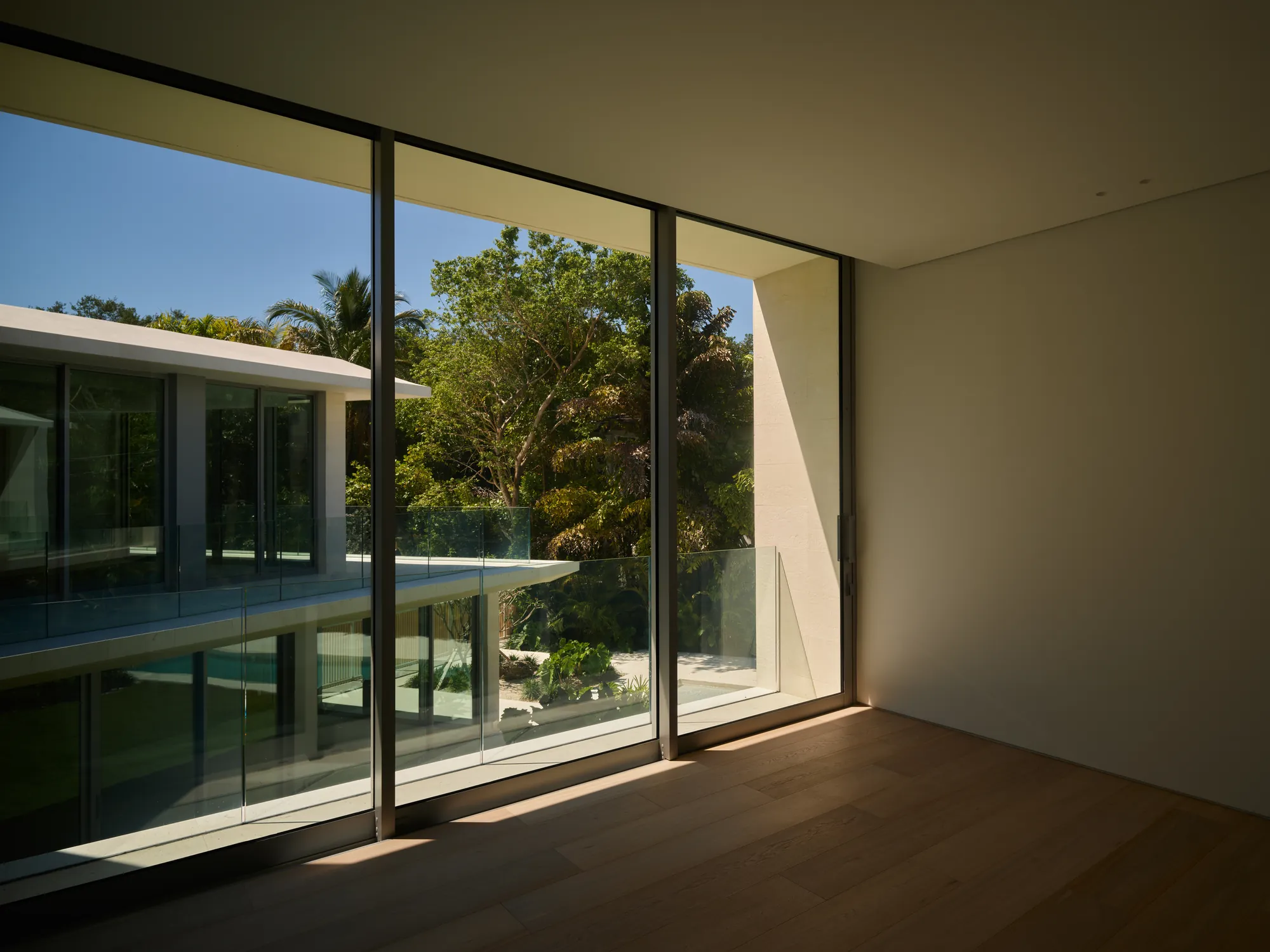
Quartzite countertops: the hardwearing stone for real kitchens
Why quartzite earns its place in kitchens that get used: how the stone behaves, where it beats the alternatives, and what to know before you specify it.
Materials · Jul 25, 2026 · 3 min
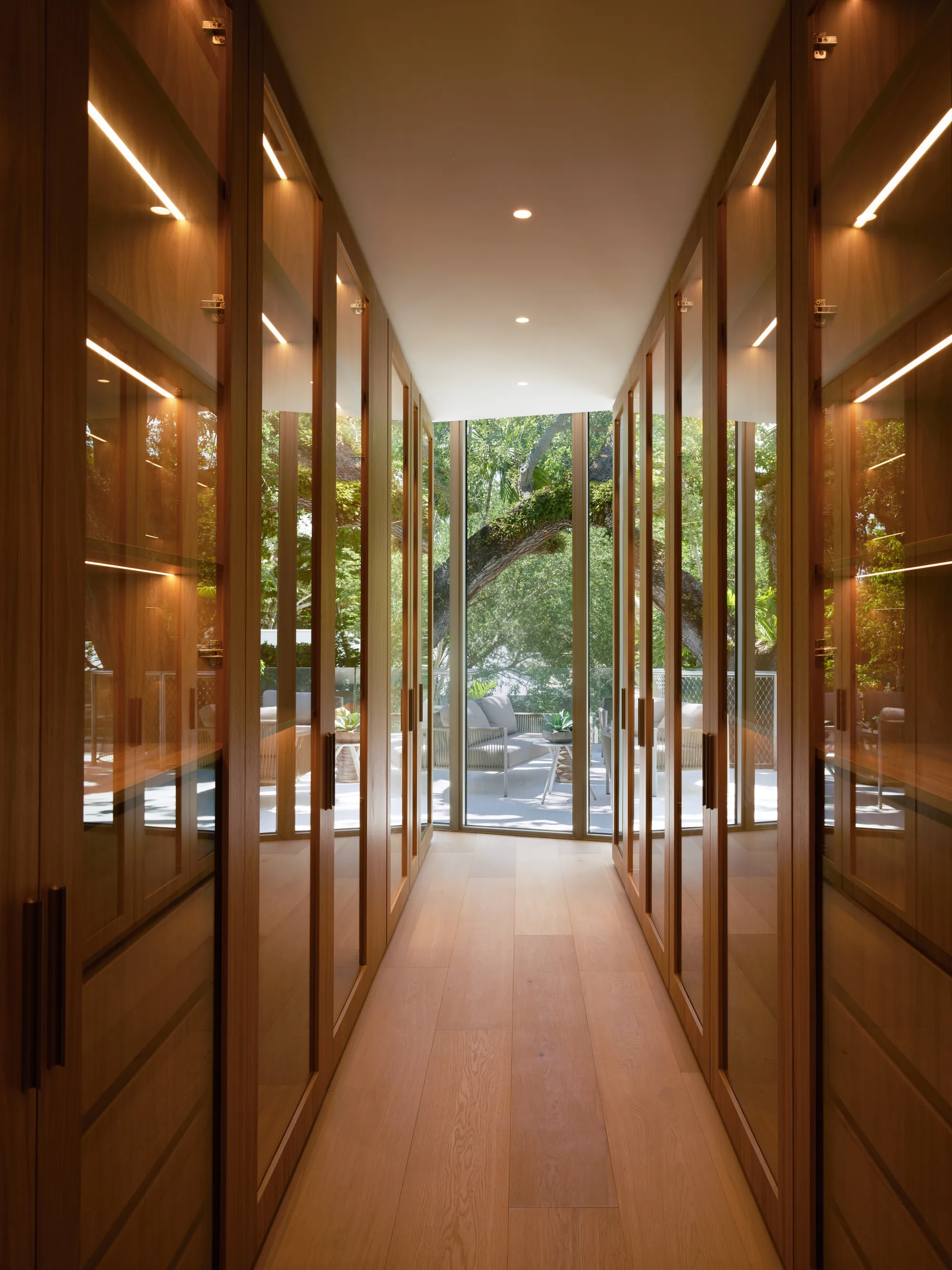
Fluted wood: texture as architectural detail
How fluted wood panels turn a flat surface into an architectural detail. Where to use them, which species and finishes work, and how to keep the effect quiet rather than busy.

Materials · Jul 21, 2026 · 3 min
Limewash on brick: refinishing exteriors the quiet way
How limewash transforms a brick exterior into a soft, mineral finish that ages into character. The process, the durability, and the restraint that keeps it looking right.