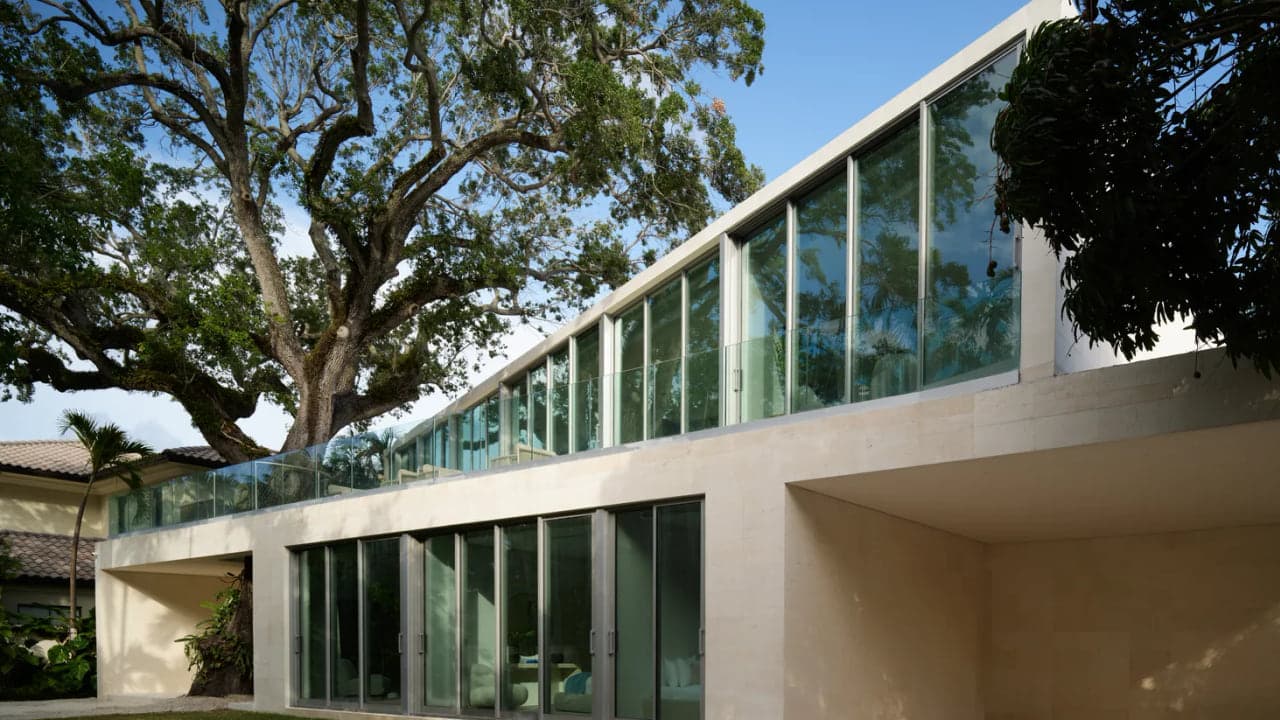
Modern Architects: Who They Were and What 'Modern' Means
Modern and modernist get used as if they are the same word. They are not. Here is who the movement's defining architects were and the one distinction worth keeping.
Luxom Studio · LUXOM Developments
· 5 min read · Last reviewed
Key takeaways
- 'Modernist' names a historical movement with specific principles and a roster of architects. 'Modern' is a looser style adjective that gets applied to any clean, uncluttered building, old or new.
- Le Corbusier's five points of architecture, pilotis, a flat roof, strip windows, free facades and an open floor plan, became the movement's working blueprint starting in the 1920s.
- Modernist buildings share four traits: function over ornament, open floor plans from clean geometry, honest industrial materials, and large openings that connect the interior to its site.
- Post-modern architecture is the later reaction against modernism's restraint, not a newer version of it; the two terms describe opposing instincts, not a timeline.
- A reader who knows this vocabulary can describe a floor plan precisely instead of reacting to a rendering, which is the same literacy a licensed Florida architect still has to seal before anything gets built.
The Architects Who Actually Built the Modernist Movement
Three names come up whenever "modernist architecture" gets defined with any precision: Le Corbusier, Ludwig Mies van der Rohe and Frank Lloyd Wright. They did not share a style so much as a conviction: a building should be argued from function and structure, not inherited ornament.
Le Corbusier formalized that conviction into five points of architecture, pilotis lifting the building off the ground, a flat roof, strip windows, a free facade and an open-plan interior, and those points were adopted and reinterpreted across different sites and countries starting in the 1920s. Mies van der Rohe pushed the same instinct toward structural minimalism, reducing buildings to exposed steel frames and glass, work he developed after training under his stonemason father and later under architect Peter Behrens, a self-taught path covered in what self-taught architects' reading lists teach buyers. Wright took a different route, Prairie School horizontals and an insistence that a building should grow out of its specific site rather than impose a universal formula on it.
Architizer's own roundup of young architects to watch draws a hard line between that kind of list and the Pritzker Prize, which the jury will not award to anyone it considers too early in their career. The three names above built reputations over decades; today's "young architect to watch" lists point at a different, much earlier career stage, which is one more reason the founders of modernism and a trending Instagram portfolio are not interchangeable just because both get called "architects."
None of the three agreed on a single formula. What they agreed on was the rejection of applied ornament for its own sake, and that agreement is what later critics grouped together and called modernism.
What Actually Makes a Building Modernist
Strip the history down and Wallpaper*'s own list of the movement's key characteristics lines up with four traits that recur across the movement's built work:
- Function over ornament. Aesthetics follow what the building has to do, not a decorative program layered on afterward.
- Clean geometry, open plans. Simple forms produce free-flowing interior space and flexible floor plans, with rare, deliberate use of symmetry.
- Honest, industrial materials. Raw concrete, exposed brick and steel, and mass-produced elements are left visible rather than concealed behind applied finishes.
- A deliberate dialogue with the site. Large openings, and in some cases natural materials like timber, connect the interior to its immediate setting instead of sealing the building off from it.
A building earns the modernist label by committing to these traits structurally, not by looking spare in a photograph. A stucco box with large windows can look clean without being modernist in any precise sense; a modernist building is organized around these principles from the structural system outward.
Modernist Versus Modern: The One Distinction Worth Keeping
Here is where most explanations of this topic go quiet, and it is worth being direct about why. Search the topic and you will land on pages that each use only one of the two words. One global survey of landmark buildings uses "modernist" throughout its own section headings and never once uses "modern" as a label in its own right. A separate portfolio of built, named residential projects uses "modern" repeatedly as a style adjective and never uses "modernist" or names an architect or movement anywhere on the page. Read either one alone and you only get half the vocabulary.
The distinction worth keeping is this: modernist names a historical movement, roughly the 1920s through the 1960s, tied to specific architects and a specific set of principles. Modern is a looser style adjective, applied today to any building that reads as clean, uncluttered and ornament-free, whether or not it follows modernist principles in any structural sense. A 2026 home can be accurately called modern. Calling it modernist is only precise if it is actually built on those structural commitments, not just photographed to look spare.
Where Post-Modern Architecture Pushes Back
Google groups "post-modern" with this exact query, and the name invites a natural assumption: that it is a newer, updated modernism. It is closer to the opposite. Post-modern architecture is a direct reaction against modernist restraint, reintroducing color, historical reference and ornament that modernism had deliberately stripped out. Where a modernist building argues from function alone, a post-modern building is often willing to be playful or referential on purpose. The two terms describe opposing instincts inside the same conversation, not two steps on the same timeline.
Why This Vocabulary Matters Before You Hire Anyone
Someone searching this topic is rarely ready to hire an architect yet. They are building the vocabulary to recognize and discuss a style before they evaluate a portfolio, a renovation, or a builder. That is a useful place to start, because the same precision that separates "modern" from "modernist" also separates who draws a home from who builds it under one contract, and it is exactly the kind of term-by-term distinction that matters once a buyer is filtering a nearby shortlist of architects instead of just reading about the movement.
The same discipline applies on the interiors side. Modern luxury interior design defines its own term with the same precision this guide uses for modern architecture: restraint and material quality, not expensive-looking ornament. Organic modern interior design goes a step further and separates that term from its closest neighbors, modeling the same kind of distinction this guide draws between modern and modernist. Whichever side of the house a buyer starts on, the vocabulary works the same way: it lets a plan or a portfolio get evaluated on specifics, not on how clean it looks in a photograph. A licensed architect still has to seal the final construction documents before anything gets built; in Florida that requires a current license from the Florida Board of Architecture and Interior Design regardless of how fluent the buyer's own vocabulary already is.
Pull quote
Modernist is a movement with a membership list. Modern is a mood anyone can borrow.
Filed under
Questions about modern architects, the modernist movement, and the difference between 'modern' and 'modernist' as style labels
01What is the difference between modern and modernist architecture?
Modernist architecture names a specific historical movement, roughly the 1920s through the 1960s, built on named principles from architects like Le Corbusier. Modern architecture is a broader style adjective applied to any clean, ornament-free building today, whether or not it follows modernist principles. See modernist versus modern, the one distinction worth keeping for how to tell which word a given building actually earns.
02Who are the architects considered founders of modernist architecture?
The movement's most cited names are Le Corbusier, Ludwig Mies van der Rohe and Frank Lloyd Wright, each working from a different set of principles toward the same instinct: strip a building down to function, structure and material. The architects who actually built the modernist movement covers what each one contributed.
03What are the defining characteristics of modernist architecture?
Four traits recur across the movement: function over ornament, open floor plans from clean geometry, honest industrial materials like raw concrete and exposed steel, and large openings that put the interior in dialogue with its site. What actually makes a building modernist breaks down each one against a real floor plan.
04Is post-modern architecture newer than modern architecture?
Later in date, yes, but not a newer version of the same idea. Post-modern architecture is a direct reaction against modernist restraint, reintroducing color, ornament and historical reference that modernism had stripped out. See where post-modern architecture pushes back for the specific principles it reverses.
05Can I call my newly built house modernist if it was designed in 2026?
Precisely, no. A 2026 house can borrow modernist principles, flat roof, open plan, honest materials, and accurately be called modern or modernist-influenced, but "modernist" as a movement label belongs to its historical period. Modernist versus modern, the one distinction worth keeping explains why that distinction matters once you are evaluating a design.
06Does knowing this vocabulary help when reviewing architectural plans?
It gives a reader specific questions to ask instead of a general reaction to a rendering, the same shift described in what self-taught architects' reading lists teach buyers. A licensed architect still has to seal the final construction documents; in Florida that requires a current license from the Florida Board of Architecture and Interior Design regardless of how fluent the buyer's own vocabulary is.
Explore the portfolio
Projects to see


Talk to the studio
If this belongs in your home, our studio will draw the plan.
Initial conversation, 30 minutes. We listen to the brief and respond with a scoped proposal within five working days. You can also read the services page for typical timelines and fees.
Written by Luxom Studio · LUXOM Developments
The design and development studio behind LUXOM residences in Coconut Grove, Miami
Keep reading
From the journal
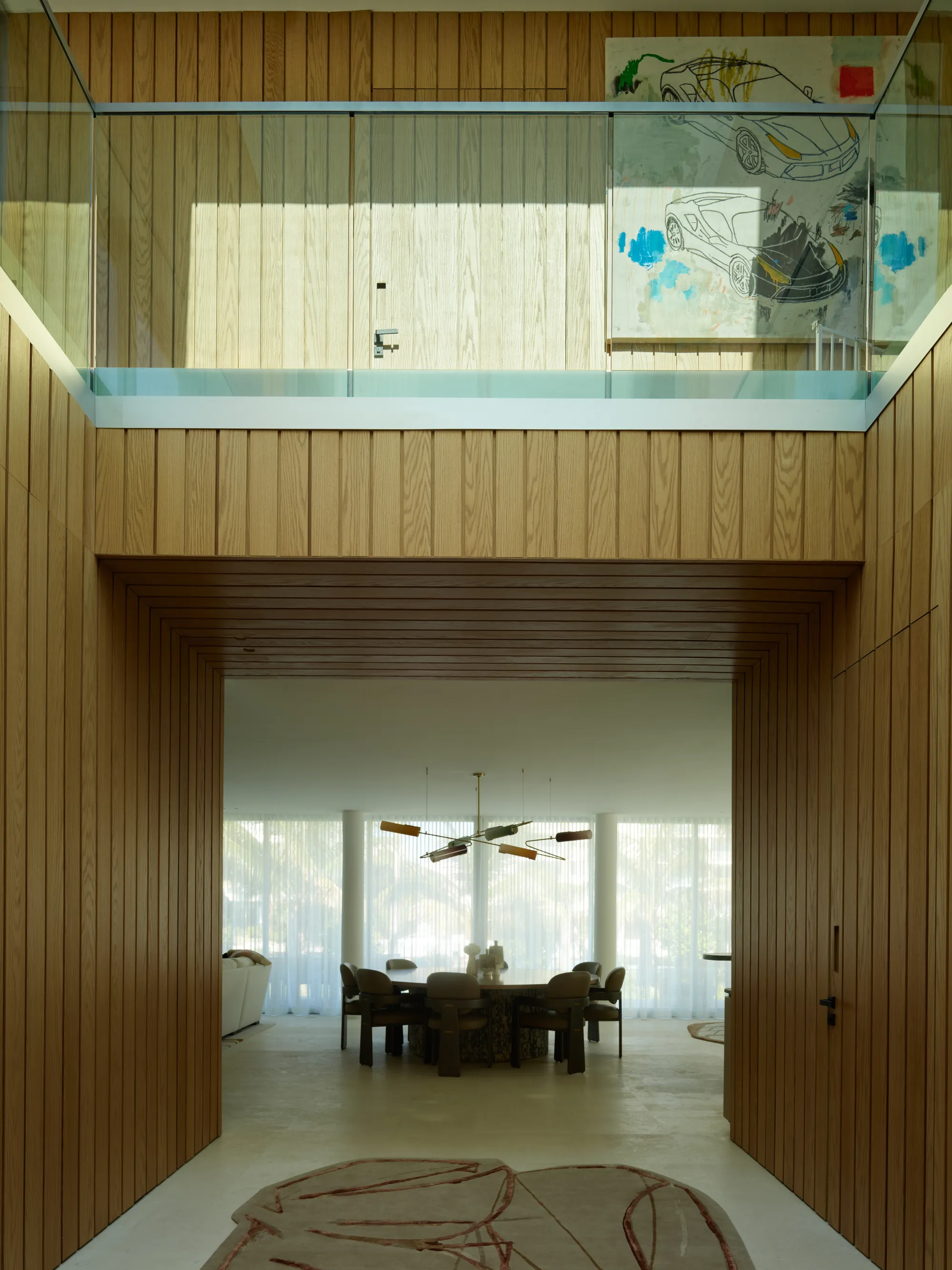
Architecture · Oct 22, 2026 · 5 min
Skylights vs. Windows: Where Each One Actually Belongs
A skylight is not a stronger window. Here is how Luxom decides between a roof opening and a floor to ceiling window on a Coconut Grove house.

Architecture · Oct 18, 2026 · 5 min
What an Architectural Plan Actually Has to Show
An architectural plan is a full drawing set, not one sheet. Here is what it actually contains, and the jurisdiction rules a stock house plan rarely mentions.
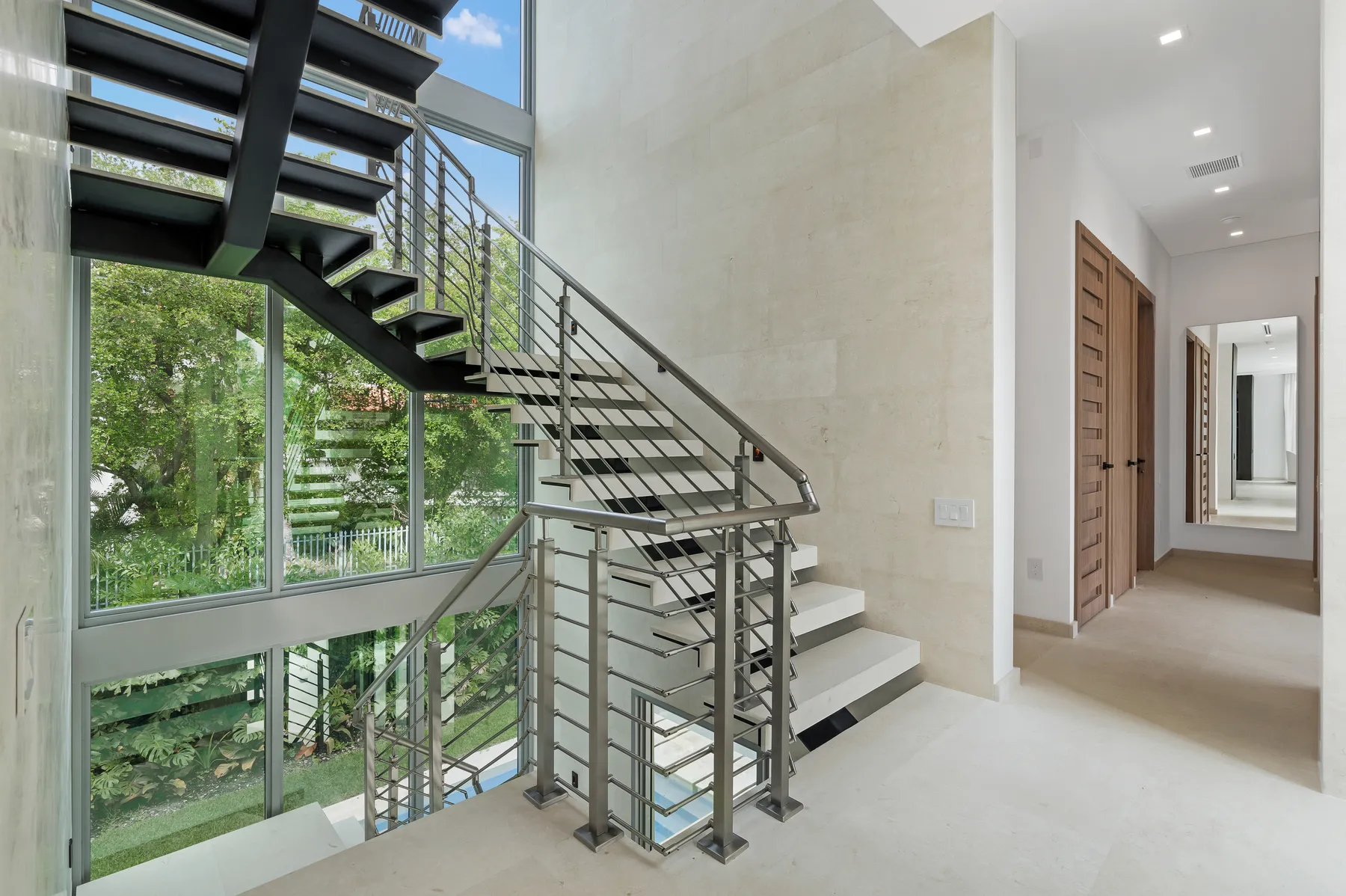
Architecture · Oct 8, 2026 · 6 min
Staircase Railings: Five Types, and the Code That Comes First
Glass, cable, picket, solid and wrought iron. How each railing type works, what residential code asks of all of them, and how to make the one you choose disappear into the staircase.