What Mies van der Rohe Taught Luxom About Building
A line long attributed to Mies van der Rohe, that architecture starts when two bricks are carefully put together, reads as history. At Luxom it reads as a daily standard for materials, proportion and restraint.
Luxom Studio · LUXOM Developments
· 6 min read · Last reviewed
Key takeaways
- A line long attributed to Mies van der Rohe, that architecture starts when two bricks are carefully put together, treats the first joint on a job as the whole discipline, not a detail to fix later.
- Honest materials means steel, stone, wood and glass are used to express what they actually are, not dressed up with a finish meant to disguise a cheaper material underneath.
- Mies's own maxim, less is more, is a rejection of ornament used to distract from a plan or a joint that was not resolved correctly in the first place.
- Precise proportion is what lets a room built with almost nothing in it still feel resolved and calm rather than empty.
- Restraint is harder to build than decoration, because a plain wall or an exposed joint has nowhere to hide a mistake.
Editor's note
A line we keep coming back to at Luxom, long attributed to Mies van der Rohe: architecture starts when you carefully put two bricks together. It sounds like a line for architecture students. On a live job it is closer to a job description, since it says the whole discipline lives in the first joint, not in the finished photograph.
This piece walks through what that line actually asks of a build: materials used honestly, proportion carried without ornament to hide behind, and why restraint is the harder standard to hold to, not the easier one.
Architecture Starts With Two Bricks, Carefully Placed
The quote is short enough to miss what it is actually claiming. It does not say architecture starts with a concept, a site plan or a client meeting. It says architecture starts with two bricks, and with the care taken to set them against each other correctly: level, plumb, the joint tight and consistent.
That claim reorders where quality gets decided. Most of a finished house is judged from a distance, from the street or in a photograph, where a slightly uneven joint or a rushed transition disappears into the overall impression. The two bricks line refuses that distance. It puts the standard at the scale of a single joint, checked while the wall is still going up, not inspected for the first time once the scaffolding comes down.
Honest Materials: Nothing Gets Dressed Up to Look Like Something Else
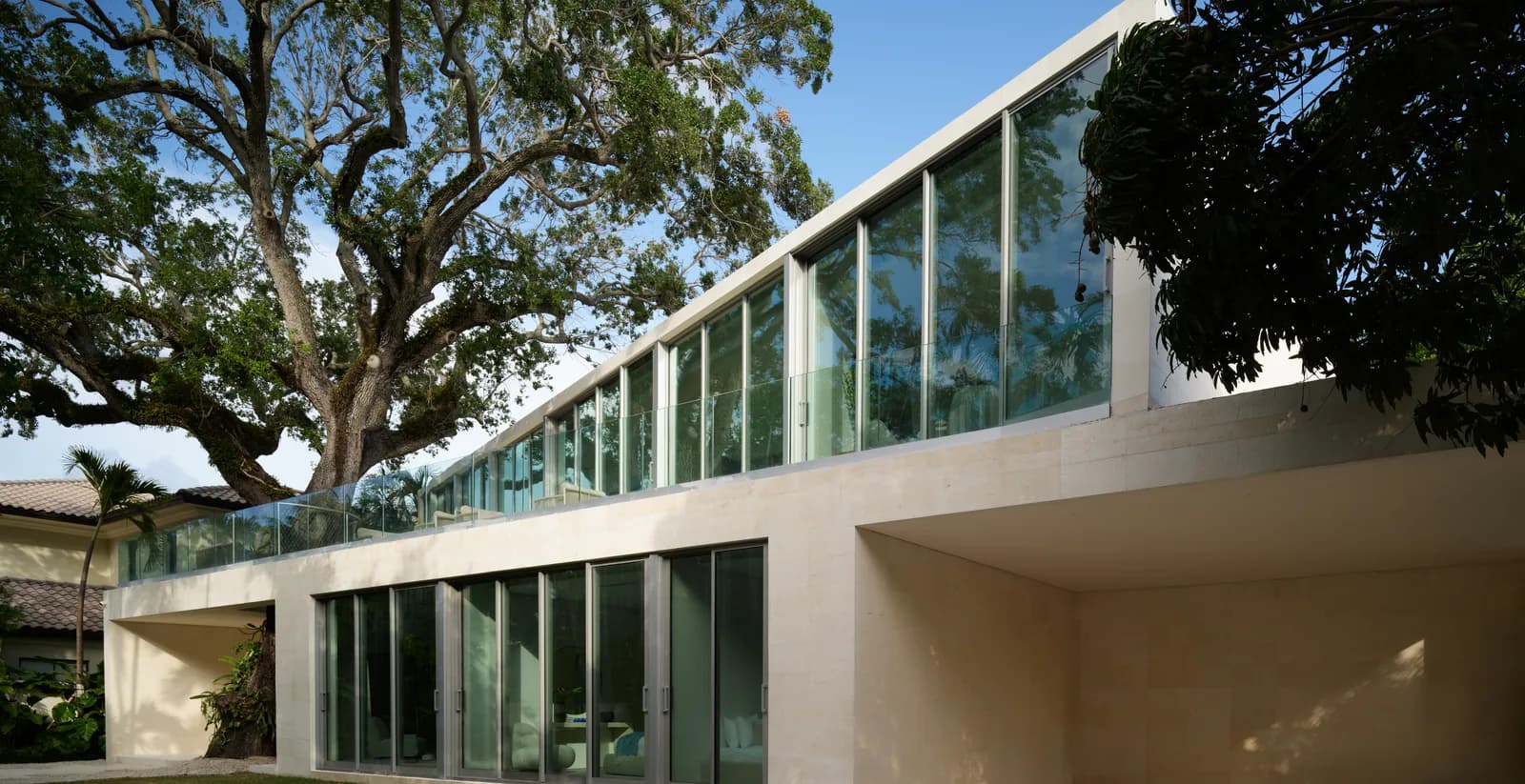
Mies applied the same discipline to material choice. He held that materials such as steel, glass and concrete should be exposed to express their true structural nature rather than concealed or finished to look like something else, and his built work is full of structure left visible instead of buried behind a decorative skin. His own architectural philosophy treated this as inseparable from the maxim less is more.
The residential version of that rule is straightforward to state and harder to hold to under budget pressure: stone reads as stone, oak reads as oak, and no surface stands in as a cheaper substitute pretending to be the real material. Travertine, unlacquered metal and solid wood all age by developing character rather than by peeling or fading, which is only true if what is installed is the material itself and not a finish imitating it.
Pull quote
If a finish only works from across the room, it is decoration, not an honest material.
Precise Proportions Over Ornament, Always
Mies's own maxim, less is more, is often read as a taste for empty rooms. It is closer to an argument about where ornament gets used: to cover for a plan, a ceiling height or a joint that was never resolved correctly in the first place. Strip the ornament away and there is nowhere left to hide a wrong decision, which is why the discipline has to happen before the room is finished, not after.
What is left carrying the room once ornament is removed is proportion: the relationship between floor area, ceiling height, window placement and the few objects allowed in. Mies's residential work, including the Farnsworth House, leaned on exactly this, precise proportion and glass walls that blur the line between indoors and outdoors, instead of applied decoration, to make a spare plan feel complete rather than empty.
That same restraint shapes which named architectural style a lot can actually carry before a single joint gets laid, covered in how Luxom chooses an architectural style for a Coconut Grove lot.
Why Restraint Is Harder to Build Than Decoration
It is common to treat ornament as the expensive choice and restraint as the cheap one. On a real job the opposite is usually true. A carved cornice or a heavy applied molding can cover a ceiling line that is slightly off, or a wall that was never quite square. A plain wall, an exposed edge or a single run of stone across a kitchen has no molding to hide behind. If the joint or the proportion underneath is wrong, it shows.
That is the part of the two bricks line that most retellings skip: restraint is not the absence of decisions, it is a standard that removes every place a mistake could hide. Holding to it costs more in supervision and correction, not less, which is exactly why it is rare.
The Principle Behind Every House We Build
At Luxom this is not treated as an art history reference, it is the standard checked on site. The same people responsible for a plan, from the architecture to the interiors, stay involved once construction starts, because honest materials and precise proportion only hold up if the people accountable for the philosophy are the ones checking the joint in person rather than reviewing it after the fact in a photograph.
That is also why this line opened our own note on how we build: the discipline is not a mood board reference, it is a rule applied at the scale of a single wall, repeated across every room, on every project. The same standard runs through how we think about quiet luxury as a value system, how warm minimalism turns restraint into a livable room, and how a centered courtyard uses proportion and plan discipline instead of decoration to do the work of light and privacy.
If you are planning a build and want to see this standard applied to an actual plan, our services page covers how Luxom designs and builds around it from the first sketch.
To see this same restraint applied to the part of a house every passerby actually judges, facade-elevation-design walks through how the philosophy holds up on a built elevation: white stucco, glass, an oak door and a canopy kept where it earned its place.
Mies arrived at honest structure through straight lines and restraint. What Gaudí's structural principle means for a Miami house traces the same decision from the organic side: structure chosen first, ornament never asked to cover for it.
For the broader framework this philosophy sits inside, see what makes architecture read as luxury, not just expensive, which lays out proportion, sequence and material honesty as the three decisions that matter most.
The same restraint is what separates a decorated room from a designed one, a distinction we walk through directly in decorated buys objects, designed buys decisions.
Mies is not the only reference point for this standard. A different, more sculptural version of the same idea, structure left visible instead of concealed behind ornament, is what we unpack in what Zaha Hadid's Miami tower teaches about structure as form.
If terms like cantilever and eave came up while you were reading a set of drawings, our glossary of architecture terms every Coconut Grove buyer should know defines them against an actual house instead of a textbook page.
Pull quote
Two bricks, laid with care, is still the whole discipline.
Filed under
Questions about Mies van der Rohe design philosophy in residential architecture
01What does architecture starts with two bricks mean?
It is a line long attributed to Mies van der Rohe, and it argues that the discipline of architecture does not begin with a grand concept or a finished elevation, it begins with the first joint: two bricks set level, plumb and tight against each other. Get that first joint wrong and no amount of design intention downstream corrects it. The line is really a statement about where quality gets decided, not at the ribbon cutting, but at the first course of material going into the wall. It is why a build worth calling well made has to be checked at that scale from day one, not inspected for the first time once the walls are up.
02What does honest materials mean in architecture?
Honest materials means a material is used to be exactly what it is, rather than finished to imitate something else. Mies championed this with steel, glass and concrete, exposing structure instead of hiding it behind a false front. In a home, the same rule applies to travertine, oak, plaster and stone: the stone reads as stone, the wood reads as wood, and no surface is a printed laminate standing in for the real material. The test is simple, would the material still look considered up close, under raking light, with nothing left to hide behind. If a finish only works from across the room, it is decoration, not an honest material.
03What is Mies van der Rohe's less is more philosophy?
Less is more is Mies's own maxim, and it is not a claim that empty rooms are automatically better. It is an argument that ornament is often used to cover for a plan, a proportion or a joint that was not resolved correctly, and that removing the ornament forces the underlying decisions to be right. A room with almost nothing in it has nowhere to hide a bad line, a wrong ceiling height or a window placed without thought. Less is more is a discipline applied before the room is finished, not a decorating style applied after.
04How does proportion make a plain room feel calm instead of empty?
Proportion is the relationship between the size of a room, its ceiling height, its window openings and the objects placed in it, and it is what separates a plain room that feels resolved from one that feels merely unfinished. A room can have very little in it and still feel complete if the ceiling height suits the floor area, the window sits where the eye expects a break in the wall, and materials shift where a plane actually changes. Strip out the ornament and proportion is the only thing left carrying the room, which is why it has to be right before anything else is decided. Mies's residential work, including the Farnsworth House, used this precision, together with glass walls that blur the line between indoors and outdoors, in place of applied decoration.
05Why do luxury homes avoid heavy ornament?
Because ornament ages, and precise proportion and honest materials do not. A carved cornice or a heavy applied molding reads as a specific decade the moment tastes move on, while a well proportioned room finished in real stone and wood keeps reading as considered regardless of the year. Restraint is also the harder standard to build to, since a plain wall, an exposed edge or a single run of stone has no molding to hide behind if the joint underneath is wrong. Choosing less ornament is choosing to be judged on the work itself rather than on decoration layered over it.
Explore the portfolio
Projects to see


Talk to the studio
If this belongs in your home, our studio will draw the plan.
Initial conversation, 30 minutes. We listen to the brief and respond with a scoped proposal within five working days. You can also read the services page for typical timelines and fees.
Written by Luxom Studio · LUXOM Developments
The design and development studio behind LUXOM residences in Coconut Grove, Miami
Keep reading
From the journal
Interiors · Jul 9, 2026 · 4 min
Quiet luxury: the anti-trend that lasts
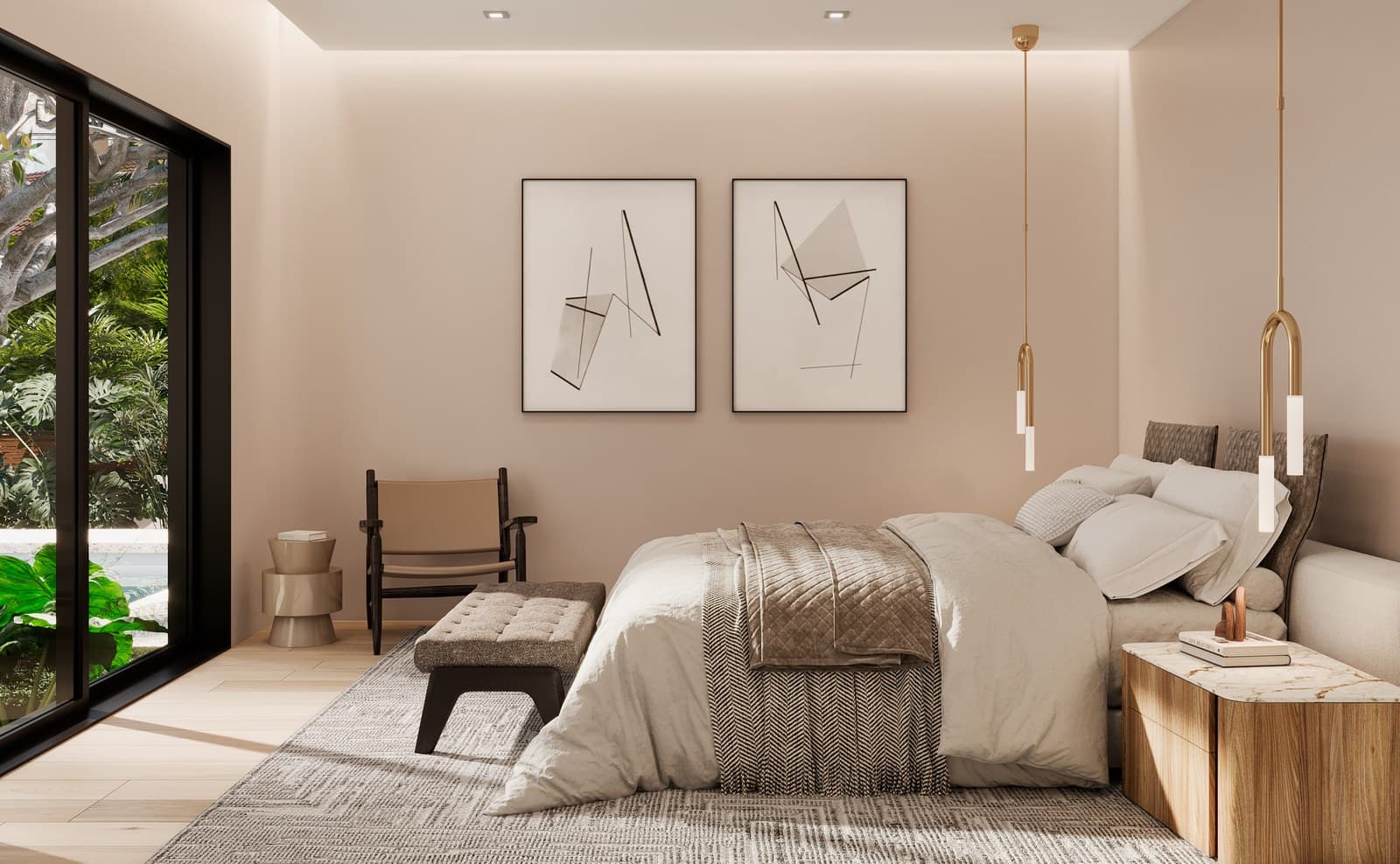
The design language that reads as expensive without announcing it. What quiet luxury is, the materials that carry it, and how to build a home that ages into value instead of out of it.
Interiors · Jul 12, 2026 · 3 min
Warm minimalism: luxury without the cold
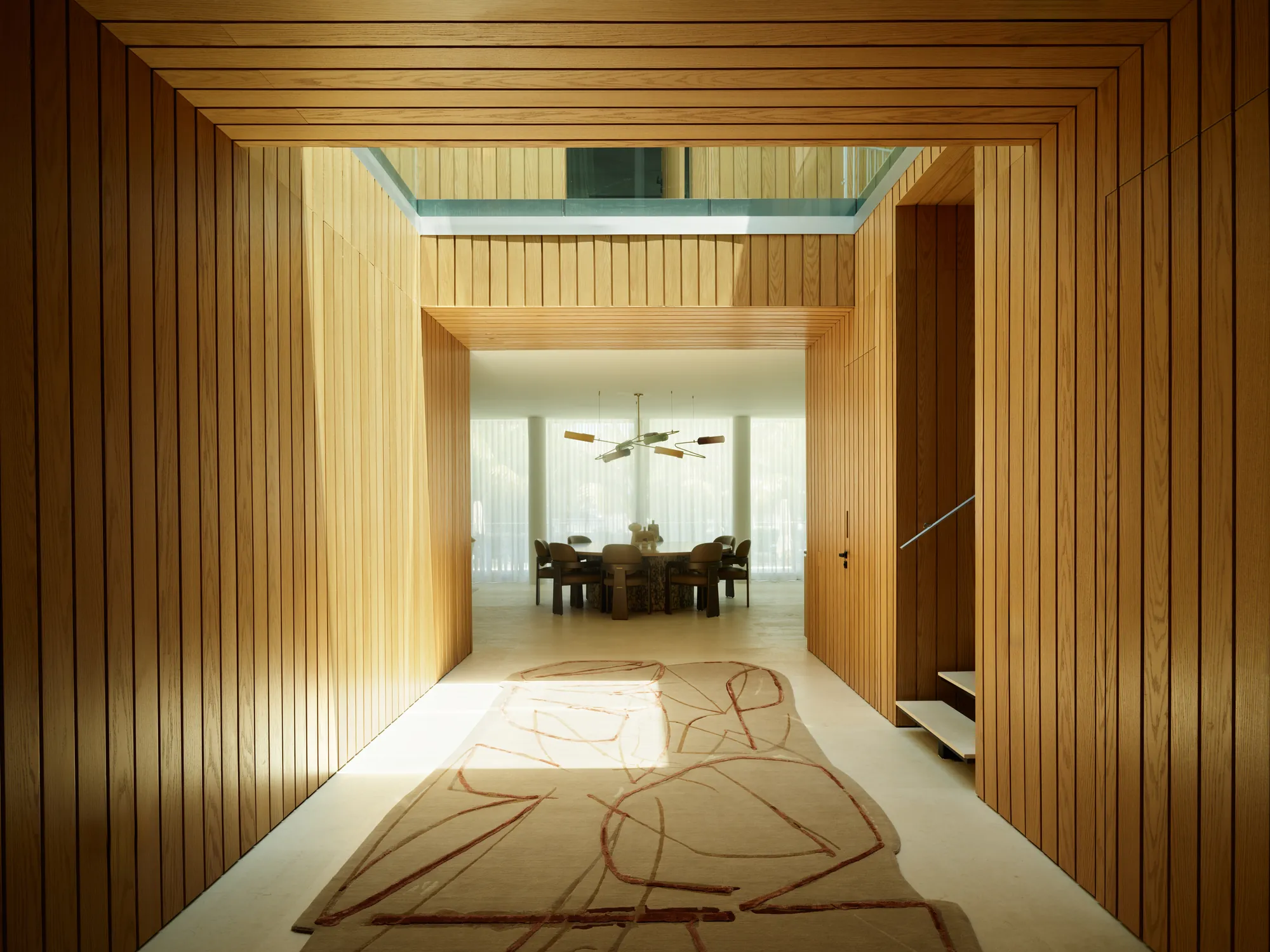
The branch of minimalism that keeps the calm and loses the chill. How material, light and texture turn a spare room into one you want to stay in.
Architecture · Aug 6, 2026 · 6 min
Why the Courtyard Goes in the Center of the Plan
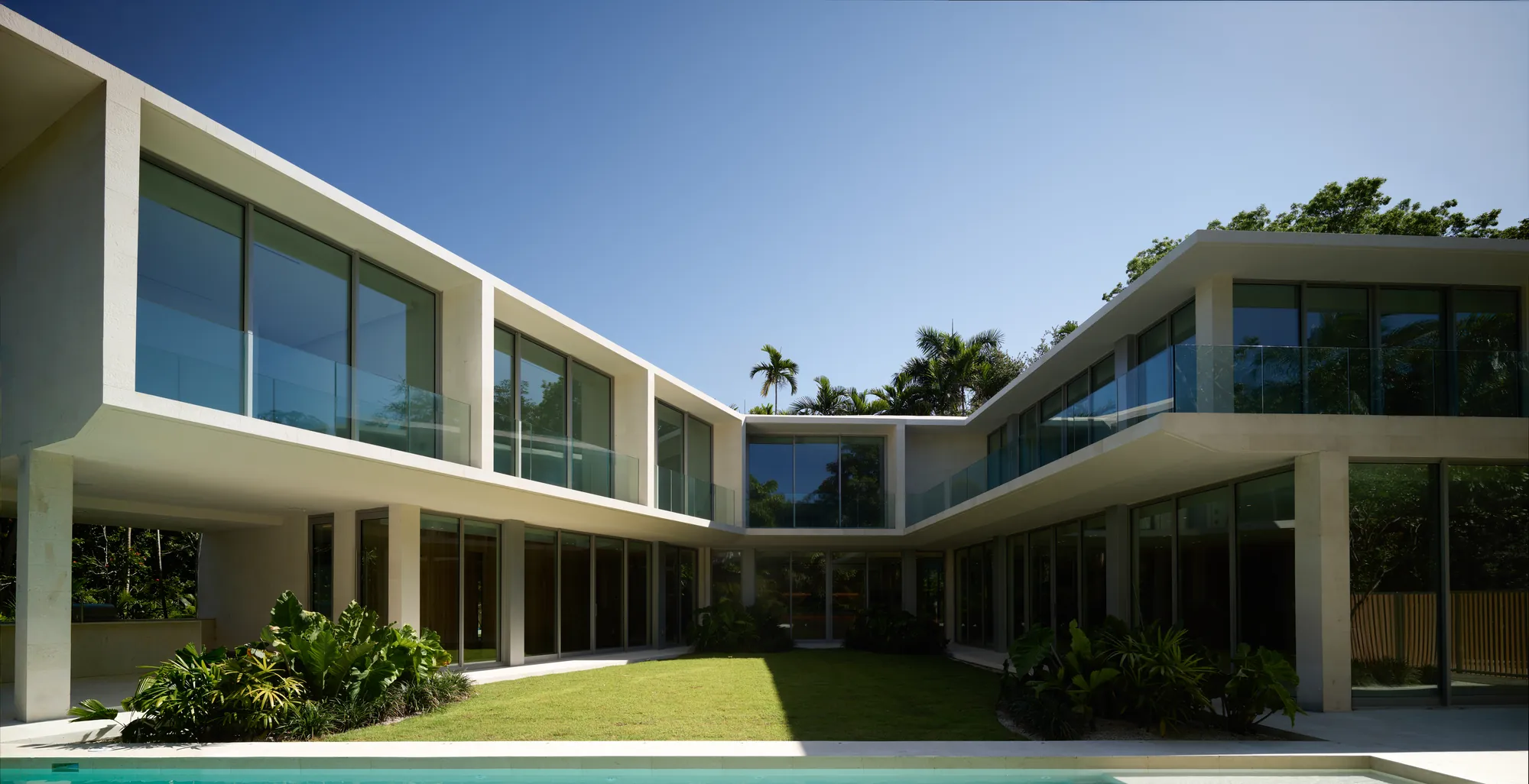
Why Luxom centers the courtyard in a floor plan instead of the back: a centered void gives every room its own light and view, keeps hallways bright, and creates privacy from the plan itself, not from taller walls.