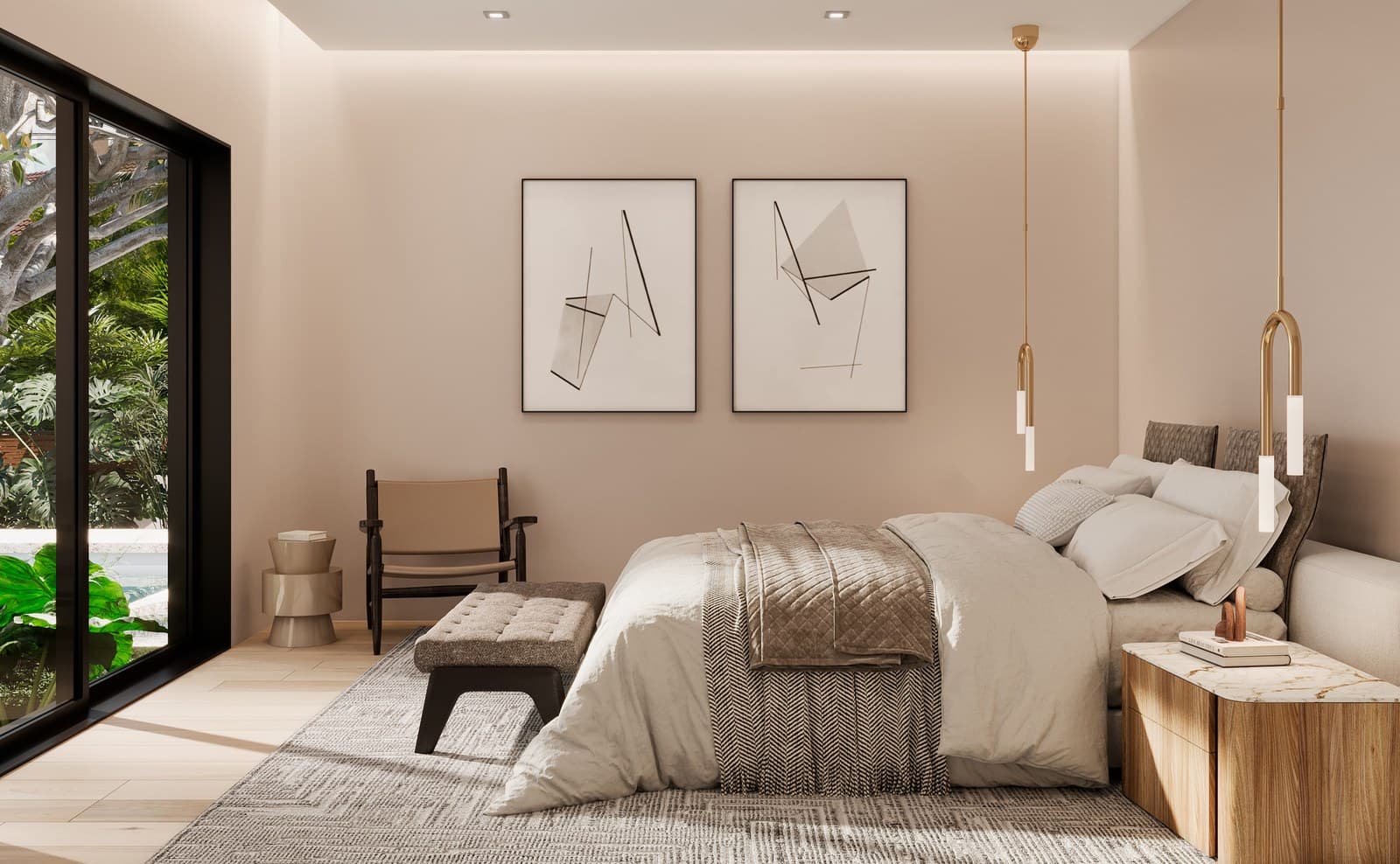
Quiet luxury: the anti-trend that lasts
The design language that reads as expensive without announcing it. What quiet luxury is, the materials that carry it, and how to build a home that ages into value instead of out of it.
Luxom Studio · LUXOM Developments
· 4 min read · Last reviewed
Key takeaways
- Quiet luxury is defined by restraint: natural materials, precise craft, and no logos or trend signals. It reads as expensive because it is built well, not because it announces itself.
- The value lives in materials that age well. Stone, solid wood, lime plaster and unlacquered metal gain character over time instead of dating.
- A quiet luxury interior is planned around light, proportion and negative space, not around statement pieces or color.
- Because it avoids trends, a quiet luxury home holds its appeal and its resale value far longer than a styled, of-the-moment interior.
- Restraint is the hardest brief to execute. Fewer elements means every surface, joint and transition has to be right.
Editor's note
Quiet luxury has become a phrase people use and rarely define. Stripped of the marketing, it describes something specific: a home that reads as expensive without a single element trying to prove it. No logos, no spectacle, no color chasing a season. Just material, proportion and light, arranged with enough discipline that the room feels calm the moment you walk in.
It is the opposite of the styled interior built for a photograph. Where that room shouts, this one holds its voice. And because it is rooted in how a space is made rather than how it is decorated, it lasts, both as a place to live and as an asset.
Quiet luxury is a discipline, not a decor style
You cannot buy quiet luxury as a set of products. It is a way of deciding. Every choice is filtered through one question: does this need to be here, and is it the best version of itself. The result is fewer elements, each one correct. A single slab of stone instead of a shelf of objects. One considered light source instead of a grid of downlights. Walls finished by hand instead of covered in pattern.
That restraint is why the look reads as expensive. The eye registers quality it cannot quite name, because there is nothing loud to distract it. Designers like John Pawson and Axel Vervoordt have built entire practices on this idea: remove until only the essential remains, then make the essential extraordinary.
The material list is short, and it is honest
Quiet luxury runs on a small palette of natural materials that improve with age. Lime plaster on the walls, so light settles rather than glares. Solid wood underfoot, brushed and oiled. Stone used as architecture, carved into benches, basins and thresholds rather than applied as a thin skin. Unlacquered metal that develops a patina instead of resisting time. Undyed wool and linen for softness.
What unites them is honesty. None pretend to be something else, and none rely on a finish that will wear thin. Choose a material that looks better in ten years, and avoid the imitation that looks worse in three. This is the same material logic we apply across our built work, visible on the projects page.
Proportion and light do the work color used to do
Take away bold color and pattern and something has to carry the room. In quiet luxury, that job goes to proportion and light. Ceiling heights, the rhythm of openings, the width of a plaster reveal, the way a room breathes with negative space: these become the composition. Lighting is layered and low, closer to a film set than a showroom, so shadow is part of the design rather than a problem to erase.
Done well, a nearly monochrome room never feels flat. It feels deep. The warmth of the material and the movement of daylight across it give the space everything a feature wall used to provide, and none of the fatigue.
Why the quiet home holds its value
There is a practical case underneath the aesthetic one. A home built from honest materials and free of trend signals ages slowly. It does not announce the year it was finished, so it does not feel old the moment that year passes. For an owner, that means a residence that still reads as considered a decade later. For value, it means an interior that supports the price rather than dating against it.
We have written before about where the real margin in a luxury home is decided, and finish quality is a large part of it. See Where luxury developers make money for the full argument.
How to brief a quiet luxury interior
Start by subtracting. Decide what the room is for, then remove everything that does not serve it. Spend the budget on the surfaces you touch and the light you live under, not on ornament. Insist on real materials and give the craft the time it needs, because restraint is unforgiving: with fewer elements, every joint and transition has to be right.
If that sounds simple, it is the hardest brief we take. Getting a quiet room right takes more decisions than a busy one, not fewer. Our interior design service walks through how we plan it, and you can start a conversation any time through the contact page.
Pull quote
Quiet luxury is not the absence of decisions. It is the presence of a hundred quiet ones, none of them asking to be noticed.
Filed under
Questions about quiet luxury interior design
01What is quiet luxury in interior design?
Quiet luxury is an approach to interiors built on restraint rather than display. It favors natural materials, exact craftsmanship and calm, uncluttered space over logos, loud color or of-the-moment trends. The result reads as expensive because it is genuinely well made, not because it signals status. Think hand-applied plaster instead of feature wallpaper, a single block of stone instead of a gallery of accessories, and lighting you feel rather than see. The reference points are designers like Axel Vervoordt and Vincent Van Duysen, who let material and proportion carry the room. Quiet luxury is less about buying expensive things and more about making considered decisions and then leaving them alone. For a fuller reading of the materials and gestures behind it, see Trends 2026, and our interior design service explains how we execute the look end to end.
02How is quiet luxury different from minimalism?
They overlap, but they are not the same. Classic minimalism reduces a room to the essential and can read as cold, hard or austere, all white walls and empty surfaces. Quiet luxury keeps that discipline of reduction but warms it with material richness: lime plaster in oat and bone, solid oak underfoot, travertine, linen pooled at the floor. The palette is quiet, not absent. Where minimalism can feel like a statement about having less, quiet luxury feels like a room designed to be lived in for twenty years. This warmer, more tactile branch is often called warm minimalism, and we covered it in depth in Trends 2026. In practice the difference is comfort: a quiet luxury home invites you to stay, while strict minimalism can ask you to keep it perfect.
03Which materials define a quiet luxury home?
The palette is short and honest. Hand-applied lime plaster for walls, so light settles into the surface instead of bouncing off it. Solid or quartersawn wood, brushed and oiled rather than lacquered. Natural stone such as travertine and limestone, honed and vein-cut, used as architecture rather than veneer. Unlacquered brass or bronze that patinas in place. Undyed textiles in wool and linen. What these share is that they age into the home rather than out of it, gaining character over years instead of looking tired. The rule of thumb is simple: choose materials that will look better in a decade, and avoid substitutes that imitate them, since imitation shows within a few years. You can see this material logic applied across our built work on the projects page.
04Does quiet luxury cost more to build?
Often yes at the build stage, and it is usually worth it. Quiet luxury spends on the things that cannot be added later: real stone, precise joinery, considered lighting, surfaces installed to last. It saves on the things that date, such as ornament, trend furniture and disposable finishes. The cost sits in craft and material rather than in square footage or spectacle, so the budget goes further per room than a heavily decorated interior. It also protects value, because a home built from honest materials holds its appeal when a styled, of-the-moment interior would already feel old. We wrote about where that value actually comes from in Where luxury developers make money. If you want a scoped estimate for a specific home, our interior design service is the place to start.
05Will a quiet luxury interior look dated in a few years?
No, and that is the entire point. Because it avoids trend signals and relies on materials that age into character, a quiet luxury interior stays current far longer than a room built around this season's colors or shapes. None of its elements are novel in isolation: plaster, stone, brass and oak have appeared in fine interiors for a century. What keeps it from dating is the discipline to deploy them together and then resist the urge to restyle. The home reads as timeless because it was never trying to be timely. If your goal is a residence that still feels considered in fifteen years rather than one that photographs well for six months, quiet luxury is the safer brief. Talk to us through the contact page and we will walk you through how we plan for that longevity from the first sketch.
Explore the portfolio
Projects to see


Talk to the studio
If this belongs in your home, our studio will draw the plan.
Initial conversation, 30 minutes. We listen to the brief and respond with a scoped proposal within five working days. You can also read the services page for typical timelines and fees.
Written by Luxom Studio · LUXOM Developments
The design and development studio behind LUXOM residences in Coconut Grove, Miami
Keep reading
From the journal
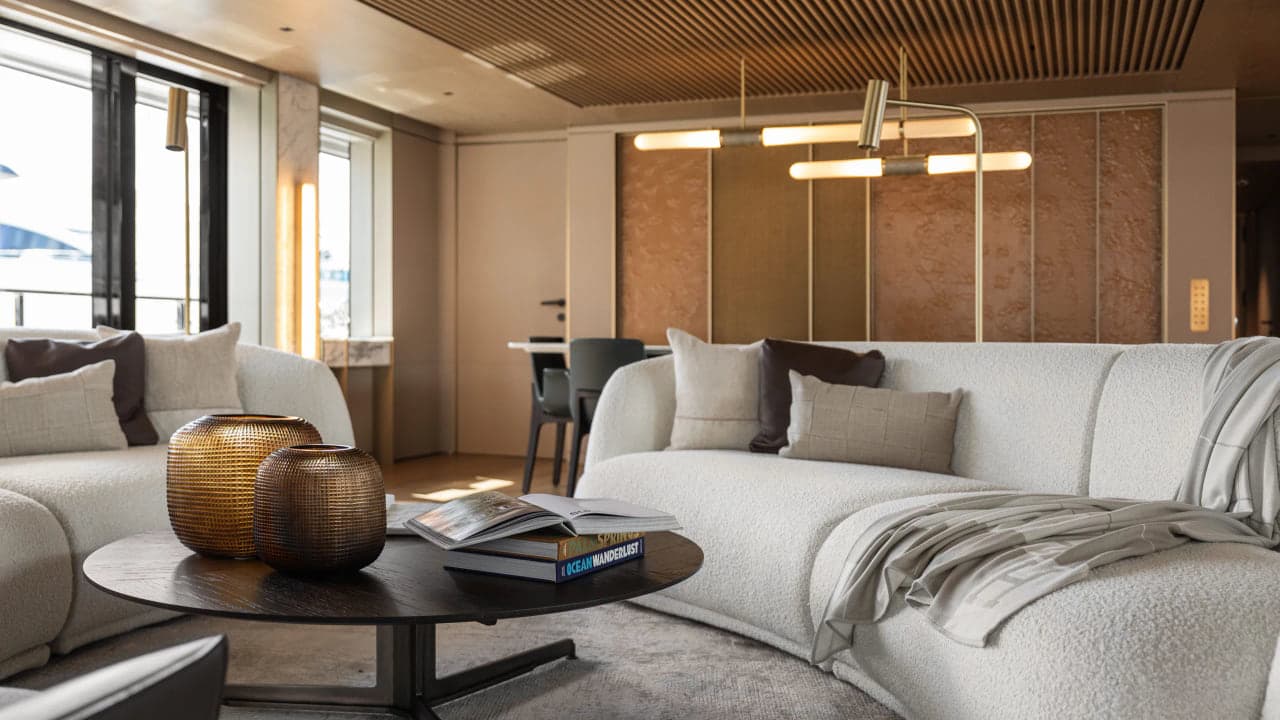
Interiors · Oct 2, 2026 · 4 min
Navy Sofa Styling Ideas: Material Before Color
Every guide hands you five or six color schemes to choose between. The decision that actually matters is the stone, wood and metal already built into the room, chosen before the sofa.
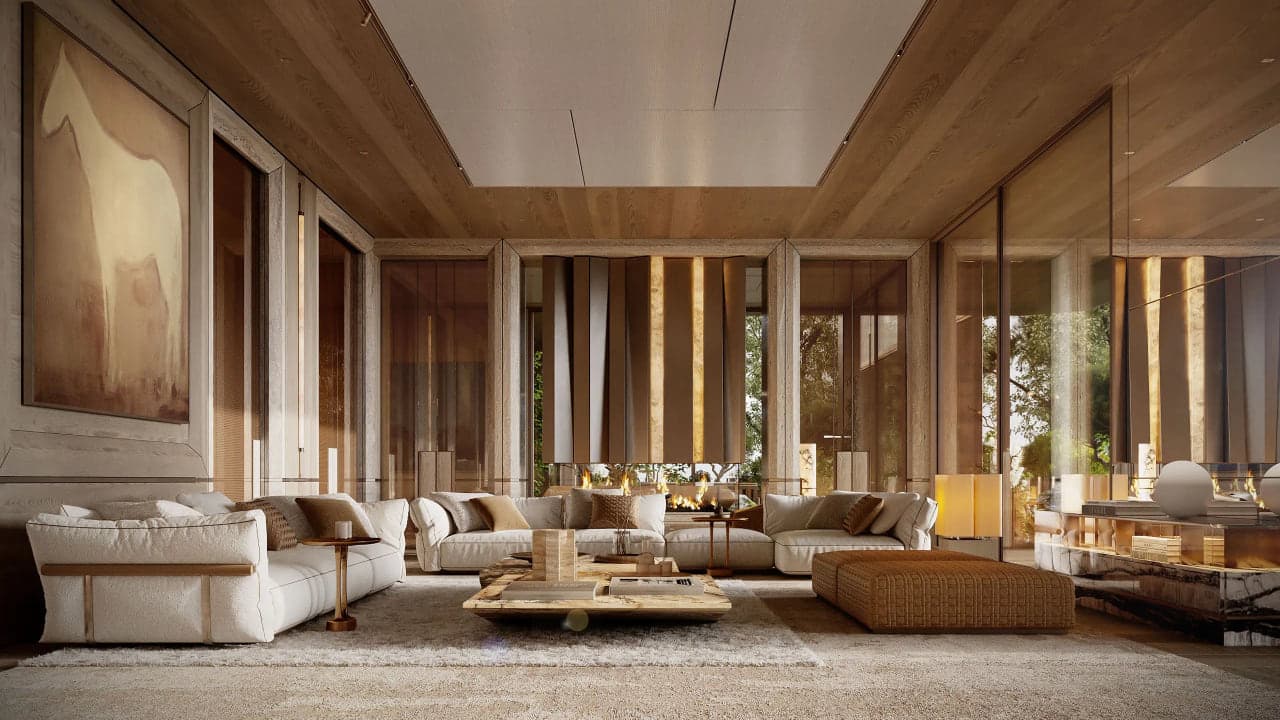
Interiors · Oct 2, 2026 · 7 min
Interior Designer Miami FL: How to Vet One Before You Hire
Miami's interior designer listings sort firms by budget, style and awards. None of them show who decides the wall, the window height or the zoning limit before a single finish gets chosen. Here is how to look past the directory.
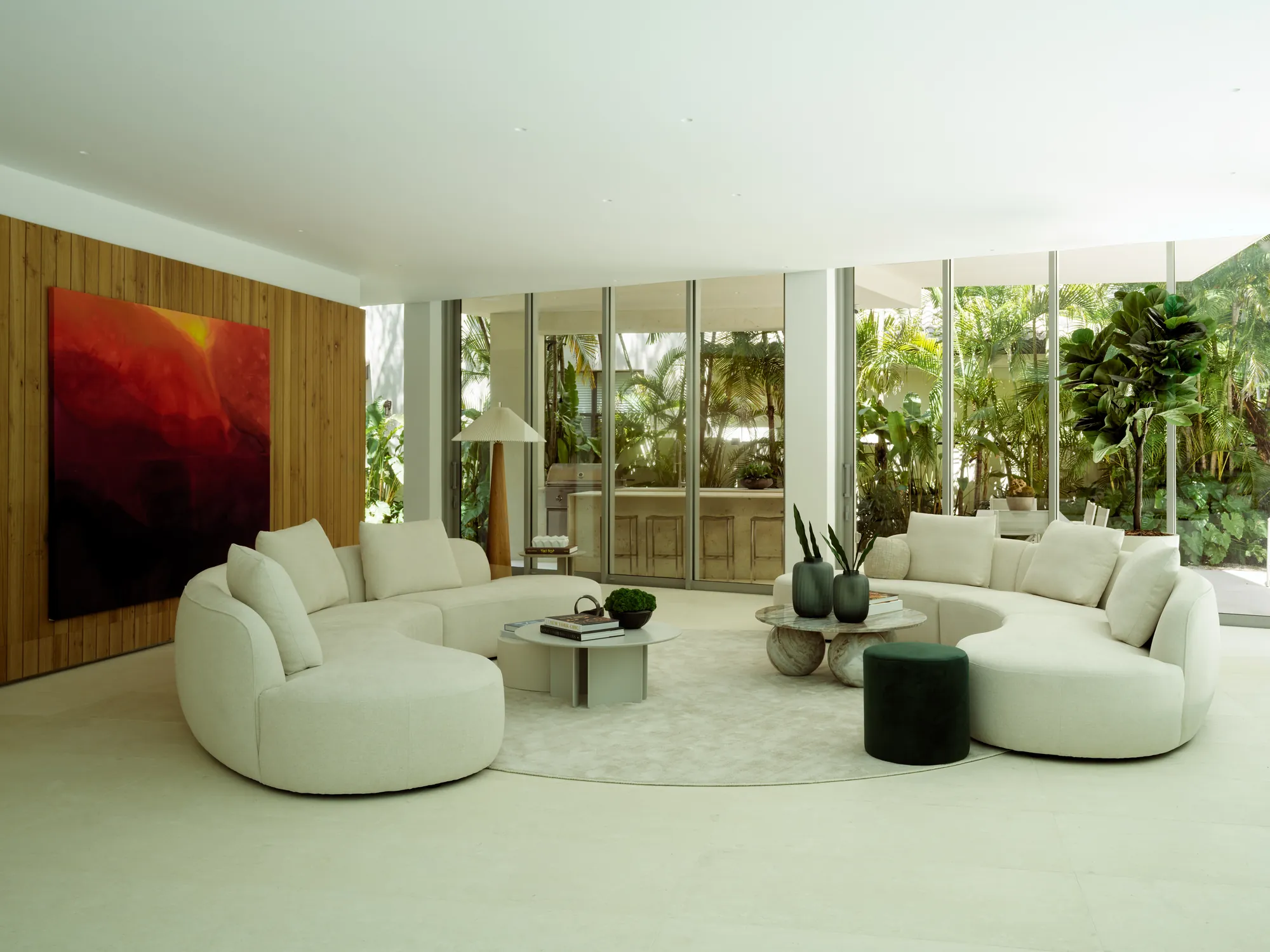
Interiors · Sep 13, 2026 · 5 min
Your rug should not match your furniture. It should talk to it.
The generic advice says find one matching thread. What that actually looks like in a finished Luxom room is a planned material conversation, not a matched fabric swatch.