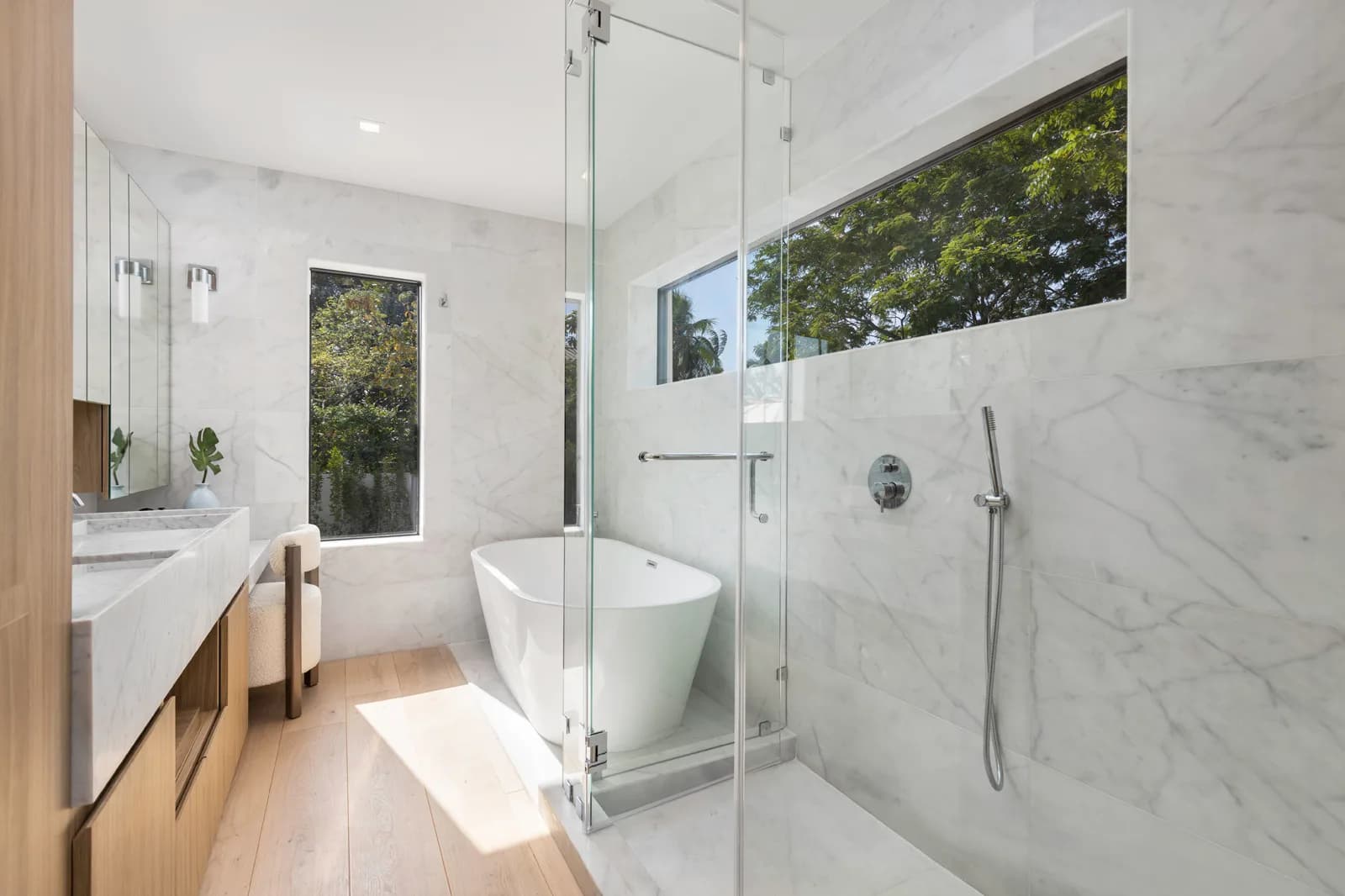
Fourteen Bathrooms, One Rule: Book-Matched Marble at Luxom
Book-matched marble only forgives a joint drawn first. How that seam gets planned, where the mirror and window sit around it, and how the discipline runs across Luxom's Coconut Grove bathrooms.
Luxom Studio · LUXOM Developments
· 6 min read · Last reviewed
Key takeaways
- Book-matching cuts sequential slabs from the same block and opens them like the pages of a book, so the veining mirrors itself at a center seam. It is a fabrication decision, not a styling filter added afterward.
- The seam has to be drawn before the slab is cut. Once the stone is cut, the joint is fixed. It cannot be nudged left or shifted on site the way a tile line can.
- That means the mirror and the window get sited on the same plan as the seam, before construction starts, not decided once the crew is already on the wall.
- Heavily veined marbles such as Calacatta, Statuario and Carrara read the most clearly across a book-matched seam, which is why they show up again and again in wet bathroom applications.
- Luxom runs this same discipline across bathrooms in its built Coconut Grove residences, the same planning logic that governs how one slab of Calacatta carries through the kitchens at Samana, Crystal and Onaway.
From the feed
The reel we posted opens on a line worth repeating: book-matched marble only forgives a joint that was drawn first. It is a short way of describing a real constraint. Fourteen bathrooms from our built projects show the same idea, slabs, mirrors and a window sited in the right place, and none of it happens by accident once the stone is already on the wall.
Book-matching turns a bathroom wall into a single mirrored composition
Book-matching is a fabrication technique, not a decorating choice made after the tile is already up. It takes two consecutive slabs cut from the same block and opens them like the pages of a book, so the veining on one slab mirrors the veining on the other across a center seam. The result, on a shower wall or a vanity backsplash, is a surface that reads as one continuous, symmetrical composition rather than two panels of stone installed next to each other. Fabricators separate this from a vein match, where the pattern simply continues in one direction across the seam, and a random match, where slabs are placed without regard for how the veining lines up at all. What book-matching means and how the seam is planned before the slab is cut is the whole subject of this piece, because the planning happens well before anything is visible on a finished wall.
The joint has to be drawn before the slab is cut, not decided on site
This is the part a finished photograph never shows. The seam position is fixed the moment the two slabs are cut and their faces polished, which means it has to be planned against the real wall dimensions, the fixture layout and any window opening before the block ever reaches the saw. There is no adjusting a book-matched joint on site the way a tile setter can shift a grout line by half an inch. Get the seam wrong and the only fix is cutting a new set of slabs. That is the discipline behind the line in our reel: the marble only forgives a joint that was drawn first, because by the time it is installed, the decision has already been made and paid for. JSC Stone's guide to marble matching techniques covers why the joint line has to be drawn before cutting, not decided on site, from the fabrication side of the same sequencing.
Where the mirror and the window get sited relative to the seam
A book-matched wall is symmetrical around its center joint, which means anything hung on that wall, a mirror, a sconce, a window opening, has to be planned on the same drawing as the seam itself. Site a window off center against a mirrored veining pattern and it reads as an interruption rather than part of the composition. Site it deliberately, aligned to the seam or balanced against it, and the window becomes part of the wall's geometry instead of a hole cut into a finished surface. The same logic applies to a mirror mounted above a book-matched vanity backsplash: it has to be centered against the joint, not against the sink, or the two symmetries fight each other. None of this is a detail a contractor solves in the field. It gets drawn once, at the same stage as the stone. Where mirrors and windows sit relative to the bookmatch seam is decided on that same plan, not improvised once the crew is already on the wall.
Not every marble book-matches well in a wet bathroom
Book-matching depends on veining strong enough to read clearly once it is mirrored, which rules out quieter, more uniform stones. Calacatta, Statuario and Carrara are the three marbles that book-match most convincingly, each with a whiter ground and bold, defined veining that carries through a mirrored seam without going flat. Calacatta in particular reads the boldest of the three, with warmer, gold toned veining against a whiter background, which is why it shows up repeatedly across both kitchens and bathrooms in our built projects. A softer, more porous stone still needs the same wet area precautions any natural marble does in a bathroom, sealed and specified with a finish that tolerates moisture, but the book-matching decision itself lives entirely in how strong and legible the veining is before a single slab is cut. Stone Group's guide to vein matching covers which marbles book-match best in a wet bathroom application (Calacatta, Statuario, Carrara) and why a quieter stone does not deliver the same mirrored effect.
The same discipline runs across Luxom's Coconut Grove bathrooms
How Luxom applies the same discipline across 14 bathrooms in its Coconut Grove portfolio is the clearest proof this is a standard, not a one-room showcase. Fourteen bathrooms from our built projects carry this same planning logic, not as a rule applied to one hero room but as a standard that runs through the portfolio. At the Samana Residence, a 3,227 square foot, single storey home at 70 Samana Dr completed in 2022, book-matched marble appears in the primary bathroom alongside the same Calacatta language that anchors the kitchen island. At the Crystal Residence, a 3,647 square foot house at 3560 Crystal View Ct, the same stone specified in design carries the same way through the kitchen and three separate bathrooms, continuity across every wet room rather than a single showcase surface. Onaway, an 8 bedroom, 8.5 bathroom estate completed in 2024, and Ingraham, an 8,197 square foot, 8 bedroom home with its own wellness layer, both apply the identical logic at a larger scale: more bathrooms asking the same seam discipline to hold consistently, not fewer rules because there is more house to cover. It is the same idea documented in one slab, three kitchens: the material and the planning discipline stay constant, while the room around it changes.
What book-matched marble actually costs, and where it belongs
Book-matching costs more than a standard slab install, typically on the order of a 30 percent premium, because it uses two consecutive slabs from the same block rather than whatever slabs fit most efficiently, and it takes longer on the fabrication floor to sequence, cut and polish the mirrored faces correctly. That premium is easiest to justify on a bathroom's largest uninterrupted vertical surface, a shower wall, a tub surround or a full vanity backsplash, where the mirrored composition has room to read as one piece rather than being broken up by cabinetry or fixtures. It is a harder case on a small powder room wall interrupted by a door and a sconce, where the seam never gets the space to do its job. Planned early and sited against the fixtures it has to share a wall with, it is one of the few finishes that looks more considered the longer you live with it, exactly because the joint was drawn before anything else was decided. To see how this same planning discipline shapes a bathroom's full layout, not just the stone, see our guide to designing the spa bathroom at home, and for how the same marble language carries through our kitchens, see our marble countertops guide and our guide to choosing stone. To talk through what this looks like on your own project, get in touch.
Pull quote
Book-matched marble only forgives a joint that was drawn first.
Filed under
Questions about book-matched marble in a bathroom
01What does book-matched marble mean in a bathroom?
Book-matching takes two consecutive slabs cut from the same block and opens them like a book, so the veining on one slab mirrors the veining on the other across a center seam. Fabricators separate this from a vein match, where the pattern simply continues in the same direction, and a random match, where slabs are placed without regard for how the veining lines up. In a bathroom, book-matching is most often used on the shower wall or a full vanity backsplash, where the mirrored pattern reads as one continuous, symmetrical surface rather than two panels of stone installed side by side. For the fuller comparison of marble types and where each one belongs, see our marble countertops guide.
02How is a book-matched marble joint planned before the slab is cut?
The seam gets drawn on paper, against the actual wall dimensions, fixture locations and window openings, before the block is ever sent to the saw. JSC Stone's guide to marble matching techniques walks through why this sequencing runs in that order on the fabrication side: once consecutive slabs are cut and polished on their mirrored faces, the joint position, and everything that has to align around it, is locked in. There is no correcting a seam after the stone is cut the way a tile setter can shift a grout line by half an inch. Luxom applies the same up front planning across its kitchens, documented in one slab, three kitchens, where the veining is composed as one layout before a single piece of stone is cut.
03Which marbles book-match best in a bathroom?
Marbles with strong, well defined veining book-match most convincingly, because the mirrored pattern needs enough contrast to read clearly across the seam. Calacatta, Statuario and Carrara are the three that come up most often in wet bathroom applications, each with a whiter ground and bold veining that carries through a book-matched joint without going flat or muddy. Stone Group's guide to vein matching covers why a quieter, more uniform stone does not deliver the same effect, the mirrored symmetry depends on veining strong enough to notice. Our guide to choosing stone covers how these marbles compare to quartzite and travertine outside the shower wall specifically.
04Where does book-matched marble get used in a bathroom besides the shower wall?
The shower wall is the most common application because it is the largest uninterrupted vertical surface in most bathrooms, but the same technique shows up on vanity backsplashes, tub surrounds and, less often, a feature wall behind a freestanding tub. Wherever it is used, the mirror and any window opening have to be sited on the same plan as the seam, since a mirror placed off center against a book-matched wall breaks the symmetry the joint was cut to create. Our guide to designing the spa bathroom at home covers how a bathroom's fixture layout gets planned as a whole before any single material decision, book-matched stone included.
05Does book-matched marble cost more than a standard slab install?
Yes. Book-matching uses two consecutive slabs from the same block to build one wall, rather than fitting whatever slabs are available most efficiently, and it takes more time on the fabrication floor to sequence, cut and polish the mirrored faces correctly. Marmorique's guide to bookmatched marble puts the premium at roughly 30 percent over a standard slab install. Luxom treats that premium as a planning decision made at the design stage, not an upgrade added after the fact, which is part of why the seam has to be drawn before construction starts rather than priced in as an afterthought.
Explore the portfolio
Projects to see


Talk to the studio
If this belongs in your home, our studio will draw the plan.
Initial conversation, 30 minutes. We listen to the brief and respond with a scoped proposal within five working days. You can also read the services page for typical timelines and fees.
Written by Luxom Studio · LUXOM Developments
The design and development studio behind LUXOM residences in Coconut Grove, Miami
Keep reading
From the journal
Materials · Aug 6, 2026 · 7 min
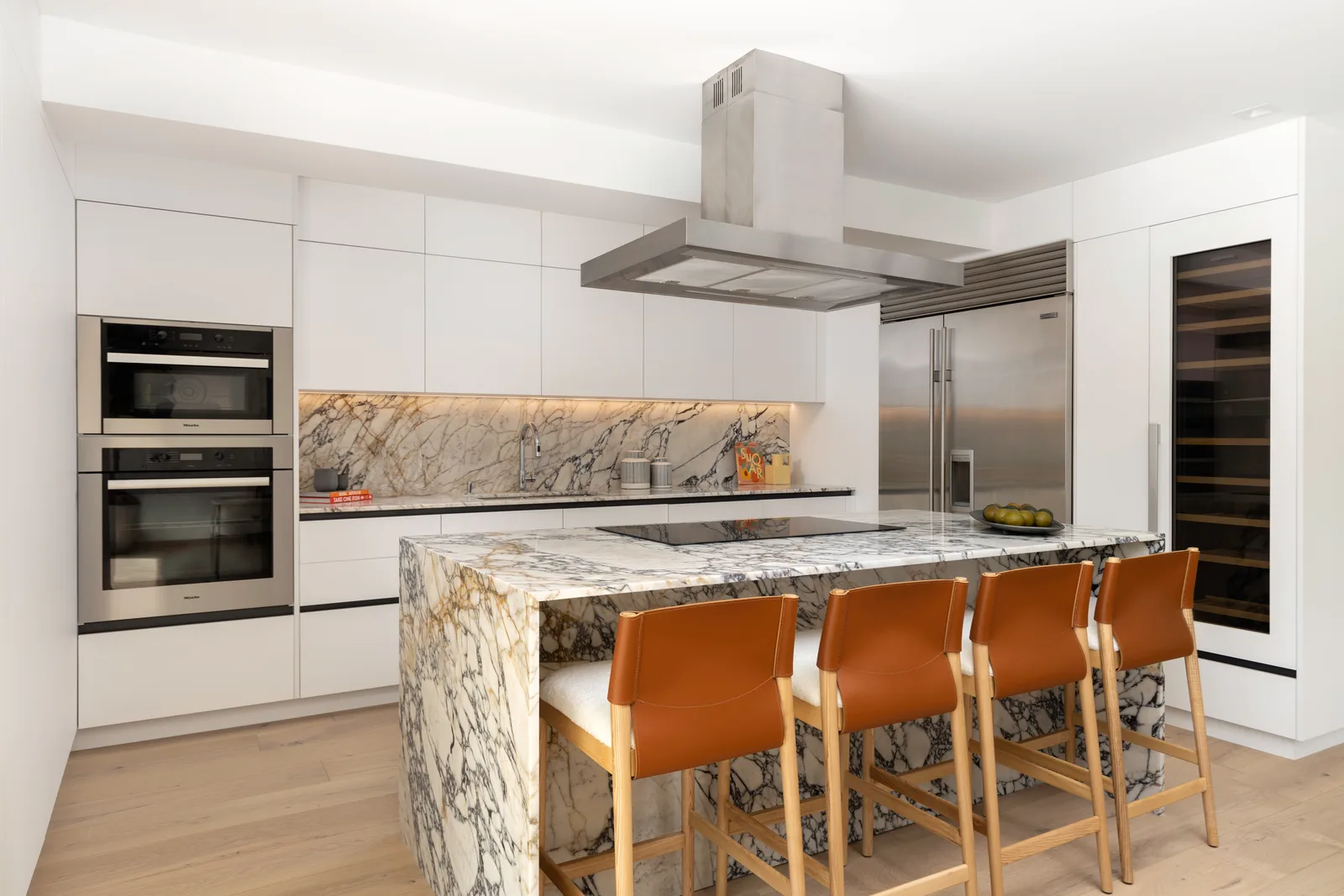
One Slab, Three Kitchens: The Same Marble at Samana, Crystal and Onaway
How one Calacatta marble language runs through three different Luxom kitchens: a single waterfall island at Samana, a full counter to backsplash run at Crystal, and the same stone at a much larger scale at Onaway.
Materials · Jul 22, 2026 · 4 min
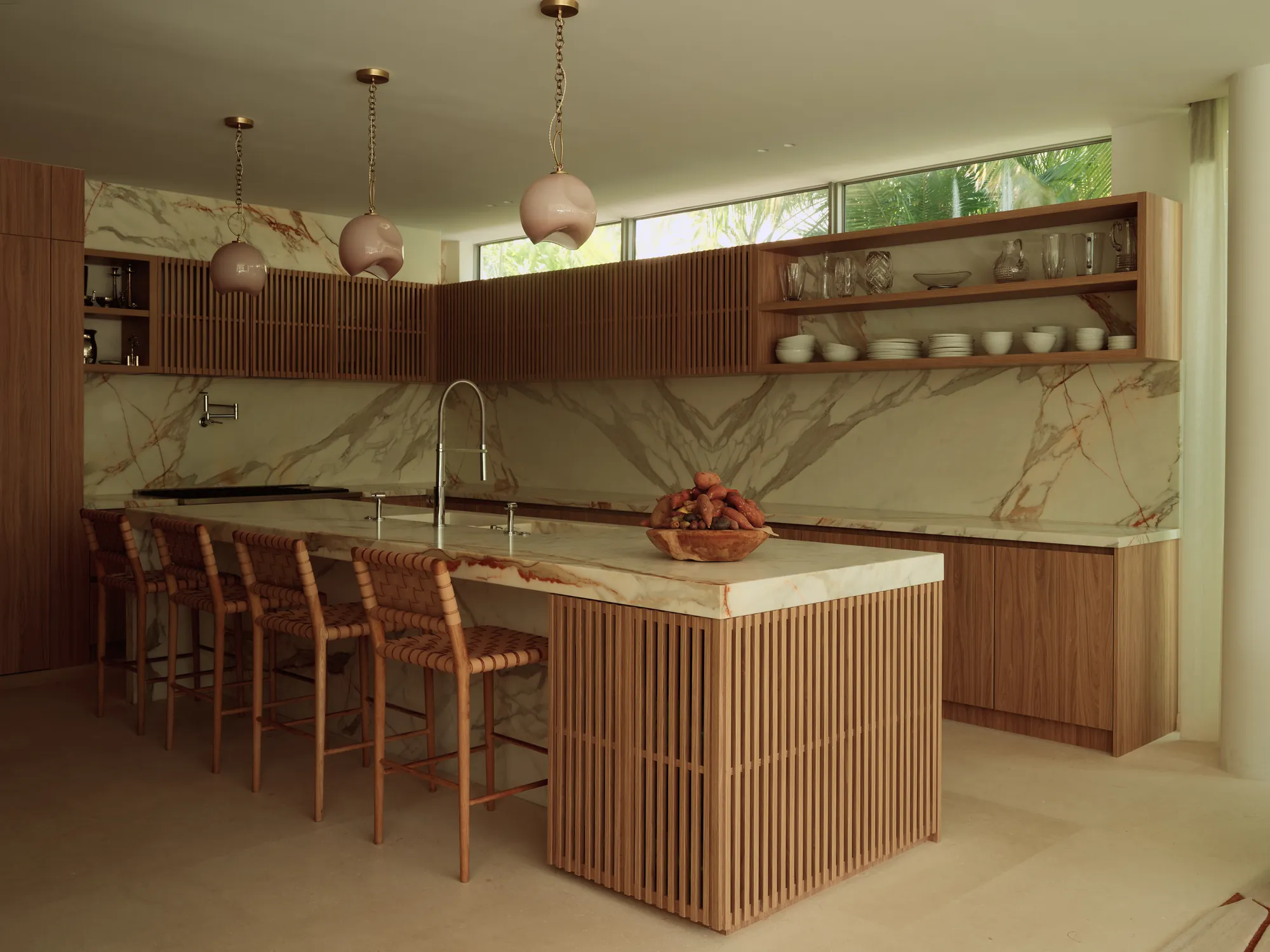
Marble countertops: types, care, and where they belong
A clear guide to marble countertops: the main types, what the stone will and will not tolerate, and the rooms where marble earns its place rather than becoming a maintenance problem.
Interiors · Jul 28, 2026 · 4 min
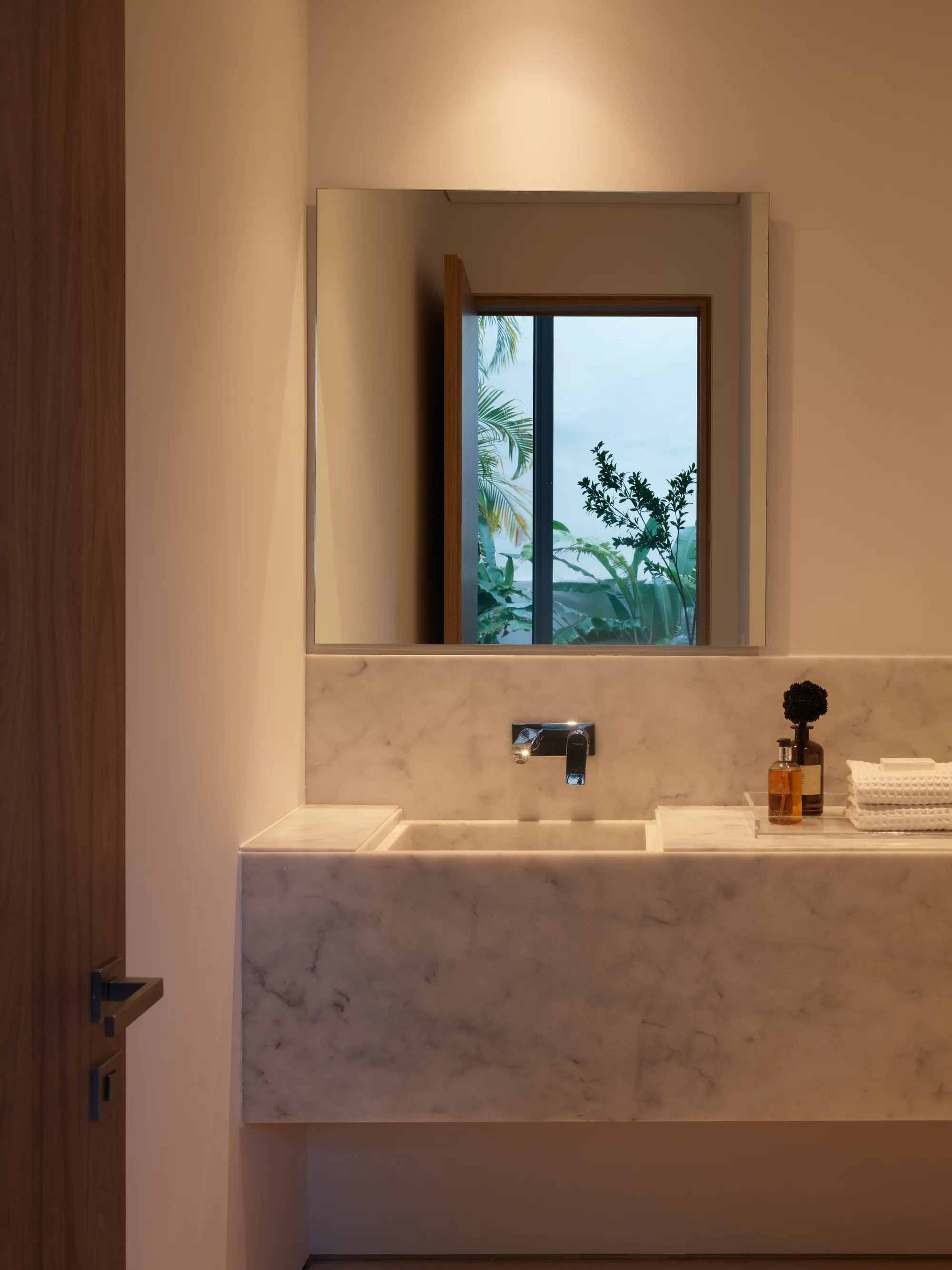
Designing the spa bathroom at home
The spa bathroom is made from a short list of decisions: warm materials, layered light, and a layout that gives the room room. How to design one that actually calms.