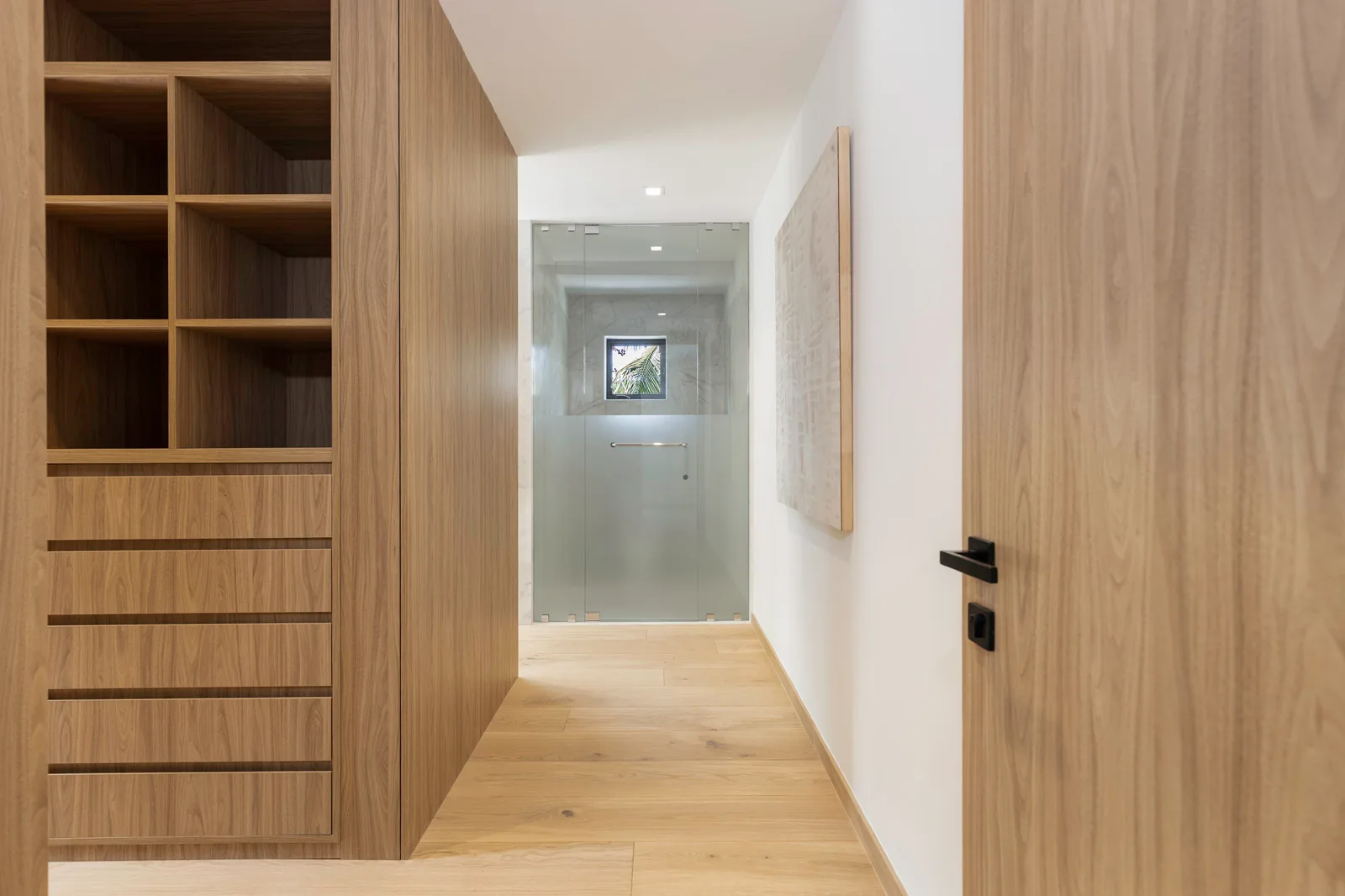
One Timber, Fourteen Rooms: White Oak and Walnut Joinery
Why timber is the one finish that improves with use, and how a single white oak and walnut joinery program runs through closets, panelling, doors and ceilings in one Luxom home.
Luxom Studio · LUXOM Developments
· 5 min read · Last reviewed
Key takeaways
- Timber is one of the few interior finishes that improves with use. Stone stays inert and paint wears flat, but wood takes on patina, its surface deepening in tone and character the longer a room is lived in.
- Luxom treats timber as one material decision for a whole home, not a room by room purchase. A single white oak and walnut program runs through closets, panelling, doors and ceilings, built by the same team responsible for the rest of the house.
- White oak reads calm, light and consistent, a dense, tight grained hardwood long used in cabinetry for its durability. Walnut reads warmer and richer, prized for its dark heartwood and fine, stable grain once dried and finished.
- Fourteen separate joinery runs, closets, panelling, doors and ceilings, sit inside one home when the material is planned as a single program instead of assembled piecemeal from separate cabinetry vendors chosen room by room.
- Joinery is the traditional discipline of fitting timber together with cut joints rather than nails or metal fasteners, and that same discipline is what keeps a matched white oak and walnut program looking coherent from the front door to the primary closet.
Editor's note
Most interior finishes are chosen to look finished on installation day and then, quietly, start losing ground. Timber does the opposite. A well built joinery piece in white oak or walnut looks more settled, not less, after years of daily use.
That is the premise behind treating timber as one material decision for an entire home rather than a set of separate purchases. This is why the finish improves with use, how white oak and walnut differ, and what it looks like to run one joinery program through closets, panelling, doors and ceilings instead of assembling it room by room.
Why timber improves with use instead of just wearing down
Most interior surfaces have a best day, and it is the day they are installed. Paint is at its most even before the first scuff. Laminate is flattest before the first scratch. Stone looks the same at year one and year ten, since it does not visibly change, it only eventually shows wear at its edges. Timber is different. Its oils and finish deepen in tone as hands, light and years pass over it, its grain becomes more legible, and small marks tend to read as history rather than damage.
That single property is why timber earns a different kind of planning than a finish chosen once and left alone. A joinery run that will look better in a decade is worth designing as a program, not a purchase, because the payoff compounds the longer a family lives with it.
White oak versus walnut for joinery
White oak is a dense, tight grained hardwood long valued in cabinetry, flooring and shipbuilding for its durability and resistance to moisture. In a home it reads light, calm and contemporary, and its straight, consistent grain suits large panelled walls and closet interiors that want to feel bright rather than heavy.
Walnut, American black walnut specifically, is prized in furniture and joinery for its rich, dark heartwood, fine grain and dimensional stability once properly dried and finished. It reads warmer and carries more visual weight, which is why it tends to anchor entry doors, panelled halls and ceilings in a room that wants depth rather than lightness. Matched deliberately rather than mixed at random, the two species let tone shift from room to room while the home stays inside one coherent material story. For the same species logic applied to texture rather than color, see Fluted Wood.
Pull quote
A stone counter looks the same on day one and year ten. Timber looks better on year ten, if it was planned as one material and not a dozen separate orders.
Why one team building all the joinery beats stitching it together from separate vendors
A home assembled from separate cabinetry vendors, one for the kitchen, another for closets, a third for doors, tends to show it eventually. Species drift slightly between suppliers, stain colors never match exactly, and small detailing choices reveal seams a trained eye notices even without being able to name what feels off.
Building the joinery as one program removes that drift by design. The same team plans the species, the cut of the grain and the finish schedule once, then repeats it consistently across closets, panelling, doors and ceilings. In a single Luxom home that discipline has produced fourteen separate joinery runs in matched white oak and walnut, from closet interiors through panelled halls to ceiling treatments, all built by the same team responsible for the rest of the house rather than stitched together from outside vendors. Our walk-in closet piece and kitchen fit out both show that same single team logic applied to one room at a time.
Where solid wood joinery belongs in a home: closets, panelling, doors, ceilings
Closets are where timber joinery earns its keep fastest, since drawers, doors and shelving are touched daily and a matched species reads immediately as considered rather than assembled. Panelling extends the same material into halls and living spaces as a quiet architectural backdrop rather than a feature wall. Interior doors carry the walnut or white oak decision from room to room, and ceiling treatments bring the same warmth overhead in spaces built to feel enclosed and calm.
None of these are decorative afterthoughts chosen in isolation. Each is one run inside a program that was planned as a whole before the first cut was made, which is the same logic joinery has relied on since it began fitting timber together with cut joints instead of nails or shortcuts.
Finish and maintenance for timber joinery
A matte or satin oiled finish suits both species better than a high gloss lacquer, since it lets the grain and the patina process show rather than sealing the surface under a hard reflective coat. Oiled timber can also be spot refreshed over the years, re-oiling a worn section rather than refinishing an entire run, which is part of why it ages gracefully instead of simply degrading.
Day to day care stays simple: keep sustained moisture off the surface, wipe spills promptly, and skip harsh solvent cleaners that strip the oil. Sun exposure will shift tone gradually over years, which is expected and part of the patina rather than a flaw. Planned this way, a joinery program behaves like a long term material investment rather than a finish on a replacement cycle, the same discipline that runs through the rest of the journal and through our services.
Further reading and sources
For background on the species behind this program: Oak, Juglans nigra, American black walnut, and the discipline of Joinery itself.
Related reading on the Luxom journal: Fluted Wood, the walk-in closet as architecture, and a Coconut Grove kitchen fit out.
Pull quote
A stone counter looks the same on day one and year ten. Timber looks better on year ten, if it was planned as one material and not a dozen separate orders.
Filed under
Questions about timber joinery white oak walnut
01Why does timber improve with use instead of just wearing down?
Timber ages through patina rather than damage. As hands, light and years pass over a wood surface, its oils and finish deepen in tone, its grain becomes more legible, and small marks read as history rather than flaw. That is different from most interior finishes. Paint fades and needs recoating, laminate scratches and cannot be repaired, and stone stays visually inert from the day it is installed to the day it is replaced. Timber is a living material even after it is cut and finished, which is why a well built joinery piece in white oak or walnut tends to look more settled and more expensive after a decade than it did on installation day. The trade off is that timber asks for a stable, planned finish rather than a decorative afterthought, which is what a coordinated joinery program is built to deliver. See how the same species logic plays out in Fluted Wood.
02Where does solid timber joinery belong in a home?
Timber joinery belongs wherever hands and eyes meet the house every day: closet interiors and fronts, wall panelling in halls and living spaces, interior doors, and ceiling treatments in rooms that want warmth overhead. These are the surfaces a household actually touches, opens and looks up at, so the material reward is highest there. It is a different logic from spot treatments. Rather than one feature wall or one custom door chosen in isolation, a full joinery program plans the same species and the same detailing across every one of those runs in a home, so a closet reads as part of the same material decision as the entry door and the hallway panelling. Our walk-in closet piece covers how that same joinery logic shapes a single room.
03What is the difference between white oak and walnut for joinery?
White oak is a dense, tight grained hardwood long valued in cabinetry, flooring and shipbuilding for its durability and resistance to moisture. In a home it reads light, calm and contemporary, with a straight, consistent grain that suits large panelled surfaces and closet interiors that need to feel bright rather than heavy. Walnut, American black walnut specifically, is prized in furniture and joinery for its rich, dark heartwood, fine grain and dimensional stability once it has been properly dried and finished. It reads warmer and carries more visual weight, so it tends to anchor entry doors, panelled walls and ceilings where a room wants depth rather than lightness. Used together and matched deliberately rather than mixed at random, the two species let a home shift in tone from room to room while staying inside one coherent material story.
04Why build one joinery program instead of separate cabinetry vendors per room?
A home assembled from separate cabinetry vendors, one for the kitchen, another for closets, a third for doors, tends to show it. Species drift slightly between orders, stain colors never match exactly across suppliers, and detailing choices like edge profiles or hardware reveal seams that a single trained eye notices even if a homeowner cannot name what feels off. Building the joinery as one program, with the same team responsible for the closets, the panelling, the doors and the ceilings, removes that drift by design. The species selection, the cut of the grain and the finish schedule are decided once and repeated consistently, the same discipline joinery has always relied on to fit timber together without shortcuts. That consistency is also what lets a home read as considered rather than accumulated, which is the difference between a house that was decorated and one that was designed. Our kitchen fit out shows the same single team approach applied to a full room.
05How should timber joinery be finished and maintained?
A matte or satin oiled finish suits both white oak and walnut joinery better than a high gloss lacquer, because it lets the grain and the patina process show rather than sealing the surface under a hard reflective coat. Oiled timber can also be spot refreshed over the years, re-oiling a worn section rather than refinishing an entire run, which is part of why it ages gracefully instead of simply degrading. Day to day care is straightforward: keep direct, sustained moisture off the surface, wipe spills promptly, and avoid harsh solvent cleaners that strip the oil. Direct sun exposure will shift tone gradually over years, which is expected and part of the patina rather than a defect. Planned this way, a joinery program is closer to a long term material investment than a finish that needs replacing on a fixed cycle.
Explore the portfolio
Projects to see


Talk to the studio
If this belongs in your home, our studio will draw the plan.
Initial conversation, 30 minutes. We listen to the brief and respond with a scoped proposal within five working days. You can also read the services page for typical timelines and fees.
Written by Luxom Studio · LUXOM Developments
The design and development studio behind LUXOM residences in Coconut Grove, Miami
Keep reading
From the journal
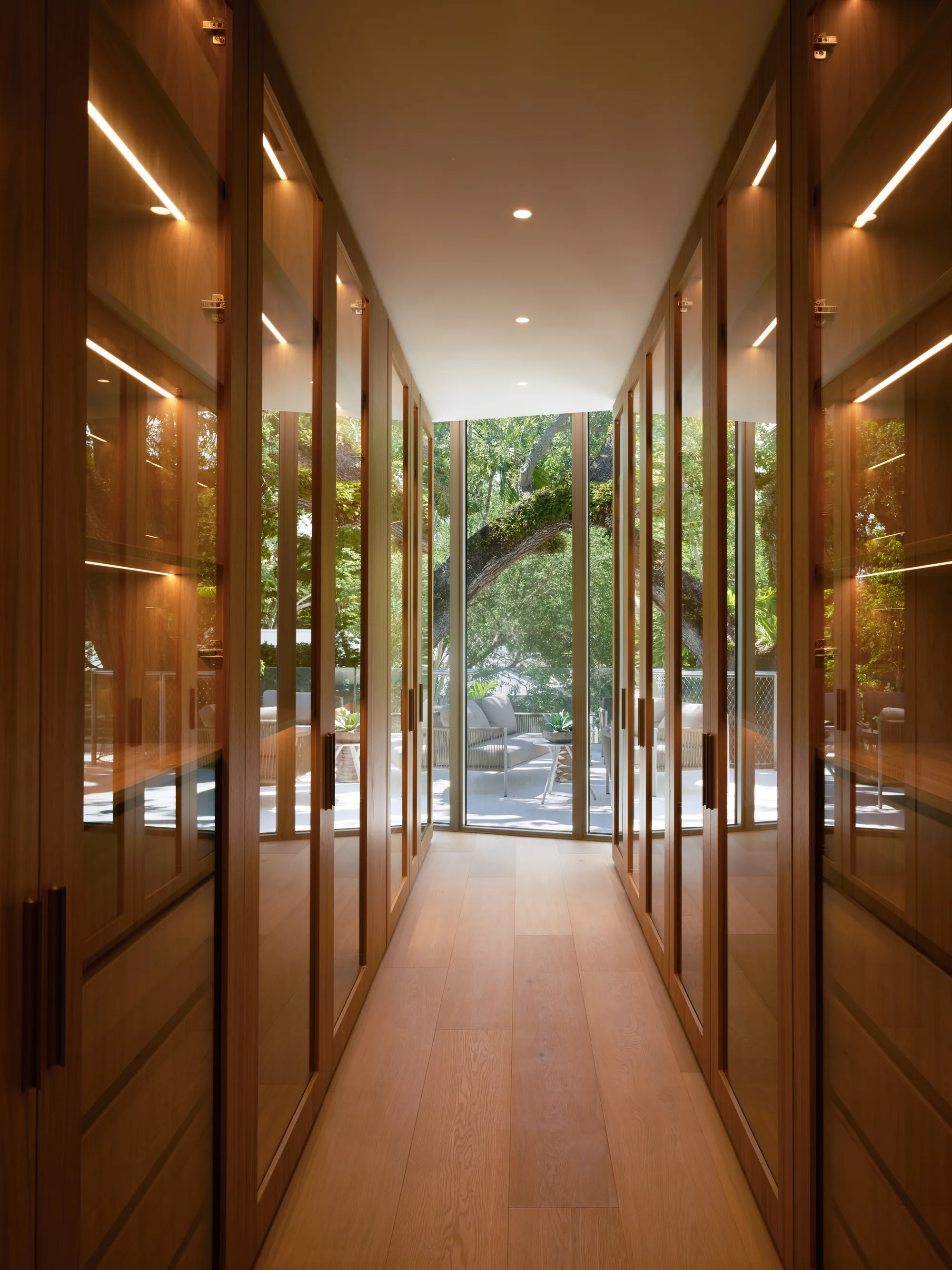
Materials · Jul 25, 2026 · 4 min
Fluted wood: texture as architectural detail
How fluted wood panels turn a flat surface into an architectural detail. Where to use them, which species and finishes work, and how to keep the effect quiet rather than busy.
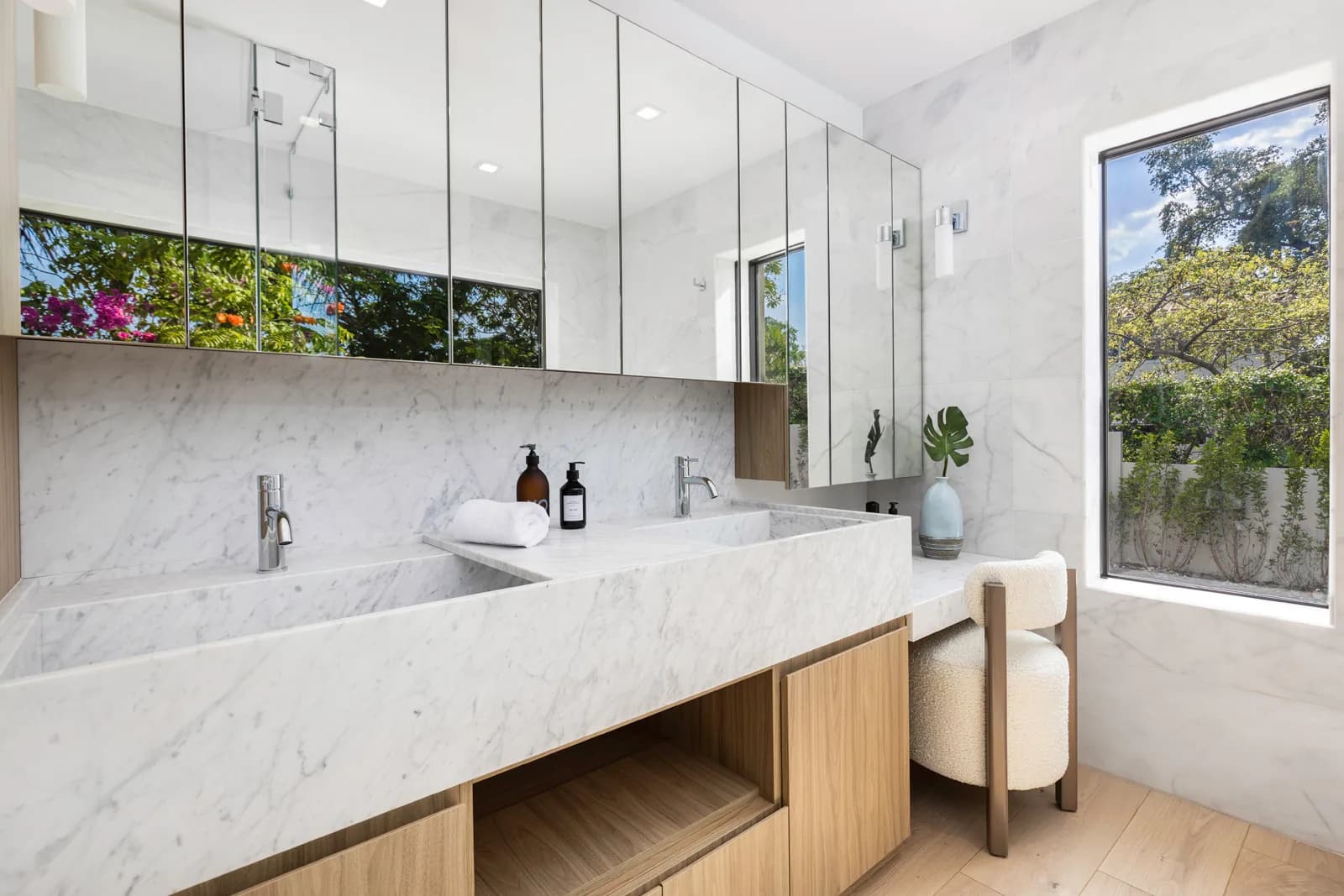
Interiors · Jul 19, 2026 · 4 min
The dressing room: walk-in closets as architecture
How to design a walk-in closet that reads as a room, not storage. Layout, proportion, materials and lighting that turn a closet into a dressing room.
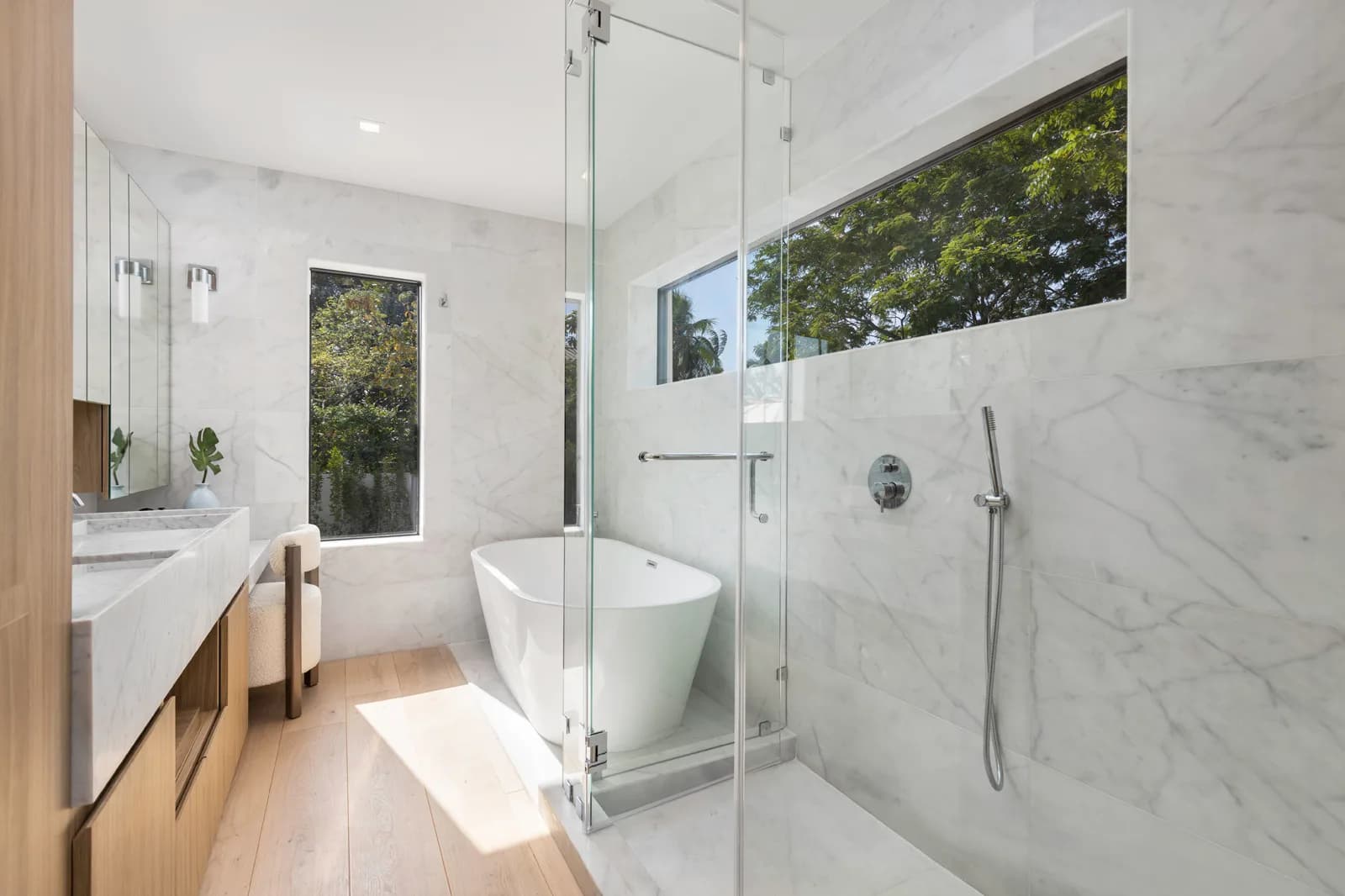
Materials · Aug 30, 2026 · 6 min
Fourteen Bathrooms, One Rule: Book-Matched Marble at Luxom
Book-matched marble only forgives a joint drawn first. How that seam gets planned, where the mirror and window sit around it, and how the discipline runs across Luxom's Coconut Grove bathrooms.