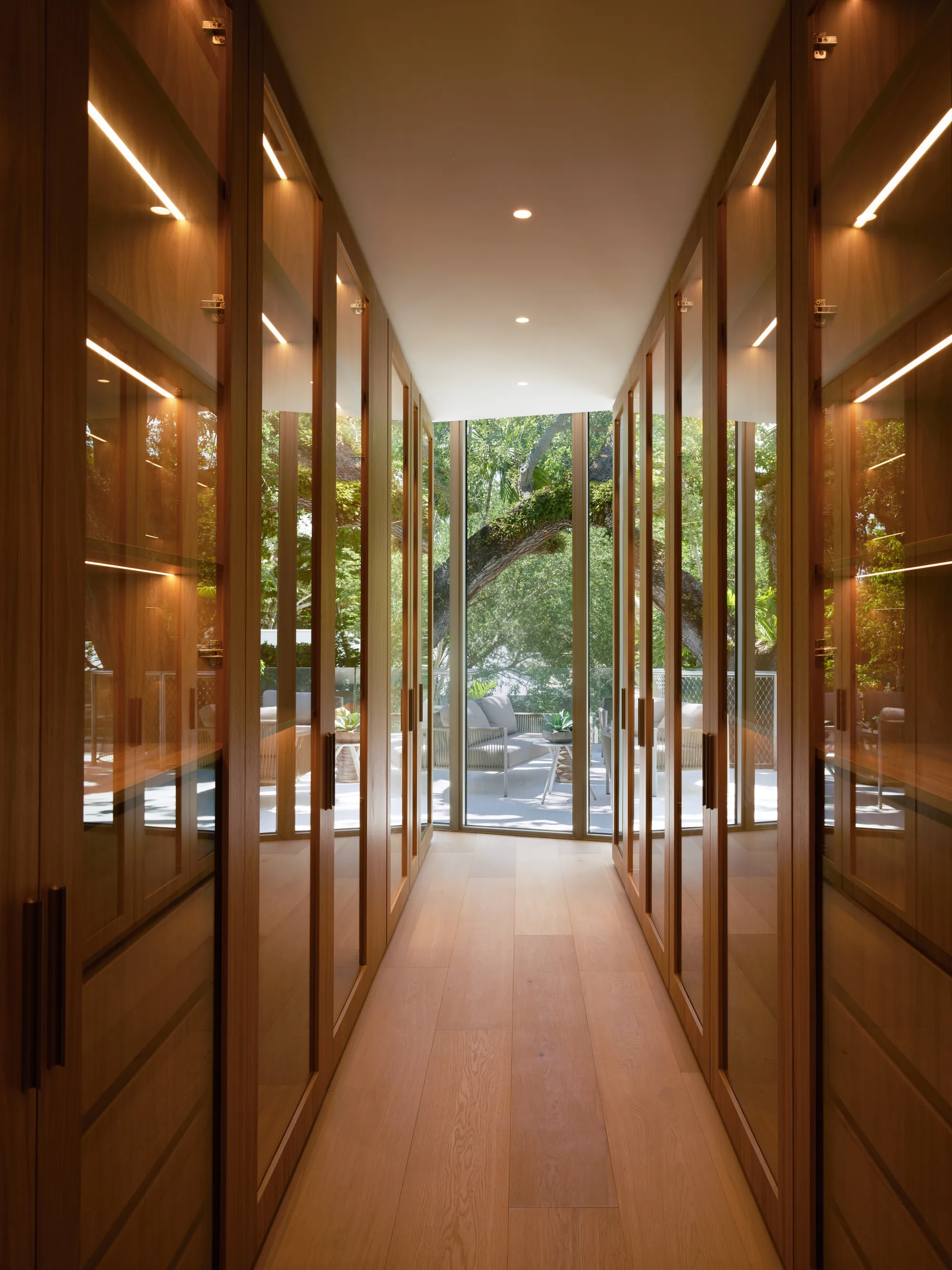
Fluted wood: texture as architectural detail
How fluted wood panels turn a flat surface into an architectural detail. Where to use them, which species and finishes work, and how to keep the effect quiet rather than busy.
Luxom Studio · LUXOM Developments
· 3 min read · Last reviewed
Key takeaways
- Fluted wood panels are surfaces machined with parallel vertical ribs. The relief catches light and shadow, turning a flat plane into an architectural detail without adding color or pattern.
- The effect works because it is tonal, not decorative. A fluted wall reads as texture and rhythm, so it adds depth to a quiet interior without competing with it.
- Species and finish set the mood. White oak reads calm and contemporary, walnut reads warm and rich, and a matte oiled finish suits the texture better than a high gloss.
- Fluted wood belongs on features, not everywhere: a feature wall, a kitchen island, joinery fronts, a reception desk or a headboard. Used on every surface it stops being a detail.
- Orientation and light matter. Vertical flutes lift a room and catch raking daylight best, so the panels look most alive where light crosses them at an angle.
Editor's note
Fluted wood has become one of the most recognizable details in contemporary interiors, and one of the most overused. Stripped of the trend cycle, it does something genuinely useful: it adds depth to a surface using nothing but light and shadow, no color, no pattern, no ornament.
That makes it a natural fit for the quiet, material-led interiors we build, but only when it is treated as an architectural detail rather than a finish to spread everywhere. This is where fluted wood works, which species and finishes carry it, and how to keep the effect quiet.
What fluting does, and why it works
A fluted panel is a wood surface machined with parallel rounded ribs and grooves, usually run vertically. The name comes from classical architecture, where fluting described the channels carved into a column, and the interior version applies the same idea to a flat plane. Its entire purpose is light: as daylight or lamplight crosses the ribbed surface, each rib takes a highlight and each groove holds a shadow.
That is why fluted wood adds richness without adding color. The interest is tonal, made of relief and shadow rather than pattern, so it deepens a quiet room instead of competing with it. It reads as texture and rhythm, which is exactly what a flat, calm interior usually lacks.
Where it belongs
Fluted wood is a feature, not a field, and the single most important decision is restraint. It rewards being placed on one considered surface: a feature wall behind a bed or sofa, the face of a kitchen island, cabinet and joinery fronts, a reception or bar front, a headboard. On any of these it turns a plain plane into an architectural event.
Cover every wall in it and the effect cancels itself, turning refined into relentless. The discipline is to let a fluted surface be the quiet event in an otherwise plain room, with calm planes around it giving the eye somewhere to rest. Plaster and stone make good, equally restrained companions.
Species and finish
Species sets the mood. White oak is the most versatile, reading light, calm and contemporary, with a straight grain that suits the vertical rhythm of fluting. Walnut reads warmer and richer for a room that wants depth. Ash and maple stay pale and quiet, while darker stains add drama at the cost of hiding the grain that makes wood worth using.
Finish protects the effect. A matte or satin oiled surface suits fluted wood far better than gloss, because a high shine throws hard reflections that fight the soft play of light and shadow the profile exists to create. Let the relief do the work, and keep the finish quiet enough that it can.
Pull quote
The finish should disappear so the shadow can speak. Gloss on fluted wood is a microphone held too close.
Orientation and light
Fluting and lighting are one decision, not two. Vertical flutes lift a room and read as taller, and they catch raking daylight from a window most effectively, coming alive as light crosses them at an angle. Horizontal flutes widen and calm a surface, useful on a long low element, though the grooves collect a little more dust.
Either way, a fluted surface lit flat and straight on loses most of its depth, while the same surface lit from the side reveals its full relief. Plan the panel and the light that grazes it together, and the detail does what it is meant to do.
Keeping it quiet
Fluted wood earns its place when it is one deliberate gesture in a material palette that already has restraint. Real wood, a quiet finish, a single well-chosen surface, and light planned to graze it: that combination reads as timeless joinery rather than a passing motif. Spread thin across a novelty material or a loud stain, it dates like anything overused.
That longer view of materials, choosing the ones that add depth without shouting, runs through the whole journal. For how fluted wood sits alongside the other surfaces defining current interiors, see Trends 2026, and our services show how we specify it in built work.
Pull quote
Fluted wood adds nothing but shadow, and shadow is exactly what a flat, quiet room is usually missing.
Filed under
Questions about fluted wood panels
01What are fluted wood panels?
Fluted wood panels are wall or joinery surfaces machined with a series of parallel, usually vertical, rounded grooves and ribs. The name comes from classical architecture, where fluting described the vertical channels carved into a column, and the modern interior version applies the same idea to a flat plane. The point of the detail is light. As daylight or lamplight crosses the ribbed surface, each rib catches highlight and each groove holds shadow, so the panel reads with depth and rhythm rather than as a flat board. That is why fluted wood adds richness to a room without adding any color or pattern: the interest is entirely in relief and shadow. Panels come as solid timber, as veneered profiles over an engineered core, or as slatted battens fixed to a backing, each with different cost and application. For where the detail sits in current interiors, see Trends 2026.
02Where should you use fluted wood in a home?
Use fluted wood as a feature, not a field. It works best on a single considered surface where its texture can register: a feature wall behind a bed or sofa, the face of a kitchen island, joinery and cabinet fronts, a reception or bar front, a headboard, or the base of an island. In each case the fluting turns an otherwise plain surface into an architectural detail. The mistake is overuse. Wrap every wall in fluted panels and the effect cancels itself, becoming busy and relentless rather than refined. The discipline is to let a fluted surface be the quiet event in a calm room, surrounded by plainer planes that give the eye somewhere to rest. It also pairs well with soft, tactile companions such as plaster and stone, which share its restraint. Our projects show fluted joinery used as a single deliberate gesture rather than a blanket treatment.
03Which wood species and finishes work best for fluted panels?
Species sets the mood and finish protects it. White oak is the most versatile choice, reading calm, light and contemporary, and its straight grain suits the vertical rhythm of fluting cleanly. Walnut reads warmer and richer, better in a room that wants depth and a more traditional weight. Ash and maple stay pale and quiet, while darker stained oaks add drama at the cost of hiding the grain. Whatever the species, a matte or satin oiled finish suits fluted wood far better than a high gloss, because gloss creates hard reflections that fight the soft play of light and shadow the profile is meant to produce. An oiled or lightly lacquered matte surface lets the relief do the work. On veneered panels, confirm the veneer is thick enough to survive the machining of the profile. For how these species read in a wider material palette, Trends 2026 puts fluted wood in context.
04Are fluted wood panels a trend or a lasting detail?
Fluting is old enough that calling it a trend understates it. The detail traces back to classical architecture, where fluted columns are thousands of years old, and it has recurred in furniture and interiors ever since. Its current popularity is real, but the underlying idea, using relief and shadow instead of color to add interest, is durable because it relies on light rather than fashion. That said, execution decides whether a fluted surface ages well. Used as a single deliberate feature in natural wood with a quiet finish, it reads as timeless joinery. Used as a blanket treatment in a novelty material or a loud stain, it will date like any overused motif. The way to keep it lasting is the same discipline that keeps any material honest: restraint, real wood, and placement that treats the fluting as an architectural detail rather than a decorative fad. We cover that longer view of materials across the journal and in our services.
05Does the orientation of fluting matter?
Yes, orientation changes both the feeling and the light. Vertical fluting is the most common for good reason: it draws the eye upward and can make a ceiling read higher, and it catches raking daylight from windows most effectively, so the ribs come alive as light crosses them at an angle. Horizontal fluting widens a surface and calms it, useful on a long low element such as an island base or a bench front, though it can collect more dust in its grooves. The direction of the light source matters as much as the direction of the flutes. A fluted wall lit flat and straight on loses much of its depth, while the same wall lit from the side, by a window or a wash of grazing light, shows its full relief. Planning the fluting and the lighting together is what makes the detail read, which is why we treat them as one decision rather than two. See how it sits alongside other materials in Trends 2026.
Explore the portfolio
Projects to see


Talk to the studio
If this belongs in your home, our studio will draw the plan.
Initial conversation, 30 minutes. We listen to the brief and respond with a scoped proposal within five working days. You can also read the services page for typical timelines and fees.
Written by Luxom Studio · LUXOM Developments
The design and development studio behind LUXOM residences in Coconut Grove, Miami
Keep reading
From the journal
Materials · Jul 27, 2026 · 3 min
Quartzite countertops: the hardwearing stone for real kitchens
Why quartzite earns its place in kitchens that get used: how the stone behaves, where it beats the alternatives, and what to know before you specify it.
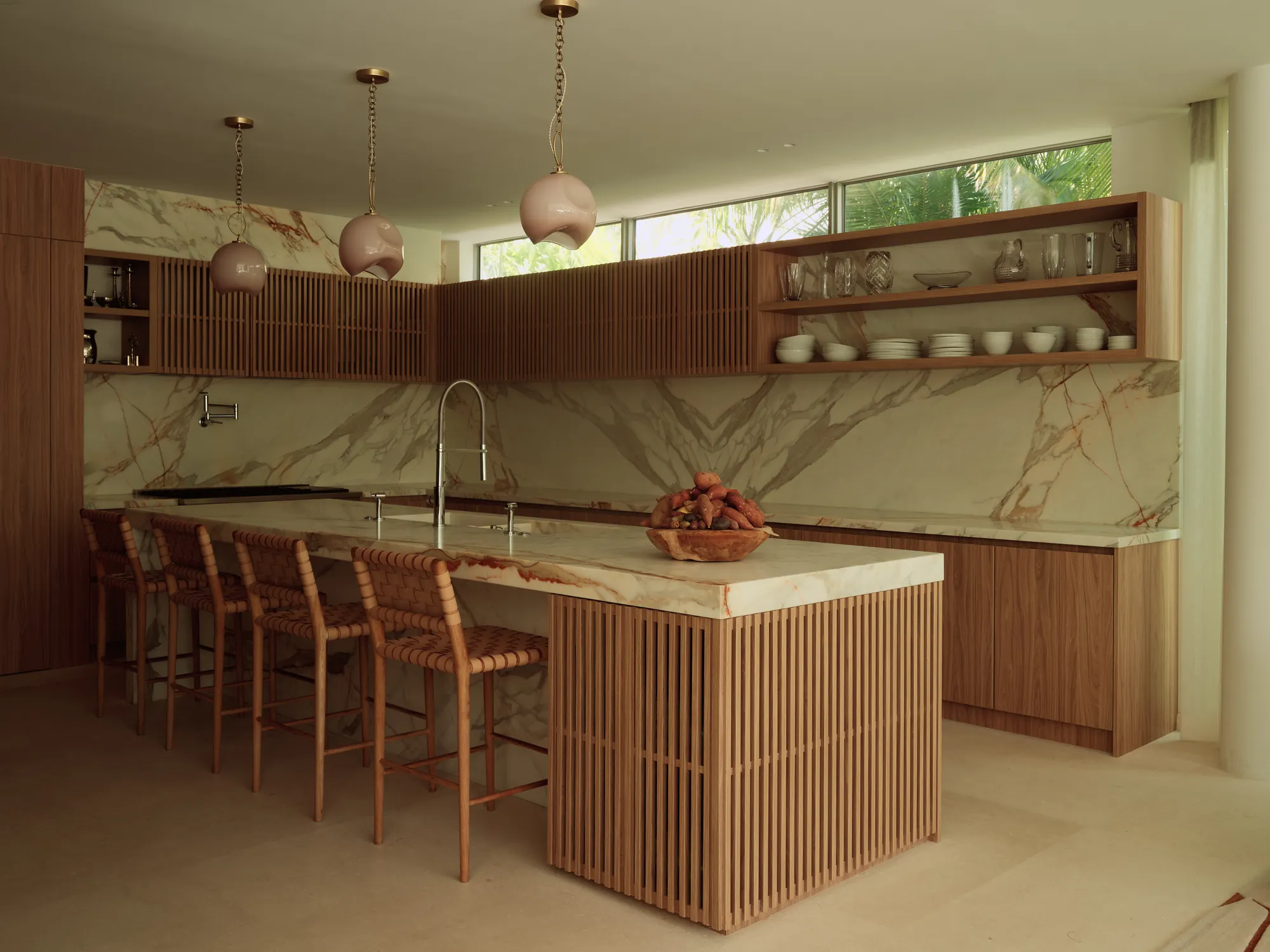
Materials · Jul 22, 2026 · 3 min
Marble countertops: types, care, and where they belong
A clear guide to marble countertops: the main types, what the stone will and will not tolerate, and the rooms where marble earns its place rather than becoming a maintenance problem.
Materials · Jul 21, 2026 · 3 min
Limewash on brick: refinishing exteriors the quiet way
How limewash transforms a brick exterior into a soft, mineral finish that ages into character. The process, the durability, and the restraint that keeps it looking right.