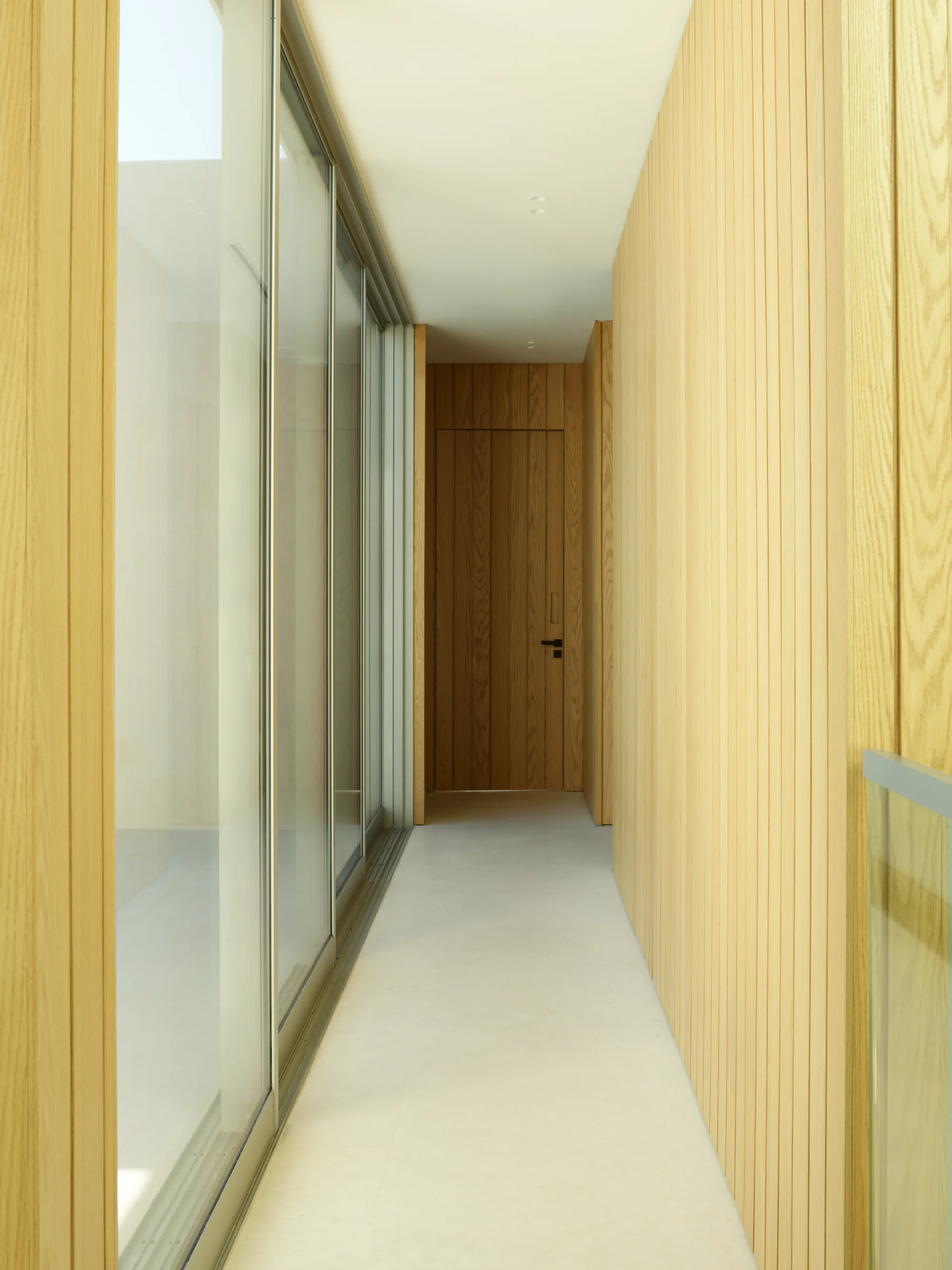
Designing the wine cellar as a home amenity
How to design a wine cellar that is both a working store and a room worth showing: climate control, racking, placement and the materials that make it feel like part of the house.
Luxom Studio · LUXOM Developments
· 4 min read · Last reviewed
Key takeaways
- A wine cellar is a climate problem first and a design problem second. Wine keeps best around 55 degrees Fahrenheit with 60 to 70 percent humidity held steady, so insulation, a vapor barrier and cooling come before aesthetics.
- A custom wine cellar earns its place when it is treated as a room, not a closet: placed where it can be seen and used, detailed in real materials, and lit to show the bottles without heating them.
- Racking should be planned around the actual collection, mixing bottle storage, display rows and case space, and built from cellar-appropriate materials like stable hardwood or metal.
- Placement matters. An interior, north-facing or below-grade location is easiest to keep cool, and a glass-fronted cellar off a living or dining space turns storage into an amenity guests experience.
- In a warm, humid climate like Miami, the vapor barrier and a correctly sized cooling unit are non-negotiable. Skimp on either and the cellar sweats, the wine cooks, and the room fails at its one job.
Editor's note
A wine cellar is one of the few rooms in a house that is judged twice: once by the eye, when guests see it, and once, silently, by the wine, over years of being kept well or badly. The beautiful ones that fail are the ones designed for the first judgment and not the second. The best ones satisfy both, which means they start as engineering and finish as architecture.
This is the first of an amenity trilogy, alongside our piece on the private home theater. The through-line is the same: an amenity is worth building only when it is designed as a proper room, technically correct and materially of a piece with the house, rather than bolted on as a feature.
Climate is the whole brief
Before a single rack is drawn, the cellar has to hold a stable environment: around 55 degrees Fahrenheit and 60 to 70 percent relative humidity, kept steady. Stability matters more than any exact figure, because it is the swings that harm wine, drying corks and stressing the bottle. Reaching those conditions in a home means insulating the room, installing a continuous vapor barrier, and sizing a dedicated cooling unit, since ordinary air conditioning cannot hold this climate and dries the air too hard.
In a warm, humid place like Miami this is not a refinement, it is the entire foundation. Get the vapor barrier or the cooling wrong and warm air condenses on cold walls, the room sweats, mold arrives and the wine cooks. Everything else in the cellar rests on getting these two systems right first.
Racking planned around the collection
Racking is where the cellar becomes personal. It should be designed around the actual collection rather than a generic grid: a mix of single-bottle storage for everyday drinking, display rows that turn labels toward the room for bottles worth showing, and case or bulk space for volume. A collection that grows wants room to grow into, so planning a margin of empty capacity is sensible.
Material choice for the racking follows the climate. Stable hardwoods such as oak, walnut and mahogany perform well in cool humidity, and powder-coated metal suits a more contemporary room. What matters is that nothing warps, corrodes or gives off aroma. Racking is functional joinery, and like all joinery it reads as quality only when it is built and fitted precisely.
Pull quote
Design the cellar around the collection you have and the one you intend to have. Wine, unlike most possessions, is bought with the assumption it will multiply.
Placement turns storage into amenity
Where the cellar goes decides what it becomes. Physically, an interior, north-facing or below-grade location is easiest to keep cool and stable, away from sun-loaded exterior walls and heat sources. But placement is also an experiential choice. A glass-fronted cellar set off a dining or living room becomes an amenity that guests encounter, a piece of the home's character, while a cellar tucked in a basement corner is purely a store.
Neither is wrong, and the right answer depends on whether the collection is meant to be seen. This is the same placement logic that governs any home amenity: proximity and visibility determine whether it is used and enjoyed or merely owned. We make the same argument about the private home theater.
Materials and light that belong to the house
A cellar reads as part of the home when its materials relate to the rest of it. Sealed stone or tile floors handle the humidity, stone or plaster walls sit well over the vapor barrier, and the racking timber can echo joinery elsewhere in the house. Lighting should be cool and low-heat, positioned to show the bottles and labels without adding warmth the cooling system then has to fight, so LED fixtures are the sensible choice.
Handled this way, the cellar stops looking like a technical box behind glass and starts looking like a room the house was always meant to have. The engineering disappears into the architecture, which is the mark of it being done well.
Building the cellar into the home
Because the insulation, vapor barrier, cooling and drainage are structural, a wine cellar is far easier and cheaper to build with the house than to carve in later. Planned early, it can sit exactly where it belongs and be detailed to match, rather than squeezed into whatever space is left.
If you are building or renovating and want a cellar that is both technically correct and genuinely part of the home, our interior design service plans it end to end, and you can start a conversation any time through the contact page. For the next room in the amenity trilogy, read the private home theater.
Pull quote
A wine cellar is engineering that happens to be beautiful. Get the climate wrong and the most gorgeous racking in the world is just an expensive shelf.
Filed under
Questions about wine cellar design
01What temperature and humidity should a wine cellar be?
A wine cellar should hold a steady temperature around 55 degrees Fahrenheit and a relative humidity between 60 and 70 percent. The exact number matters less than the stability: wine ages best when conditions stay constant, and it is swings in temperature that damage a collection, expanding and contracting the wine and drying out corks. Humidity in that range keeps corks supple so they do not shrink and let air in, while staying low enough to protect labels and racking from mold. Achieving this in a home means insulating the room, installing a proper vapor barrier, and sizing a dedicated cooling unit to the space, since a normal air conditioner cannot hold these conditions. In a warm, humid climate the cooling and vapor barrier are the whole ballgame. For how we plan technical rooms into a home, see our interior design service.
02How do you design a custom wine cellar?
Design a custom wine cellar in the right order: climate first, then racking, then finishes. Start by sealing and insulating the space with a continuous vapor barrier and sizing a dedicated cooling unit, because everything else depends on holding the environment. Then plan racking around the actual collection, mixing single-bottle storage, display rows for labels you want to show, and case or bulk space for volume, built from cellar-stable hardwood or metal. Finally, treat it as a room: choose materials that relate to the rest of the house, and light it with cool, low-heat fixtures that show the bottles without warming them. Placement is part of the design too, ideally somewhere it can be seen and used rather than buried. A custom cellar is worth the effort precisely because it is engineered and personal. Our projects page shows built examples.
03Where is the best place to put a wine cellar in a house?
The best location for a wine cellar is somewhere naturally cool and stable that is also convenient to use, which usually means an interior room, a north-facing space, or a below-grade level where the surrounding earth moderates temperature. Avoid exterior walls with heavy sun exposure, spaces above or beside heat sources, and anywhere with large temperature swings, since these force the cooling system to work harder and risk instability. Beyond the physics, placement decides whether the cellar is an amenity or a utility closet. A glass-fronted cellar off a dining or living room becomes something guests experience, while one tucked in a basement corner is purely functional. Both are valid; the choice depends on whether you want the collection seen. This is the same placement thinking behind other home amenities, such as the private home theater.
04What materials are best for a wine cellar?
Choose materials that tolerate a cool, humid, stable environment and relate to the rest of the home. For racking, stable hardwoods such as oak, walnut or mahogany perform well, as do powder-coated metals for a more contemporary look; avoid materials that warp or corrode in humidity, and avoid anything strongly aromatic that could affect the wine. Floors should be moisture-tolerant, such as sealed stone, tile or a stable engineered surface rather than solid wood that can move. Walls need the vapor barrier behind whatever finish you choose, and stone or plaster reads well and handles the conditions. Glazing, if the cellar is glass-fronted, should be insulated to hold the climate. The goal is a room that is both technically correct and materially of a piece with the house, which is how we approach every space. Reach us through the contact page to plan one.
05Do you need special cooling for a wine cellar in a hot climate?
Yes. In a hot, humid climate like Miami, a dedicated wine cellar cooling unit and a continuous vapor barrier are non-negotiable, not optional upgrades. A standard air conditioner cannot maintain the low temperature and controlled humidity wine needs, and it dehumidifies too aggressively, drying out corks. A purpose-built cellar cooling system holds around 55 degrees and the right humidity together, and it must be correctly sized to the insulated volume of the room. Without a proper vapor barrier, warm outside air meets the cold cellar wall and condenses, causing sweating, mold and eventual failure. These two systems, cooling and the vapor barrier, are where a hot-climate cellar succeeds or fails, and they have to be engineered in from the start rather than added later. For how we build technical amenities into a warm-climate home, see our interior design service.
Explore the portfolio
Projects to see


Talk to the studio
If this belongs in your home, our studio will draw the plan.
Initial conversation, 30 minutes. We listen to the brief and respond with a scoped proposal within five working days. You can also read the services page for typical timelines and fees.
Written by Luxom Studio · LUXOM Developments
The design and development studio behind LUXOM residences in Coconut Grove, Miami
Keep reading
From the journal
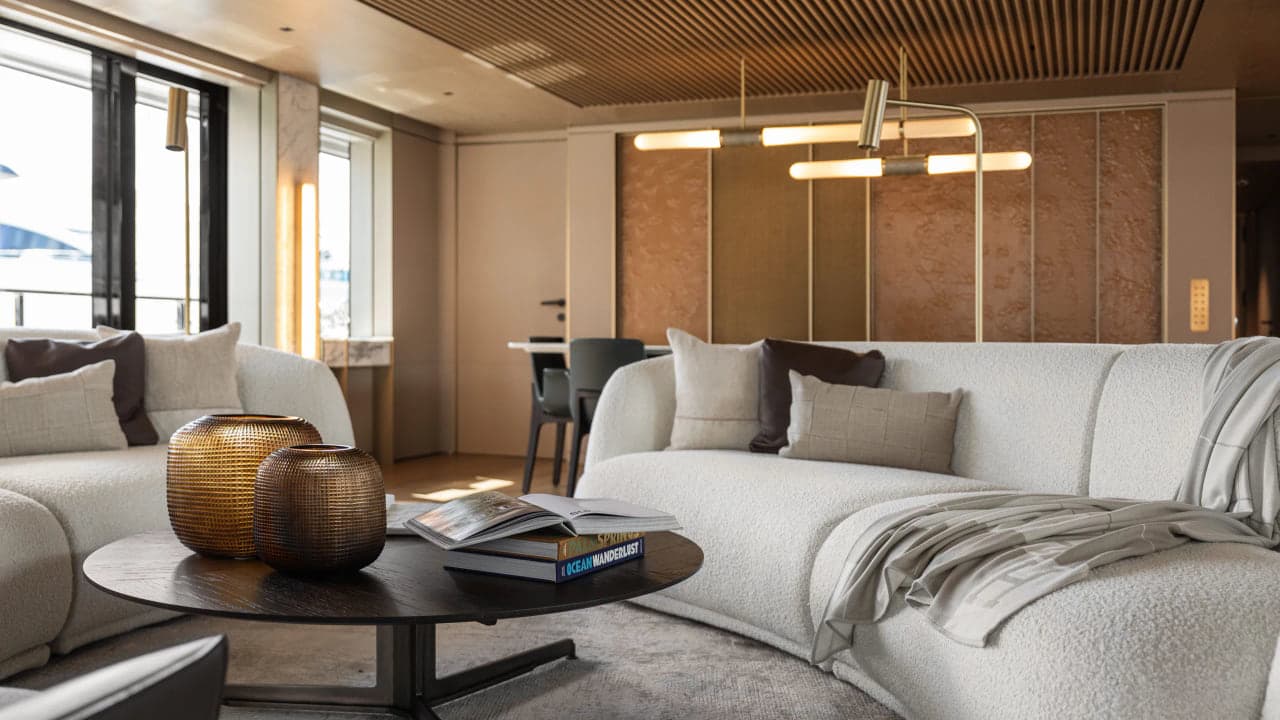
Interiors · Oct 2, 2026 · 4 min
Navy Sofa Styling Ideas: Material Before Color
Every guide hands you five or six color schemes to choose between. The decision that actually matters is the stone, wood and metal already built into the room, chosen before the sofa.
Interiors · Oct 2, 2026 · 7 min
Interior Designer Miami FL: How to Vet One Before You Hire
Miami's interior designer listings sort firms by budget, style and awards. None of them show who decides the wall, the window height or the zoning limit before a single finish gets chosen. Here is how to look past the directory.
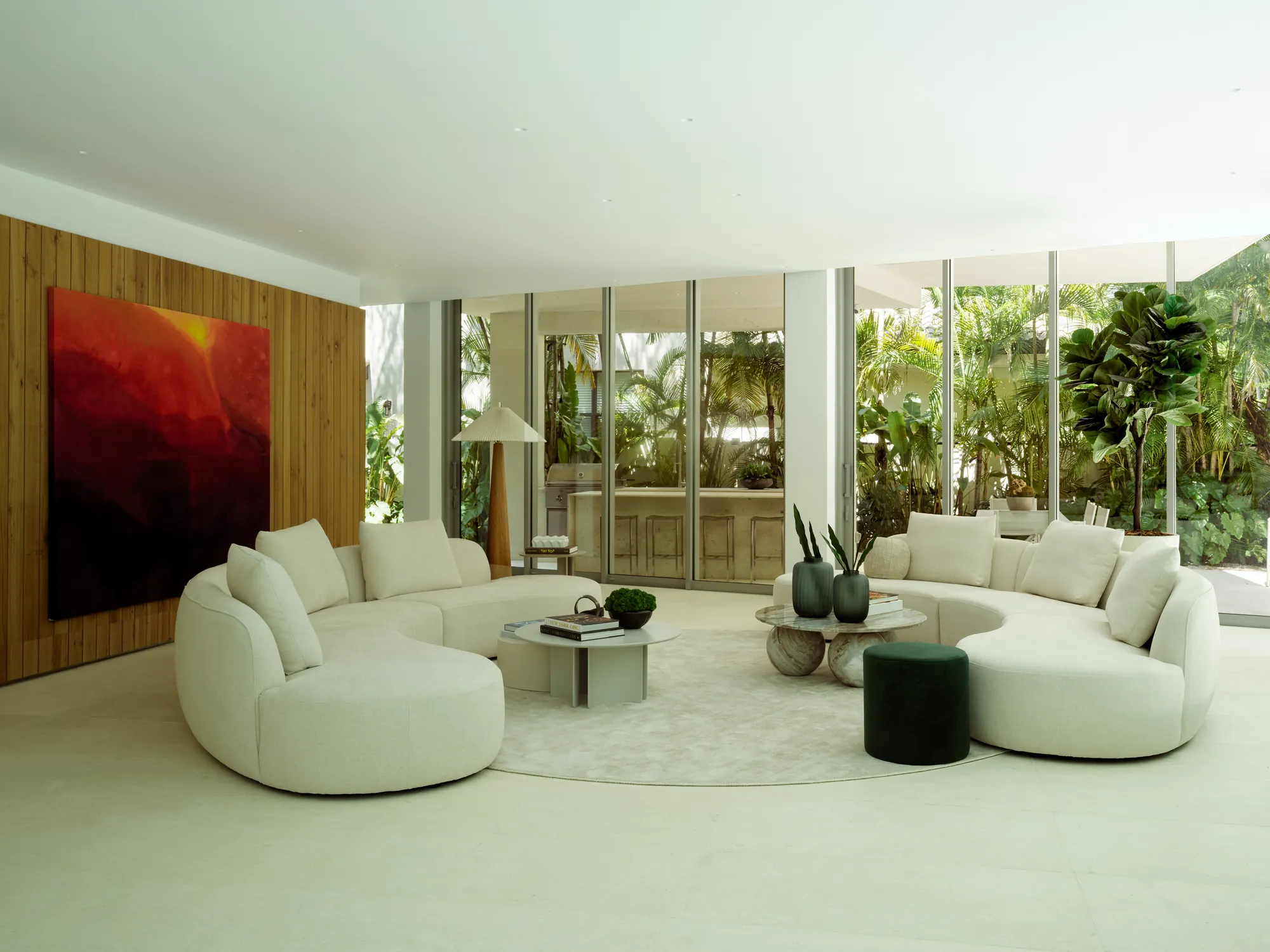
Interiors · Sep 13, 2026 · 5 min
Your rug should not match your furniture. It should talk to it.
The generic advice says find one matching thread. What that actually looks like in a finished Luxom room is a planned material conversation, not a matched fabric swatch.