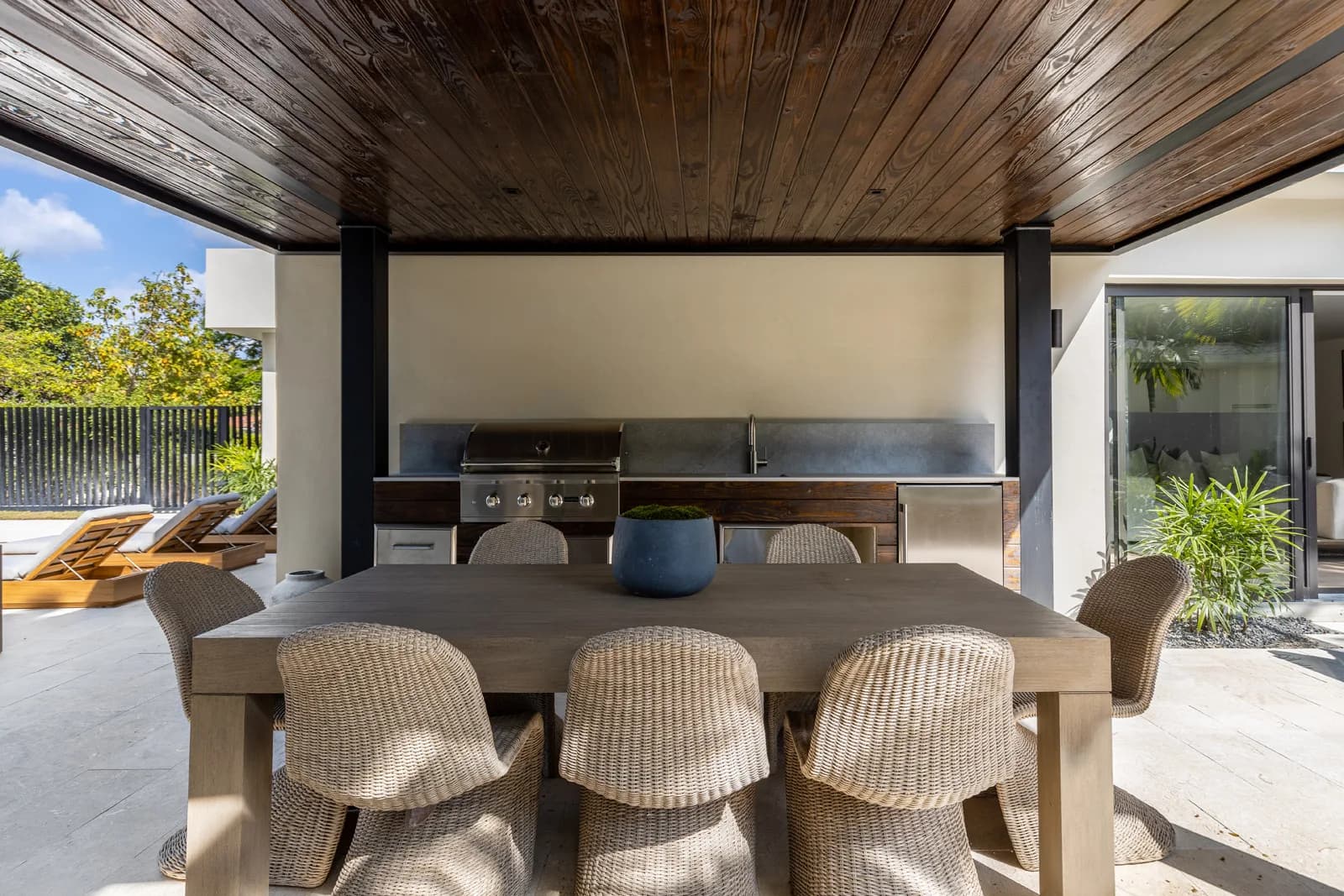
Four Outdoor Kitchen Types, and Why the Roof Comes First
A grill island, a pizza oven, a full kitchen or a bar kitchen. What each outdoor kitchen is for, what it needs to survive Miami weather, and why a covered one is the kind that cooks all year.
Luxom Studio · LUXOM Developments
· 5 min read · Last reviewed
Key takeaways
- Most outdoor kitchens fail in their first rainy season, not because of the layout but because water, sun and salt reach equipment and cabinetry that were never protected from them.
- A grill island is the simplest outdoor kitchen and works as a seasonal one. A pizza oven is a destination that needs a solid footing, a flue and clearance. A full kitchen is a second kitchen and needs a roof. A bar kitchen is built for company.
- In Miami, the covered outdoor kitchen is the one that runs all year. A roof keeps rain off burners, igniters and refrigeration, shades the cook and makes the space usable through summer storms.
- A roof over a grill brings its own requirements: an outdoor rated hood or open sides for smoke, clearances above the cooking surface, wet rated lighting and protected outlets.
- Specify 316 stainless steel, weatherproof cabinetry and dense stone or porcelain counters, and rough in gas, water, power and drainage with the house rather than after it.
From the feed
The reel we posted showed four outdoor kitchens and said only one of them runs all year. The caption was blunter: most outdoor kitchens die in the first rainy season. Cover it, or accept you built a very expensive grill. The difference between an outdoor kitchen that gets used every week and one that sits under a vinyl cover is rarely the appliances. It is whether the kitchen was designed for the weather it lives in. This is the outdoor guide we promised: the grill island, the pizza oven, the full kitchen and the bar kitchen, what each is for, and why in Miami the roof comes first.
Why outdoor kitchens fail in their first rainy season
Miami's wet season runs roughly from June through October, with afternoon storms that arrive almost daily in the summer, and hurricane season officially runs from June 1 to November 30. An outdoor kitchen left in the open takes all of it. Water gets into burners and igniters, into refrigeration and ice makers, into electronics and cabinet boxes. Sun fades finishes and bakes the counter. Near the bay, salt air pits ordinary stainless steel and corrodes hardware.
None of that is a design flaw in the layout. It is a design flaw in the brief. An outdoor kitchen planned as if it were sitting in a dry climate becomes something you cover in May and uncover in November. The four types below each answer the weather differently.
The grill island: the simple one
The grill island is the most common outdoor kitchen: a built in grill set into a counter of masonry or stone, with some prep space on either side and a few storage doors below. It is straightforward to build, relatively economical and easy to place beside a pool or terrace.
It is also the one most often left uncovered, and so the one most often used seasonally. If you build one in the open, accept that it is a dry season kitchen and specify for exposure: 316 stainless steel, a counter that sheds water, a fitted cover for the grill and doors that will not swell. Give it landing space on both sides of the grill, which matters more than any extra feature.
The pizza oven: the destination
A wood or gas fired pizza oven is less an appliance than a destination. It draws people around it, it cooks far more than pizza, and a traditional masonry dome becomes a piece of architecture in its own right.
It has real requirements. Masonry and refractory ovens are heavy, so they need a footing or slab designed for the load. A wood fired oven needs a flue, extended through any roof above it with proper clearances, and the outside of the oven gets hot enough to need distance from anything combustible. It needs to stay dry, because a wet oven takes a long time to dry out and can crack if it is fired too hard while damp. Plan dry wood storage close by, and a counter beside the oven for dough and serving.
The full kitchen: the second kitchen
A full outdoor kitchen is a complete second kitchen: grill and side burner, sink, refrigeration, real prep space and storage, sometimes a warming drawer or a griddle. It lets you cook an entire meal outside without walking back and forth through the house, which is exactly what makes it the most used outdoor kitchen when it works.
It needs everything an indoor kitchen needs: gas, water, power and drainage, planned and roughed in with the house. And in Miami it needs a roof. A full kitchen left uncovered combines the most equipment with the most exposure, which is the fastest route to the kitchen in the caption. Covered, it becomes the one in the reel that runs all year. Our technical guide to outdoor kitchens in the tropics covers the working layout in detail.
The bar kitchen: the social one
A bar kitchen is organized around a counter where guests sit facing the cook: a sink, under counter refrigeration, an ice maker and a compact grill or griddle on the cook's side, stools on the other. It is the most social of the four, because nobody has to stand behind the host or shout across a terrace.
Its equipment is the most sensitive to weather. Ice makers and refrigeration need a drain, power and protection from rain, and a counter people lean on all evening needs shade. A bar kitchen under a roof is a place to spend an evening; one in the open is a place to stand for a drink before the storm comes in.
Pull quote
The appliances decide what you can cook. The roof decides whether you ever do.
The roof is the outdoor kitchen
In Miami, the single most important decision about an outdoor kitchen is the roof over it. A covered loggia, a pavilion or a solid pergola extension designed with the house protects the equipment from rain, shades the cook through the middle of the day and turns the kitchen into a room. The dining area can stay open to the sky; the cooking and prep zone should not.
A roof over a grill brings its own design requirements. Respect the manufacturer's clearances above and around the cooking surface, which affect ceiling height and material, especially with a wood ceiling. Give smoke somewhere to go, either through open sides or an outdoor rated hood sized to the grill, and never enclose a grill in a space that cannot ventilate. Use lighting and fans rated for damp or wet locations and protected outlets, slope the floor to drain, and keep the gas, water, power and drainage roughed in with the house. Planned this way, the outdoor kitchen stops being an appliance on a patio and becomes part of the house, connected to the pool and the garden, the idea behind the pool as the main room. If you are planning one, talk to us.
Pull quote
An uncovered outdoor kitchen in Miami is a kitchen for the dry season. Put a roof over it and it becomes a room.
Filed under
Questions about outdoor kitchen types and covered outdoor kitchens in Miami
01What types of outdoor kitchens are there?
Four types cover almost every outdoor kitchen. A grill island is a built in grill set into a counter, usually in masonry or stone, with a little prep space and storage. A pizza oven is a wood or gas fired masonry oven, often built as its own feature with a counter beside it. A full outdoor kitchen is a complete second kitchen: grill, side burner, sink, refrigeration, storage and real prep space, with gas, water, power and drainage. A bar kitchen is arranged around a counter where guests sit facing the cook, usually with a sink, an ice maker and under counter refrigeration. Many outdoor kitchens combine two of these, a full kitchen with a bar counter, for example. In Miami, the bigger decision is not which type but whether it is covered, which is the argument of the section on the roof.
02Should an outdoor kitchen be covered?
In Miami, almost always, at least over the cooking and prep zone. The wet season, roughly June through October, brings frequent afternoon storms, and rain is what shortens the life of outdoor appliances: water in burners and igniters, in refrigeration and electronics, and in cabinetry that swells. Sun is the other enemy, fading finishes and making the cook miserable at midday. A roof, a covered loggia or a solid pergola protects the equipment and the people, and turns the outdoor kitchen into a room you can use all year rather than a grill under a cover for half of it. The dining area can stay open to the sky if you want it to. The roof does need to be designed for cooking beneath it, with ventilation and clearances, as our section on the roof explains.
03Can you put a grill under a covered patio?
Yes, if the cover is designed for it. The grill manufacturer's clearances to combustible materials, above and to the sides, have to be respected, which affects the ceiling height and material over the grill. Smoke and heat need somewhere to go: either the space stays open on enough sides for air to move freely, or an outdoor rated vent hood sized to the grill draws the smoke out. Never enclose a grill in a space that cannot ventilate, since combustion produces carbon monoxide as well as smoke. Lighting and fans should be rated for wet or damp locations, outlets should be protected, and the gas line should be installed by a licensed professional. Done this way, a covered grill is safer and more pleasant to use than an exposed one. Our technical guide to outdoor kitchens in the tropics covers the materials that suit this setting.
04Does a pizza oven need a chimney?
A wood fired pizza oven needs a flue to carry smoke away from the cook and the guests, and under a roof that flue has to be extended through the roof with the clearances the manufacturer or builder specifies. Pizza ovens are also heavy, especially traditional masonry or refractory domes, so they need a solid footing or slab designed for the load, and they need clearance from combustible materials because the outside of the oven gets hot. Keep the oven dry: a wet oven takes a long time to dry out, and firing a damp oven too quickly can crack it, which is one more reason to put it under cover in a rainy climate. Plan where the wood will be stored, dry and close at hand, and where the ash goes. See the pizza oven section for how it fits into the plan.
05What materials last in a Miami outdoor kitchen?
Materials chosen for salt, sun and water together. For appliances, doors, drawers and hardware, 316 stainless steel, the marine grade, rather than the more common 304, which can pit and stain near the coast. For cabinets, weatherproof construction such as marine grade polymer or stainless boxes, never indoor cabinetry, which swells in humidity. For counters, dense natural stone such as granite or quartzite, or a porcelain slab, which handle heat and sun without fading. For floors, a slip resistant stone or porcelain that drains well. Seal stone on a regular schedule, closer to yearly in this climate. And rough in the utilities, gas, water, power and drainage, with the house, since adding them to a finished terrace costs far more. Our piece on the Miami outdoor kitchen covers the wider design thinking.
Explore the portfolio
Projects to see


Talk to the studio
If this belongs in your home, our studio will draw the plan.
Initial conversation, 30 minutes. We listen to the brief and respond with a scoped proposal within five working days. You can also read the services page for typical timelines and fees.
Written by Luxom Studio · LUXOM Developments
The design and development studio behind LUXOM residences in Coconut Grove, Miami
Keep reading
From the journal
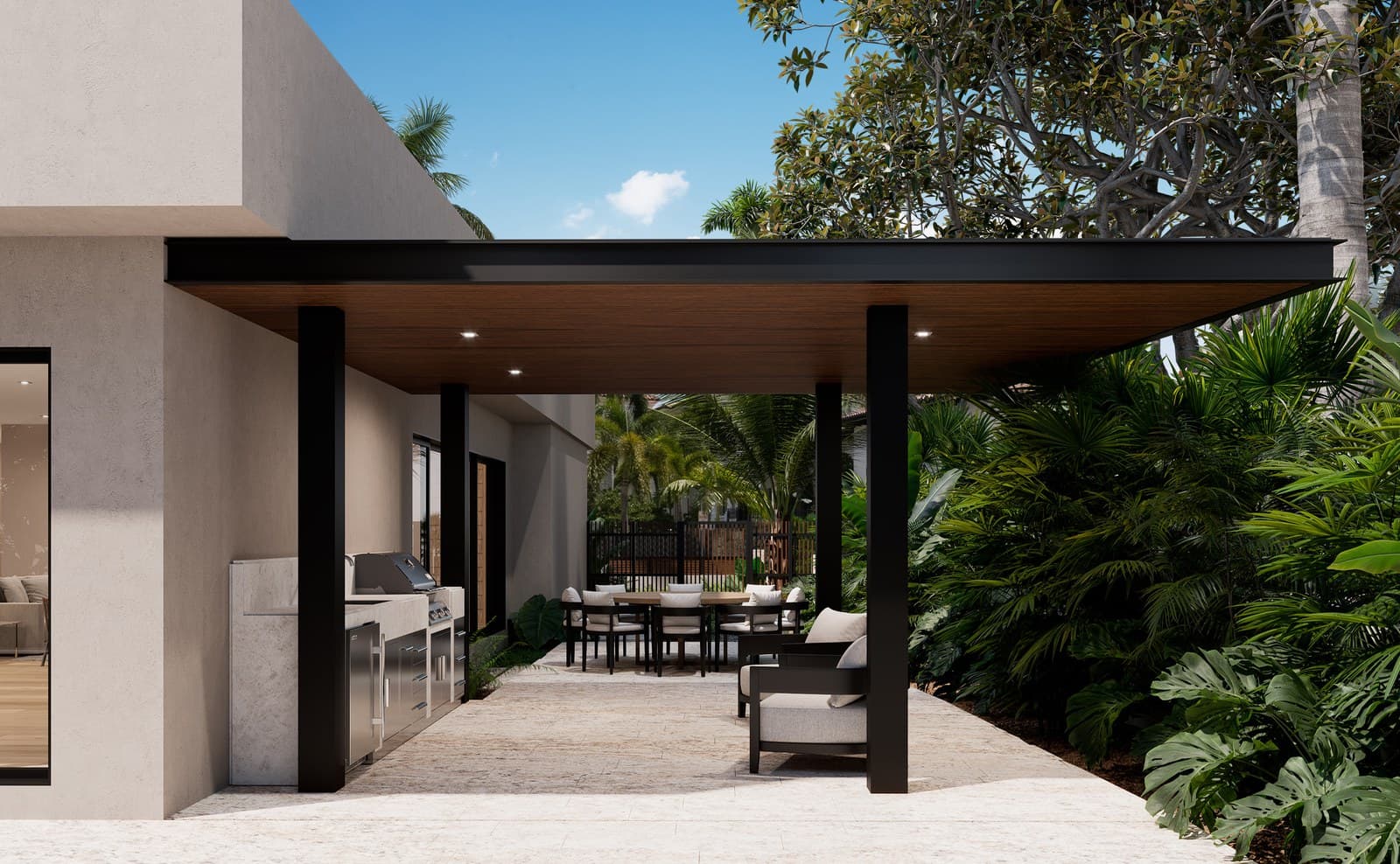
Interiors · Jul 15, 2026 · 4 min
The Miami outdoor kitchen, designed like an interior
Why the best outdoor kitchens are planned with the rigor of a room, not bolted on as an afterthought. Materials that survive the climate, and a layout built for entertaining.
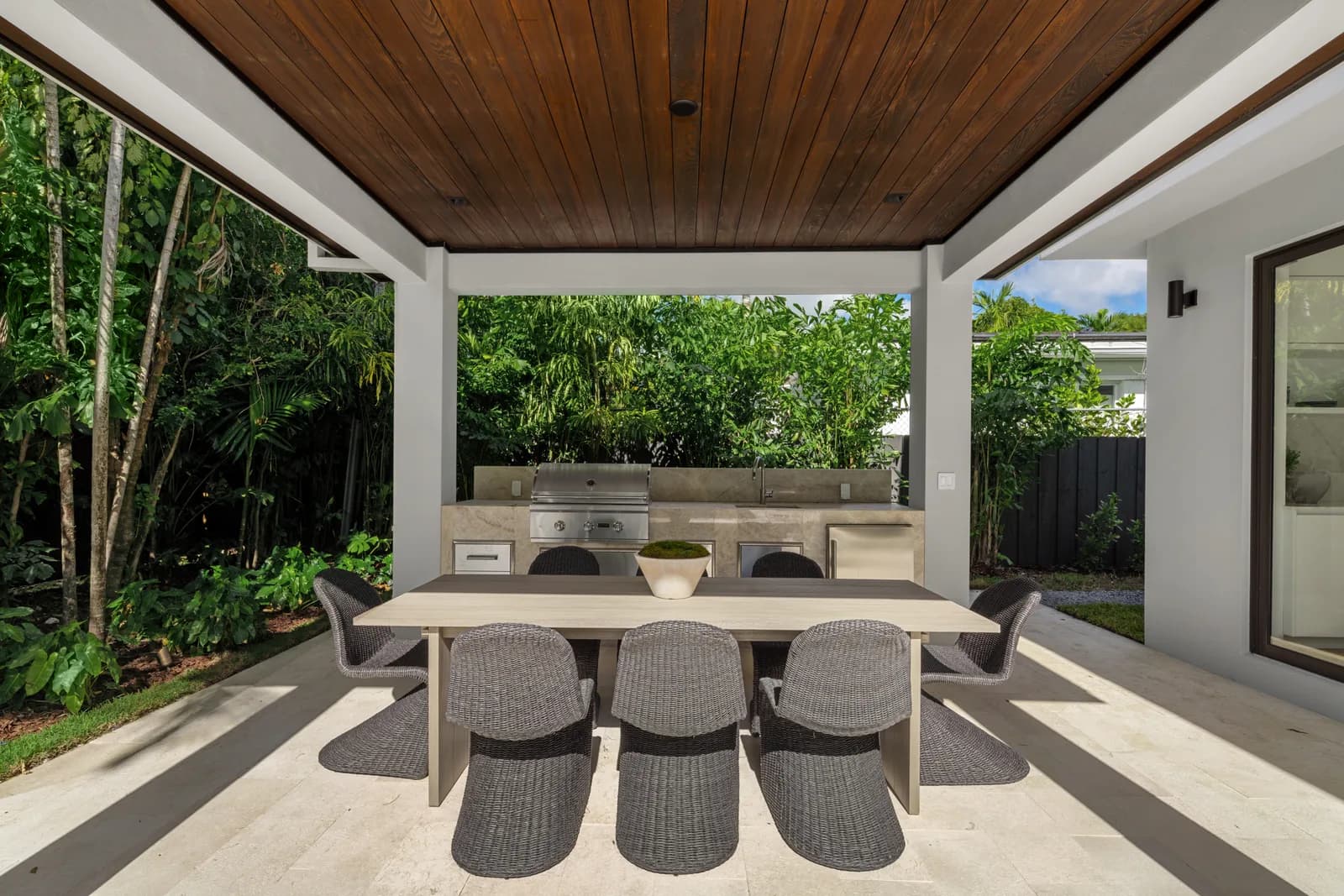
Interiors · Jul 31, 2026 · 4 min
Outdoor kitchen design: layout and materials for the tropics
How to plan an outdoor kitchen that survives a Miami climate: the working layout, the finishes that hold up to salt and sun, and the details that decide whether it lasts.
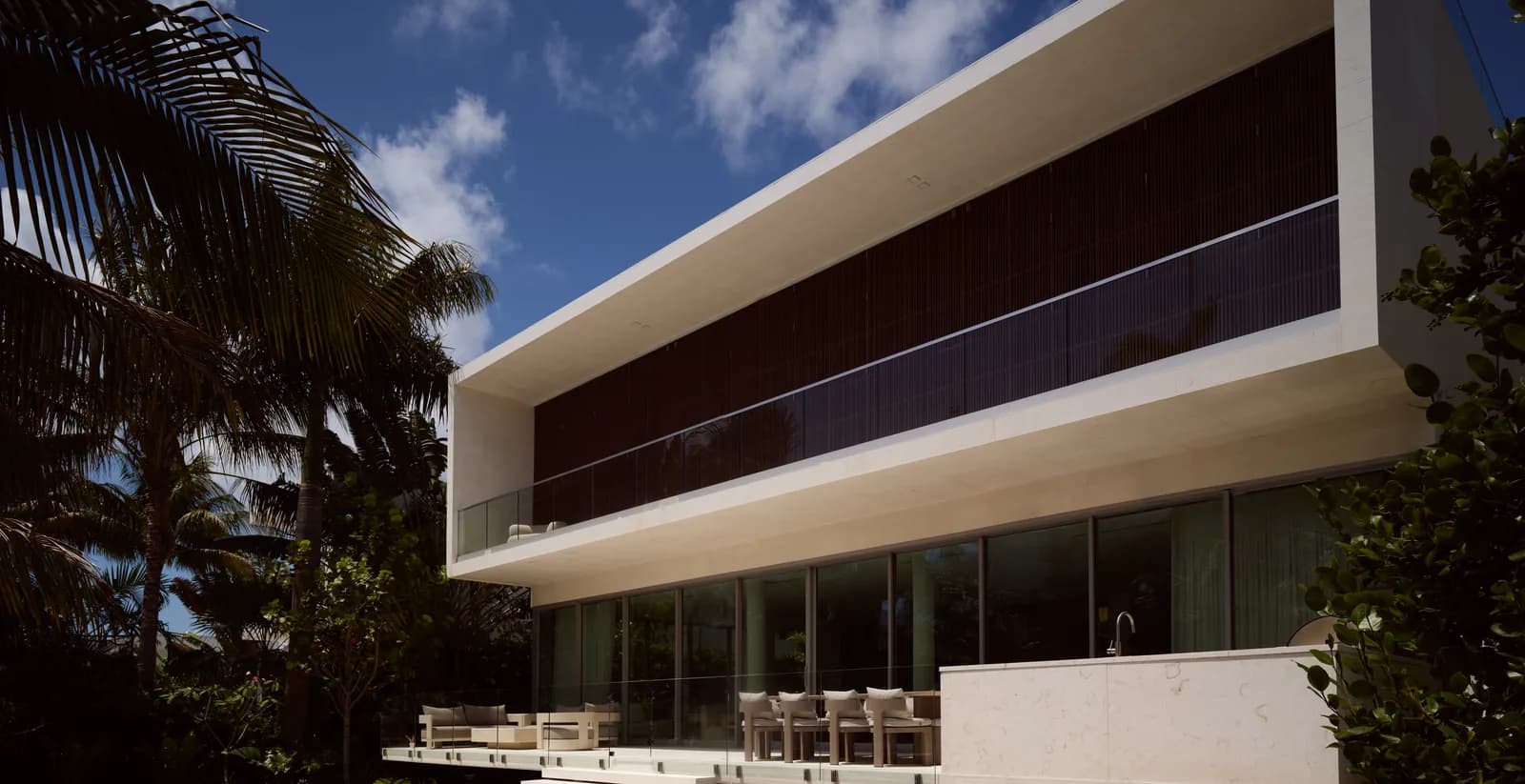
Philosophy · Aug 27, 2026 · 6 min
The Pool Is the Main Room, Not an Amenity
In a Miami luxury home, the pool gets designed before the bedrooms do. Here is why Luxom treats it as the first room on the plan, not a rectangle added to the yard later.