Kitchen Backsplash Guide: Full Slab, Subway, Zellige, Mirror or None
Five ways to finish the wall behind the counter, from a full stone slab to no backsplash at all. What each one asks in seams, cleaning and planning, and when none is the right answer.
Luxom Studio · LUXOM Developments
· 6 min read · Last reviewed
Key takeaways
- A backsplash protects the wall behind the sink and the cooktop, but in an open kitchen it is also the largest vertical surface people see. Decide it with the counter, not after it.
- A full slab backsplash continues the counter stone up the wall with no grout lines. It needs the veining, seams and outlets planned before the stone is cut, and often an extra slab.
- Subway tile is the affordable classic and stays timeless in white with a simple layout. Zellige brings handmade depth and movement. Antique mirror bounces light but belongs away from the heat of the range.
- The best backsplash is sometimes none. With no wall cabinets and the cooking on an island, a washable plaster or paint wall, or a short stone upstand, can be the calmest choice in the room.
- A full slab and no backsplash sit at opposite ends of the list and read completely differently, but they share the quality that makes a kitchen look calm: no grout grid on the wall.
From the feed
The reel we posted showed five backsplashes and said one of them is the whole wall. The caption went further: the best backsplash is sometimes none at all. Both lines point to the same idea. A backsplash is not only there to protect a wall; in an open kitchen it is the largest vertical surface anyone sees, and it decides whether the kitchen reads as calm architecture or as a collection of finishes. This is the kitchen guide we promised, covering a full slab, subway, zellige, mirror and none, with what each one asks of the room.
What a backsplash is actually for
Functionally, a backsplash protects the wall behind the sink and the cooktop from water, grease and heat, and makes that wall easy to clean. That job is concentrated in two zones. Everywhere else along the counter, the backsplash is mostly an aesthetic choice.
Visually, it is the surface between the counter and whatever is above it, wall cabinets, open shelves, a window or nothing at all. In an open plan kitchen it faces the living room, so it carries more weight than its size suggests. The most important variable is not the material but the joints: a wall covered in grout lines reads as busy, a wall with none reads as quiet. Keep that in mind as you read the five options below.
Full slab: one material, the whole wall
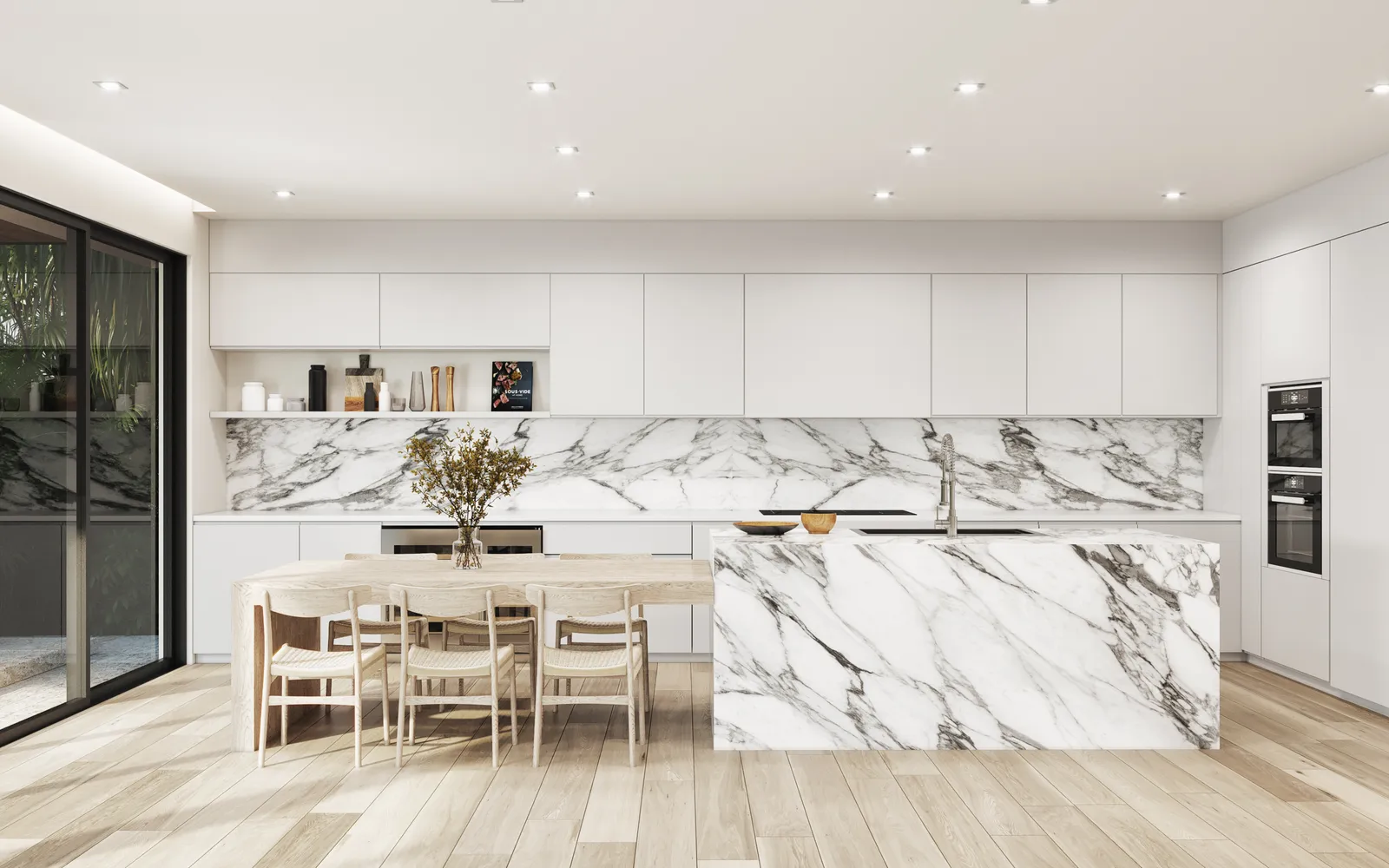
A full slab backsplash continues the counter stone up the wall, in one or a few large pieces, so the kitchen reads as a single material. There are no grout lines to clean, the veining can flow from the counter into the wall, and the effect is closer to architecture than to finish. It is the most striking of the five, and it is the one the reel meant.
It needs planning before anyone cuts. The slabs should be selected and laid out together so the veining runs where you want it. Seams belong at logical breaks, the edge of a window, the line of the hood, the end of a run, not in the middle of the wall. Outlets and switches either get cut precisely into the stone or move to the underside of the wall cabinets, and that decision has to be made before the electrical rough in. Behind the range, the stone needs to be sealed to suit the material, since grease and heat are hard on porous stone. We describe one kitchen where the same marble runs continuously from counter to backsplash in one slab, three kitchens.
Subway: the affordable classic
Subway tile, the glazed rectangular ceramic named after the tile used in early New York subway stations, is the most familiar backsplash in the world for good reason. It is affordable, easy to clean and works with almost any style. In white, laid in a simple running bond with a grout close to the tile color, it is close to timeless.
It dates when it chases a trend: a fashionable color, an unusual elongated shape, a contrasting dark grout that turns the wall into a grid. Its practical weak point is the grout near the cooktop, which collects grease over time. Seal it, or choose a grout designed for kitchens.
Zellige: the handmade one
Zellige is handmade glazed terracotta from Morocco. Because each tile is shaped and glazed by hand, no two are quite the same: the color shifts, the surface undulates and the edges are slightly irregular. On a wall, those differences catch the light, especially raking light from a window, and give the backsplash a depth that machine made tile cannot reproduce.
It is not for anyone who wants perfection. Chips and variation are part of the material. The joints are narrow and installation takes skill, and the grout should be sealed. Zellige pairs best with a quiet counter, honed stone or a plain surface, because a boldly veined marble and a handmade tile tend to compete for attention.
Mirror: the light one
An antique or tinted mirror backsplash bounces light around the kitchen, makes a narrow room feel wider and reflects the windows and the garden back into the space. It is a beautiful choice behind a bar, a coffee station or a pantry counter, and in a kitchen that is admired more than it is cooked in.
It shows every splash and fingerprint, so it needs frequent cleaning. It also does not belong directly behind a range or cooktop, where heat and grease are concentrated. If you love it, use it on the quieter walls and switch to stone in the cooking zone.
None: the best backsplash is sometimes none
The last option in the reel costs nothing in material: no backsplash at all. It works in a specific kind of kitchen, one with no wall cabinets, the sink under a window or on the island, and the cooktop on the island too. In that layout the wall behind the counter sees little splash, and it can be finished in the same washable plaster, lime or scrubbable paint as the rest of the room, sometimes with a short upstand of the counter stone to protect the joint.
The result is the calmest wall a kitchen can have. A full slab and no backsplash sit at opposite ends of this list and read completely differently, one a wall of stone, the other a wall of plaster, but they share the quality that makes a kitchen look resolved: no grout grid. None does not work behind a range or a busy sink against the wall. There, a backsplash still has a job to do.
Pull quote
A full slab says the stone is the kitchen. No backsplash says the room is. Both are decisions. A row of trendy tile is usually the absence of one.
Decide it in the right order
The backsplash is the last thing installed and one of the first things that should be decided. Choose the counter first, then the backsplash that suits it. Decide where the outlets and switches go before the walls are closed. Resolve how the backsplash meets the window, the hood and the end of the wall cabinets, and how the lighting will graze it, since textured materials like zellige come alive under light from above and flat stone does not need it. These decisions belong in the same early sequence we lay out in our luxury kitchen checklist, and for the stone itself, our guide to choosing natural stone explains the difference between quartzite, marble and travertine. If you are planning a kitchen, talk to us.
Pull quote
The backsplash is where a kitchen either becomes architecture or stays a collection of finishes. Fewer joints, fewer decisions, more calm.
Filed under
Questions about kitchen backsplash options, from full slab to no backsplash
01What is the most timeless kitchen backsplash?
The most timeless backsplashes are the simplest ones: the counter stone continued up the wall as a full slab, plain white subway tile in a straightforward layout, or no backsplash at all on a quiet plaster wall. What dates a backsplash is rarely the material. It is the trend layered on top of it, a fashionable tile shape, a colored grout, a mosaic band, a pattern that belonged to one particular year. Natural materials used in large, calm areas tend to outlast anything decorative. If you want character, handmade zellige ages well because its variation never looked machine perfect in the first place. If you want the kitchen to read as architecture rather than decoration, a single material with as few joints as possible is the safest choice. Our full slab section explains how that works in practice.
02Is a full slab backsplash worth it?
In a kitchen where the stone is the main event, usually yes. A full slab backsplash continues the counter material up the wall in one or a few large pieces, so there are no grout lines to clean and the veining can flow from the counter into the wall without interruption. It is the most architectural of the options. It does ask for planning: the slabs have to be selected and laid out so the veining runs where you want it, seams placed at logical breaks such as the edge of a window or the hood, and outlets and switches either cut precisely into the stone or moved under the wall cabinets. It often means buying an additional slab. In return you get a kitchen that reads as one material, as we describe in our piece on the same marble used across three kitchens, where one of them runs from counter into backsplash as a single connected layout.
03Do you need a backsplash in a kitchen?
You need protection behind the sink and the cooktop, where water, grease and heat hit the wall, but you do not always need a tiled or stone backsplash. When there are no wall cabinets, the sink sits under a window or on an island, and the cooktop is on the island too, the wall behind the counter sees very little splash. In that case a durable, washable wall finish, a good scrubbable paint, sealed plaster or a lime finish, can be enough, sometimes with a short upstand of the counter stone to protect the joint. The result is the calmest wall a kitchen can have. Where the range or a busy sink sits against the wall, you need a real backsplash, at least behind that zone. See the section on going without one for when it works.
04What is zellige tile, and is it practical in a kitchen?
Zellige is a handmade glazed terracotta tile from Morocco, traditionally cut and glazed by hand, which gives every piece a slightly different color, an uneven surface and edges that are never perfectly straight. On a wall, those small differences catch the light and give the backsplash depth and movement that machine made tile cannot match. It is practical in a kitchen as long as you accept its nature: chips, pits and variation are part of the material, not defects, and the joints are usually narrow, so installation takes skill. The glaze is easy to wipe clean, and the grout should be sealed. Zellige pairs best with a quiet counter, since a strongly veined stone and a busy handmade tile can compete. Our zellige section covers how to use it.
05How high should a kitchen backsplash go?
It depends on what is above it. Under wall cabinets, the backsplash usually fills the whole gap between the counter and the cabinets, which is typically around 18 inches, so the wall reads as one surface. Where there are no wall cabinets, there are two clean options: take the backsplash all the way to the ceiling or to a natural stopping point such as a shelf or the underside of the hood, or keep it as a short upstand, often around 4 inches, with a washable wall finish above. What looks wrong is a backsplash that stops at an arbitrary height in the middle of an open wall. Decide the height with the hood, the windows and the cabinet layout, the same order of decisions we lay out in our luxury kitchen checklist.
Explore the portfolio
Projects to see


Talk to the studio
If this belongs in your home, our studio will draw the plan.
Initial conversation, 30 minutes. We listen to the brief and respond with a scoped proposal within five working days. You can also read the services page for typical timelines and fees.
Written by Luxom Studio · LUXOM Developments
The design and development studio behind LUXOM residences in Coconut Grove, Miami
Keep reading
From the journal
Materials · Aug 6, 2026 · 7 min
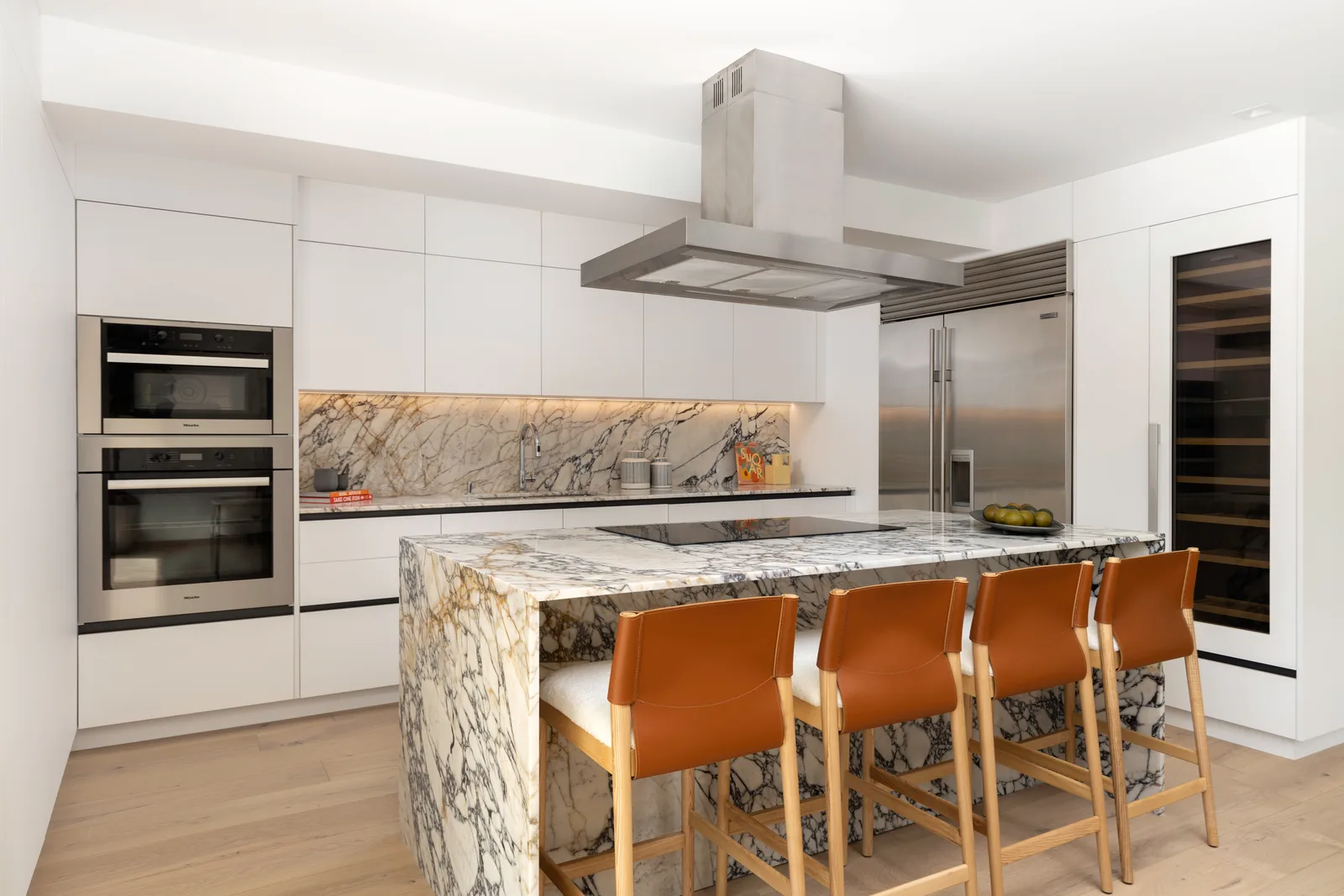
One Slab, Three Kitchens: The Same Marble at Samana, Crystal and Onaway
How one Calacatta marble language runs through three different Luxom kitchens: a single waterfall island at Samana, a full counter to backsplash run at Crystal, and the same stone at a much larger scale at Onaway.
Materials · Jul 18, 2026 · 4 min
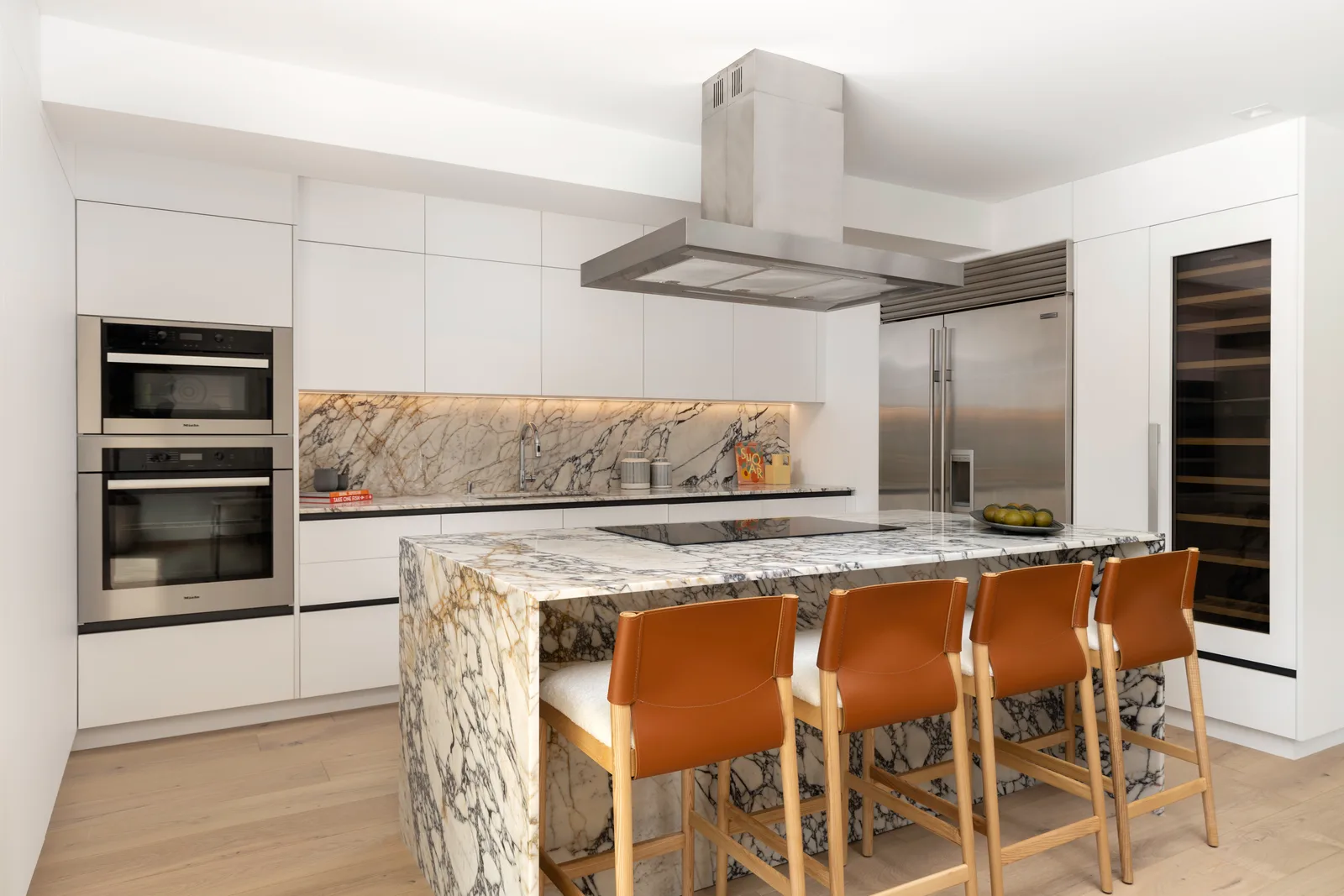
Choosing stone: quartzite, marble, and travertine
A working guide to natural stone countertops. How quartzite, marble and travertine differ in hardness, look and upkeep, and when each is the right choice.
Guides · Oct 1, 2026 · 7 min
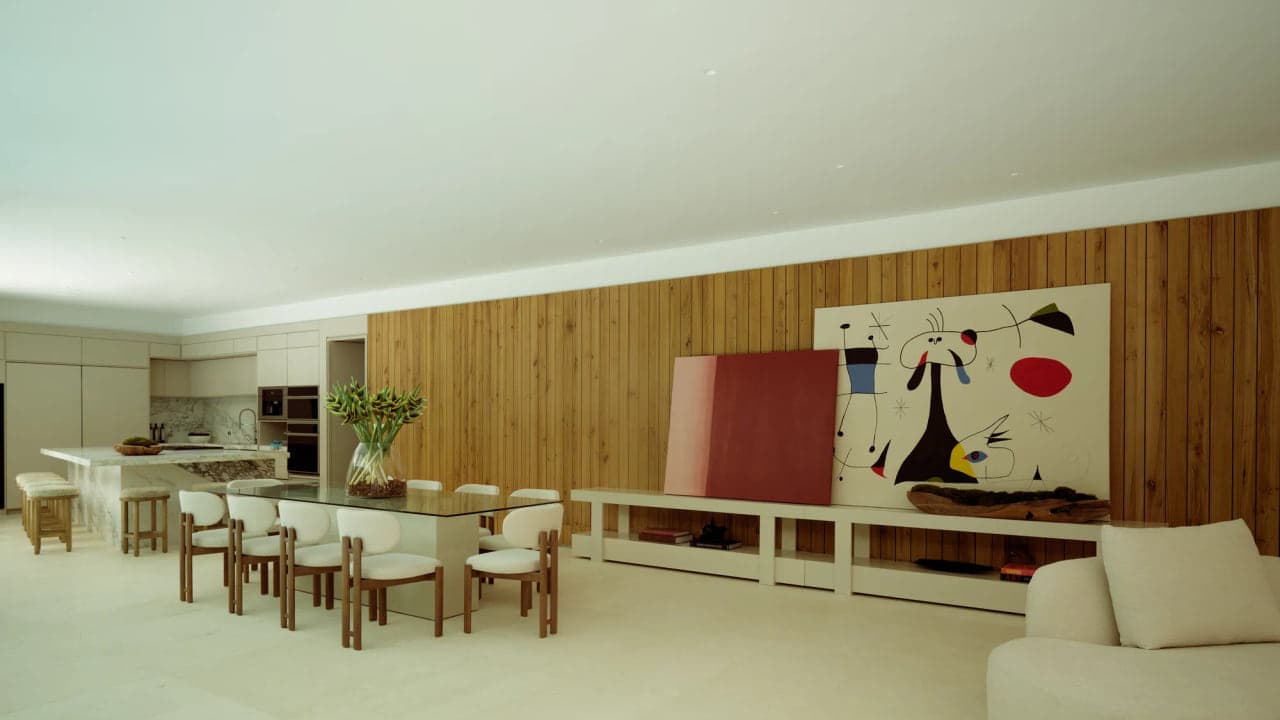
The Luxury Kitchen Checklist That Starts Before Finishes
Most luxury kitchen checklists rank finishes. This one orders the decisions the way a builder actually has to lock them, before cabinetry gets drawn.