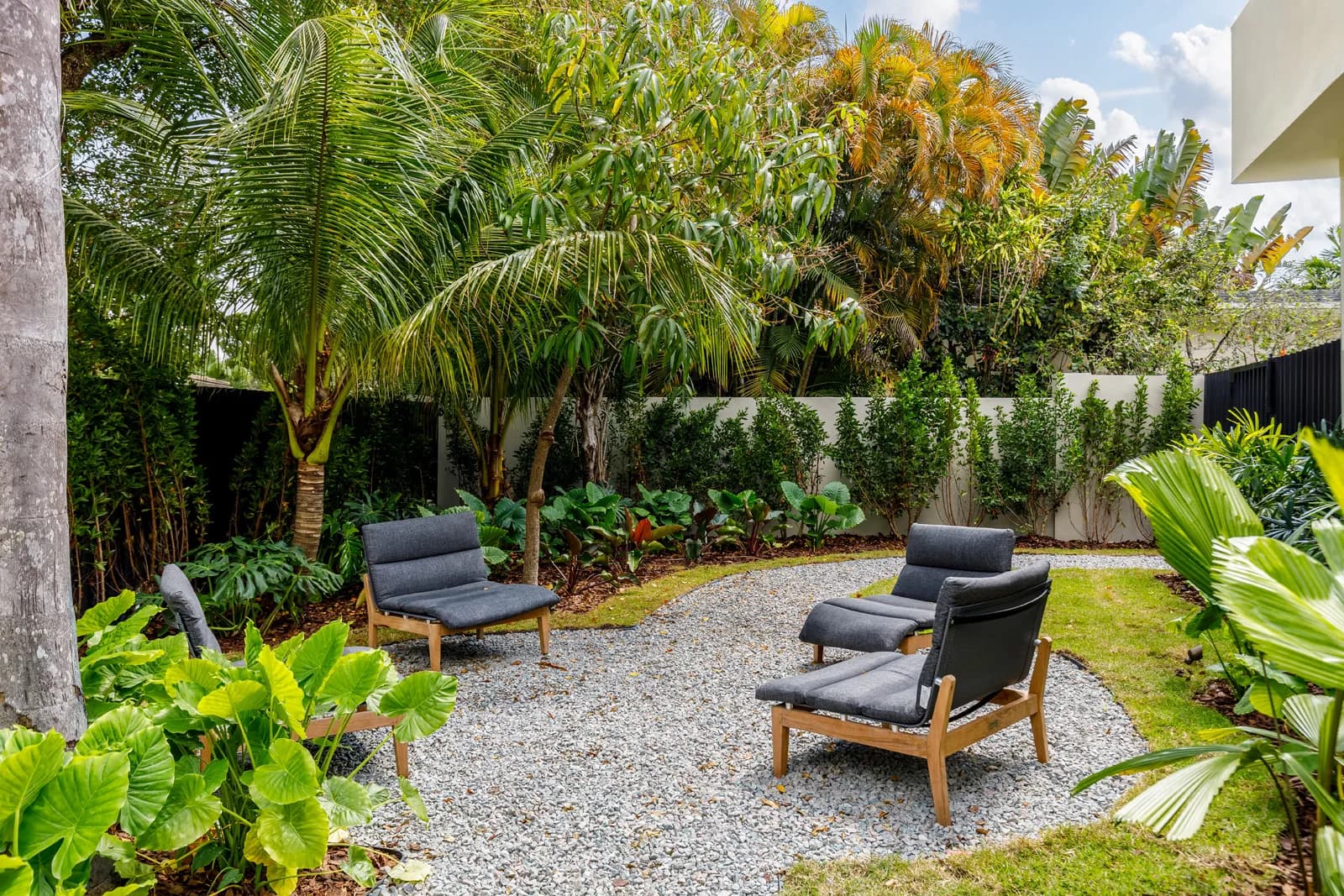
Five Garden Styles, and What Each One Costs You Every Month
Tropical, xeriscape, formal, native and Japanese gardens, read as maintenance schedules. Which ones keep billing you in Miami, and the planting that costs close to nothing once it is established.
Luxom Studio · LUXOM Developments
· 5 min read · Last reviewed
Key takeaways
- A garden is a maintenance contract written in plants. Water, clipping, fertilizer, pest control, replacements and storm cleanup are decided the day the planting plan is drawn, not the day the bills arrive.
- Miami grows all year. A lush tropical garden and a clipped formal garden are beautiful and among the most expensive to keep, because both fight that growth every week.
- Xeriscape is the one that needs no water once established, but in South Florida a desert palette struggles through the rainy season. The plants have to handle both drought and downpour.
- A native South Florida garden, sabal palm, gumbo limbo, Simpson's stopper, wild coffee, firebush, coontie, muhly grass, is adapted to the local rain, heat and wind and asks for little once it settles in.
- The garden that costs close to nothing to keep blends native and drought tolerant plants, puts lawn only where it is used, and is spaced for the plants' mature size so it gets better every year.
From the feed
The reel we posted showed five gardens and said one of them needs no water. The caption put the real point bluntly: a garden is a monthly bill you signed without reading. Every garden style comes with a maintenance schedule built into its plants, and in Miami, where things grow all year, that schedule can cost more over a decade than the planting itself. This is the landscape guide we promised, covering tropical, xeriscape, formal, native and Japanese gardens, read as what each one asks of you every month, and how to design the one that costs close to nothing to keep.
A garden is a maintenance contract
The cost of a garden is not the day it is planted. It is water through the dry season, mowing, clipping and pruning, fertilizer and pest control, replacing the plants that fail, and cleaning up after storms. All of those costs are written into the planting plan, long before the first invoice from a landscape crew arrives.
Miami makes that contract more demanding than most places. There is no winter to pause growth, the dry season can run for months, and the wet season brings heavy rain and the occasional hurricane. A plant that suits those conditions settles in and largely looks after itself. A plant that does not will need help, every week, for as long as you own it.
Tropical garden: the lush one
The tropical garden is what most people picture in Miami: palms, heliconias, gingers, bird of paradise and huge, glossy leaves, layered thick and green. It is the most immediate and generous of the five, and it suits a modern house with glass walls, where the garden becomes the view from every room.
It is also one of the most expensive to keep. The growth that makes it lush means constant pruning and frond removal, fertilizer for the hungriest plants, irrigation through the dry months and attention to pests. The way to keep the look without the full bill is structure: fewer, larger plants, generous spacing, a backbone of natives mixed in, and gravel or stone paths that give the planting edges.
Xeriscape: the one that needs no water
Xeriscaping is designing a garden that, once established, needs little or no irrigation beyond rainfall. The principles are simple: group plants by water need, keep lawn to a minimum, mulch or gravel the beds, improve the soil and water efficiently while plants establish. This is the garden in the reel that needs no water.
In South Florida, the principles work and the desert palette often does not. Many cacti and succulents come from climates without a wet season and can rot in our summer rains. A Miami xeriscape uses plants that tolerate both drought and downpour, in well drained beds, often combined with natives. Done well, it looks green in August and needs nothing from the hose in March.
Formal garden: the clipped one
The formal garden is geometry made of plants: clipped hedges, symmetrical beds, gravel walks and a clear axis from the house. It suits traditional and Mediterranean houses and brings a sense of order that nothing else can.
In Miami, it is the garden that bills most reliably. Hedges grow all year, so keeping crisp lines can mean clipping every few weeks in the warm months, plus fertilizing and pest control for the hedge plants that carry the whole design. If you love the formal look, use it in a small area near the house, a single clipped frame or a pair of hedges at the entry, and let the rest of the garden be looser.
Native garden: the one that belongs
A native garden uses plants that evolved in South Florida: sabal palm, the state tree, gumbo limbo, Simpson's stopper, wild coffee, firebush, coontie, muhly grass and, near the coast, sea grape. These plants are adapted to the local rain cycle, soils, heat and wind, so once established they need far less water and fertilizer than imported tropicals, and they support butterflies, birds and other wildlife.
A native garden does not have to look wild. Designed with the same care as any other planting, in layers, with clear edges and repeated species, it reads as lush, calm and entirely at home. It is also, in practice, the backbone of the lowest maintenance garden a Miami house can have.
Japanese garden: the composed one
The Japanese garden is about composition and restraint: stone, raked gravel, water, a few carefully shaped plants and views that are framed rather than filled. It suits a courtyard or a side garden that is looked at as much as walked through.
In Miami its principles work better than its traditional plants, since moss and many classic species dislike strong sun and heat. A local version keeps the stone, gravel and composition and uses plants that thrive here. The maintenance is different rather than smaller: raking, sweeping and skilled pruning, precise and periodic, done by someone who knows what the garden is meant to look like.
Pull quote
Most gardens get more expensive every year. The right one gets more beautiful every year and asks for less.
The garden that costs close to nothing to keep
The garden that costs close to nothing to keep is not a single style; it is a set of decisions. Choose plants for the exact place they will live, sun or shade, wet or dry, which the University of Florida's Florida Friendly Landscaping program sums up as right plant, right place. Build the backbone from natives and drought tolerant plants that handle both seasons. Put lawn only where people actually walk, sit or play. Space every plant for its mature size so nothing has to be cut back to fit. Mulch or gravel the beds, zone the irrigation by water need with drip where possible and a rain sensor, and plan to water generously only during the first year while plants establish. Keep and protect the existing canopy trees, which shade the house and the garden at no cost.
Planted that way, a garden needs less every year rather than more, and looks better as it matures. It also changes how the house feels, because the garden is the view from every room, which is why we plan it with the architecture, the orientation of the house to Miami's light and the pool as the main outdoor room. If you are planning a garden and want it to be an asset rather than a bill, talk to us.
Pull quote
The cheapest garden to keep is not the smallest one. It is the one where every plant was chosen for the place it has to live.
Filed under
Questions about low maintenance landscape design and garden styles in Miami
01What is the lowest maintenance garden for Miami?
A garden built mostly from South Florida natives and drought tolerant plants that also handle heavy rain, arranged in layers, with lawn only where you actually use it. Once established, which usually takes a growing season or so of regular watering, a garden like that needs little irrigation in most years, little or no fertilizer, and pruning a few times a year rather than every week. Group plants by their water needs, mulch or gravel the beds to hold moisture and suppress weeds, and space everything for its mature size so you are not cutting it back to fit. Keep and protect existing canopy trees, which shade the house and the garden for free. This is the approach the University of Florida promotes as Florida Friendly Landscaping, summed up as right plant, right place, and it is the logic behind the garden that costs close to nothing to keep.
02Does xeriscaping work in South Florida?
The principles work very well; the desert look often does not. Xeriscaping means designing a garden that needs little or no supplemental water once established: grouping plants by water need, limiting lawn, improving soil, mulching and irrigating efficiently. All of that suits Miami, where the dry season can last for months. The problem is that many classic xeriscape plants, cacti and some agaves and succulents, come from climates without a wet season, and South Florida's summer rains can rot them in poorly drained soil. A South Florida xeriscape uses plants that tolerate both extremes, many of them natives, in well drained beds and gravel. Done that way, it is the garden in the reel that needs no water, and it still looks green in August. See our xeriscape section for the details.
03What native plants grow well in a Miami garden?
South Florida has a deep native palette suited to its heat, rain and wind. For trees, sabal palm, the Florida state tree, gumbo limbo and, on the coast, sea grape. For shrubs and hedges, Simpson's stopper, wild coffee and firebush, which flowers for long stretches and draws butterflies and hummingbirds. For the ground layer, coontie, a low native cycad, and muhly grass, whose pink plumes arrive in the fall. Saw palmetto works in drier, sunnier spots. Natives are adapted to the local rain cycle and soils, so once they are established they need far less water and fertilizer than imported tropicals, and they support pollinators and birds. A local native nursery is the best source, because they can match plants to your light and soil. The native garden section explains how to design with them.
04How much maintenance does a tropical garden need?
More than most people expect. A classic tropical garden, palms, heliconias, gingers, bird of paradise, large leaved aroids, is beautiful precisely because it grows fast and dense in Miami's heat and rain, and that same growth is the maintenance. Expect regular pruning and frond removal, fertilizing for the heaviest feeders, irrigation through the dry season, and pest management for the plants that attract scale and whiteflies. Before and after storms, large leaves and palm fronds need attention. None of this is a reason to avoid a tropical garden, but it is a reason to design one with structure: fewer, larger plants, natives mixed in, and enough space that the garden can grow without constant cutting back. See the tropical garden section for how to keep the look without the full bill.
05Can you have a Japanese garden in a hot, humid climate?
You can have its principles, and they translate well: restraint, careful composition, raked gravel, stone, water and plants shaped over time. What does not translate easily is the planting. Moss struggles in strong sun and summer heat, and many of the classic species prefer a temperate climate. A Miami version keeps the composition and swaps the palette for plants that thrive here, often in shade, with gravel and stone doing more of the work. The maintenance is real but different in kind: rather than mowing and spraying, it is raking, sweeping and skilled pruning, which is precise and periodic rather than constant. It suits a courtyard or an enclosed side garden, a place to look at as much as walk through, the kind of space we describe in why the courtyard goes in the center of the plan.
Explore the portfolio
Projects to see


Talk to the studio
If this belongs in your home, our studio will draw the plan.
Initial conversation, 30 minutes. We listen to the brief and respond with a scoped proposal within five working days. You can also read the services page for typical timelines and fees.
Written by Luxom Studio · LUXOM Developments
The design and development studio behind LUXOM residences in Coconut Grove, Miami
Keep reading
From the journal
Architecture · Aug 6, 2026 · 6 min
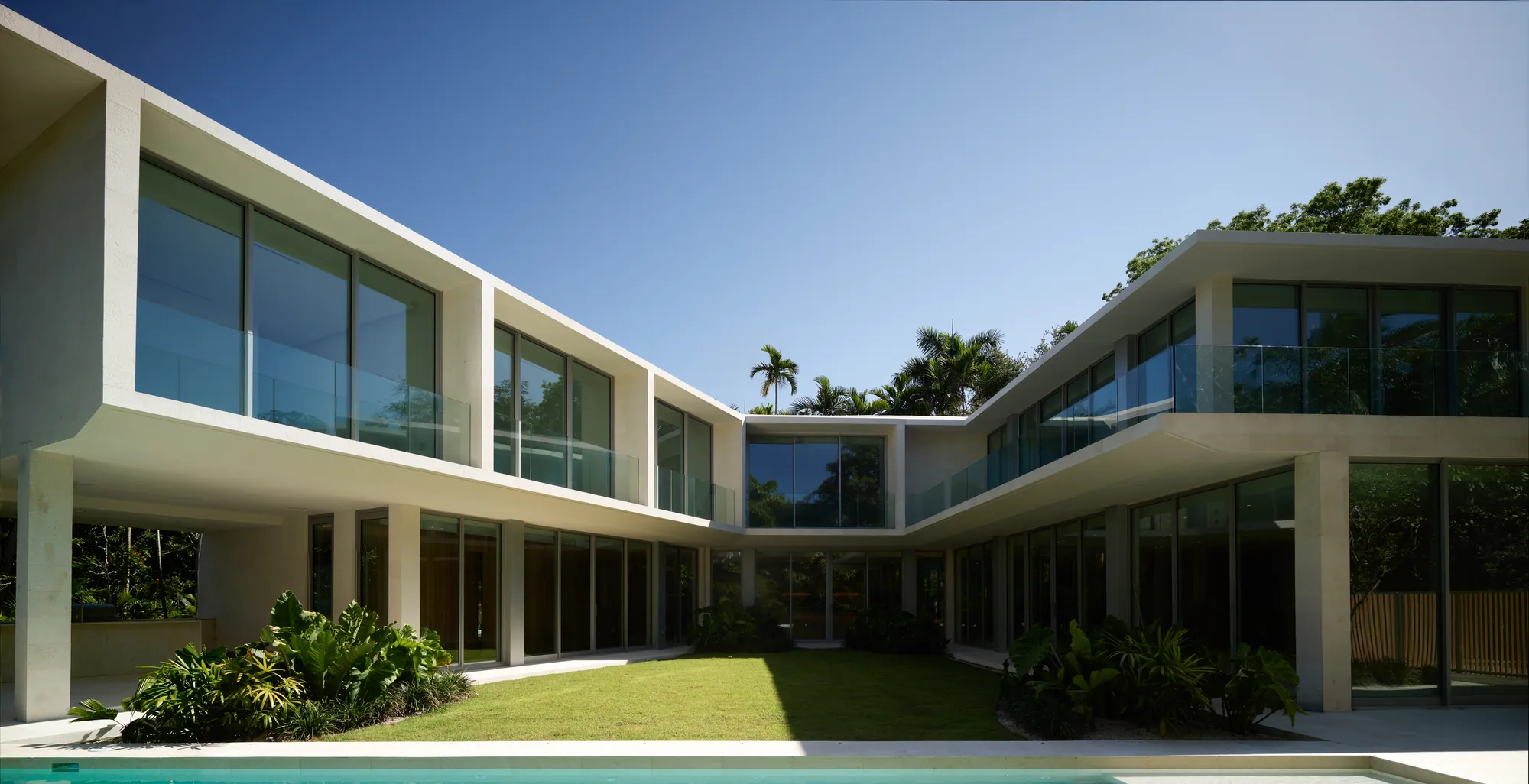
Why the Courtyard Goes in the Center of the Plan
Why Luxom centers the courtyard in a floor plan instead of the back: a centered void gives every room its own light and view, keeps hallways bright, and creates privacy from the plan itself, not from taller walls.
Philosophy · Aug 27, 2026 · 6 min
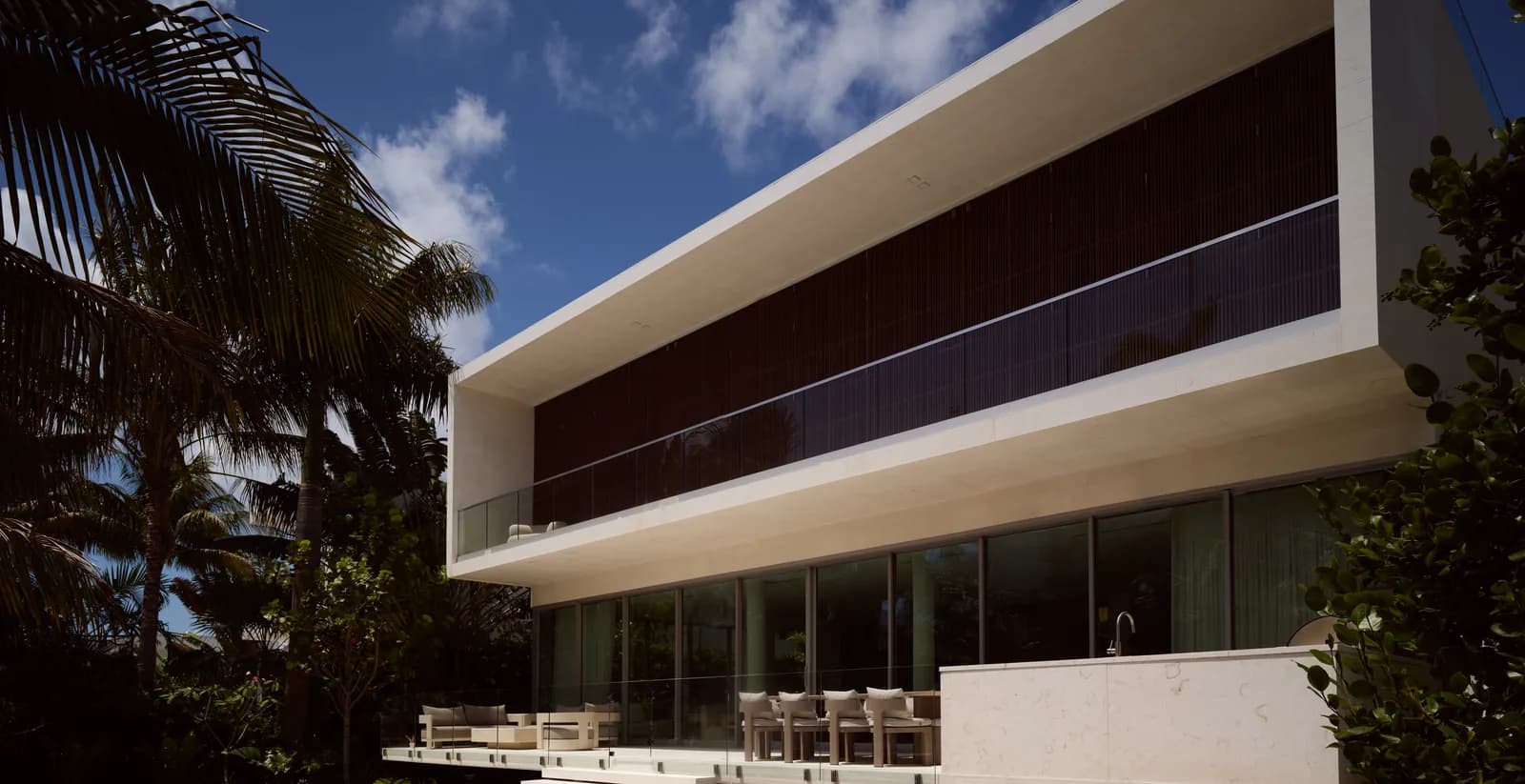
The Pool Is the Main Room, Not an Amenity
In a Miami luxury home, the pool gets designed before the bedrooms do. Here is why Luxom treats it as the first room on the plan, not a rectangle added to the yard later.
Architecture · Sep 26, 2026 · 3 min
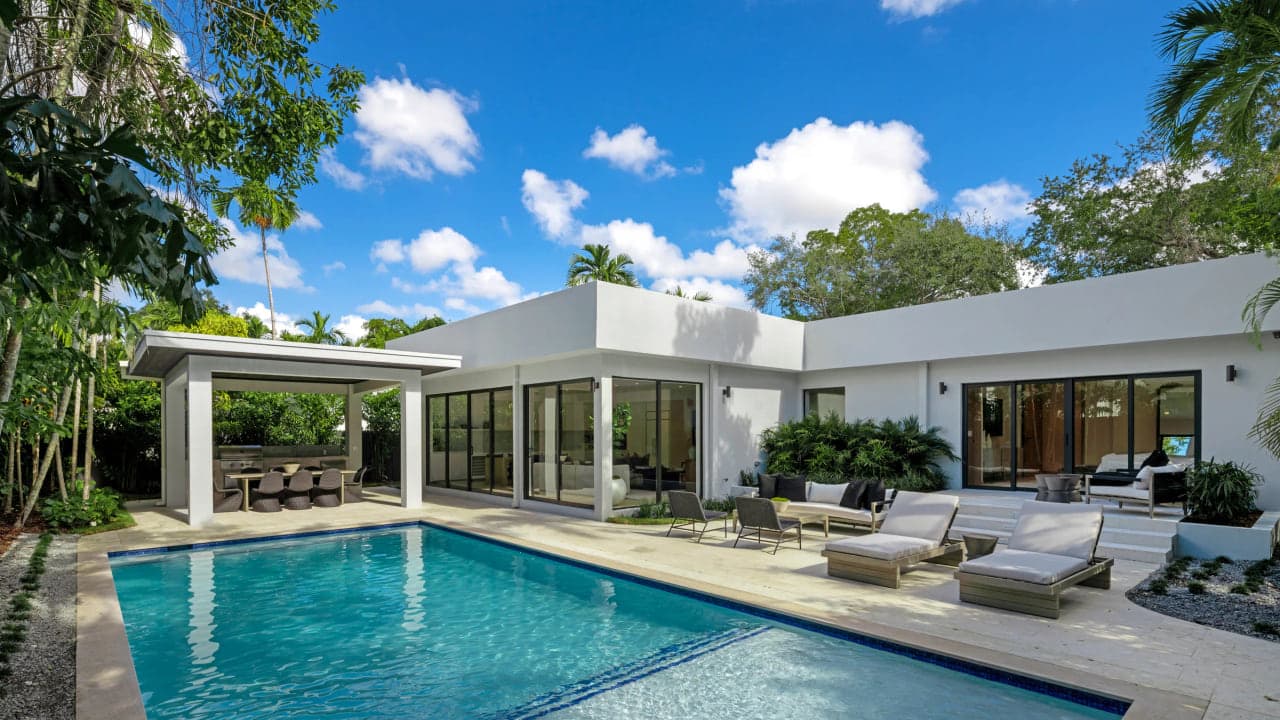
A House That Works With Miami's Light, Not Against It
Big windows are not the same thing as good light. Why Luxom decides where glass goes by the sun's path first, and treats orientation as a structural decision, not a finish.