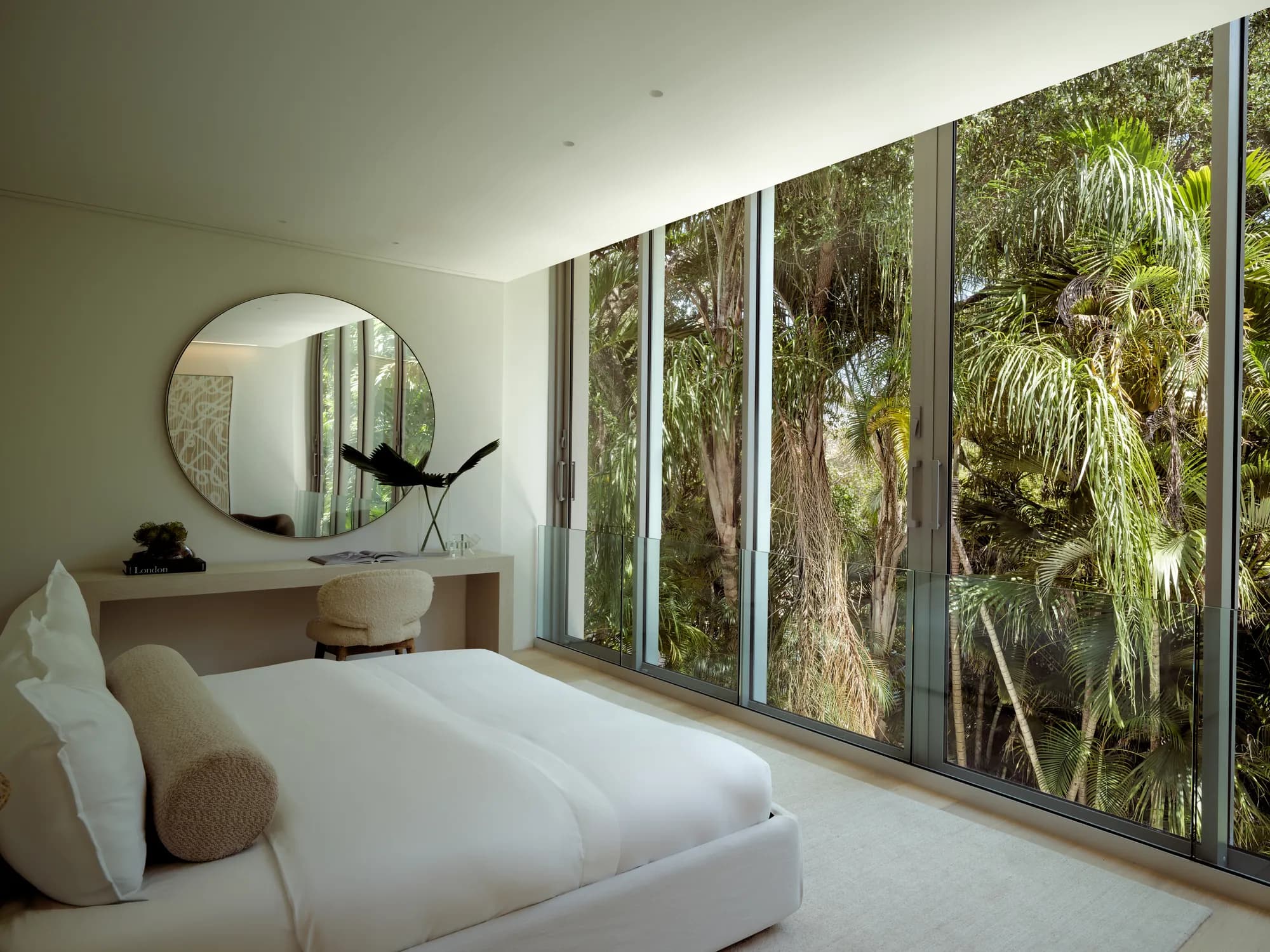
Fourteen Bedrooms, One Rule: Glass on the Long Wall at Luxom
A bedroom is judged at seven in the morning, not in a photograph. Why every primary bedroom Luxom builds in Coconut Grove puts its floor to ceiling glass on the long wall, not just any wall with a view.
Luxom Studio · LUXOM Developments
· 5 min read · Last reviewed
Key takeaways
- A bedroom photographs the same at any hour, but it only gets lived in at seven in the morning. The rule behind every Luxom primary bedroom is built around that hour, not the listing photo.
- The glass goes on the long wall of the room, not on whichever wall happens to face the best view. That orientation puts morning light across the full length of the room instead of into one corner.
- Morning light exposure is one of the main cues the body's circadian clock uses to set the timing of the sleep wake cycle, which is the actual mechanism behind why a glass wall bedroom feels different to wake up in.
- A full glass wall does not remove privacy or glare, it moves both into the design brief: orientation, low emissivity glazing and landscaping do the work that blinds and curtains would otherwise have to do alone.
- The rule holds across all fourteen primary bedrooms shown in the Word: BEDROOM series, built into Luxom's Coconut Grove residences rather than treated as a one house feature.
From the feed
The clip we posted opens on a line worth repeating: a bedroom is judged at seven in the morning, not in a photograph. Fourteen of ours carry the same answer to that test, all of them with the glass on the long wall. Here is why that one orientation decision, made on the floor plan before anything else, is what actually holds up at seven a.m.
The glass goes on the long wall, not the wall with the best view
The instinct in most bedrooms is to put the window wherever the best view happens to be, a garden on one side, a street on another, and let the room's shape fall out however it falls. Luxom runs the opposite sequence. The glass goes on the room's long wall, the side with the most linear feet, regardless of which wall a view technically faces first. That single choice changes how light behaves across the whole room. A window on a short wall lights a corner and tapers off within a few feet. Glass across the long wall carries daylight the entire length of the room, past the foot of the bed and into the sitting area, instead of leaving most of the floor plan in shadow while one corner does all the work. It is a decision made on the plan, at the same stage the room's dimensions are set, not a feature dropped in once a view has already been chosen. Put simply, this is why the long wall, not a corner window or a standard opening, is where the glass goes in every primary bedroom Luxom builds.
What morning light actually does to how a bedroom feels
A photograph does not care what time it was taken. A bedroom does, because the person living in it experiences the room at a specific hour every single day, not at the staged moment a camera catches it. The Sleep Foundation's guide to light and sleep is direct about the mechanism: light is the primary environmental cue that keeps the body's circadian clock synchronized, and exposure to natural light, morning light specifically, is tied to healthier cortisol timing, better mood and improved sleep quality. Huberman Lab's overview of light exposure and circadian rhythm adds the detail that retinal cells read the ratio of light across the day to set that timing, which is why the quality and reach of morning light in a room is not a decorating preference, it is a functional input. A glass wall running the length of a bedroom delivers that input at the scale of the whole room the moment the sun clears the tree line, rather than through a narrow shaft that only reaches a corner of the floor. That is what a glass wall does to how a bedroom is judged at seven in the morning versus in a listing photo: the photo never changes, the seven a.m. experience does. Morning light and waking up: what the circadian research actually supports is exactly that mechanism, stated plainly rather than left as a mood claim.
Privacy and glare do not disappear, they get designed for
The tradeoff people assume with a full glass wall is that it costs the room its privacy, or that morning sun becomes uncomfortable glare rather than a wake up cue. Neither has to be true if the wall is planned rather than added. Orientation solves most of the privacy question before glazing specification even comes up: a long wall facing a courtyard, a garden or a tree canopy rather than the street or a neighboring lot line does the privacy work that curtains would otherwise have to do alone. Low emissivity glass handles the glare and heat side, cutting the sun's intensity and infrared heat gain without tinting the room dark the way a film-coated window does. Privacy and glare: low-E glazing, orientation and landscaping tradeoffs is the actual design brief behind a wall like this, not an afterthought solved with curtains. None of this changes what the wall has to be structurally. It still gets built and inspected to the same code as the rest of the house, the same sequence our piece on how a Luxom bedroom gets built, block to paint walks through for the wall itself, before any glass goes into the opening.
The same rule runs across fourteen bedrooms in Luxom's built residences
Where this layout shows up across Luxom's Coconut Grove residences is the real test of whether it is a rule or a one-off feature. The long wall glass orientation runs through bedrooms at Onaway, Crystal, Ingraham and Samana, four completed Coconut Grove residences with different footprints and different lots, which is exactly why the rule matters: it survives the site conditions changing under it. At Onaway, an 8 bedroom, 8.5 bathroom estate organized as pavilions around a central pool courtyard, the long wall faces inward toward the courtyard in every bedroom, covered in full in eight bedrooms built around one pool courtyard. At Crystal, a 4 bedroom plus den residence at 3560 Crystal View Ct organized vertically on a compact lot, the same orientation logic shapes the primary suite specifically around what it faces, detailed in designing the Crystal Residence primary suite around its view. It is the same portfolio wide discipline behind the marble seam that runs through every bathroom in fourteen bathrooms, one rule: the material and the orientation logic stay constant, while the room and the lot around them change.
Where the long wall costs more, and where it earns its keep
A full height glass wall is not the cheaper option next to a standard window wall. It needs larger structural glazing, impact rated glass to meet Florida's wind load and hurricane standards under the Florida Building Code, and more careful waterproofing at an opening several times the size of a punched window. That premium is easiest to justify on the wall that actually carries the room, the long side a person wakes up facing every morning, and harder to justify on a short wall that a headboard or a closet run is going to block anyway. Luxom treats the decision the same way it treats material choices elsewhere in the house: planned at the design stage, tied to which wall in the room will actually be lived with, not an upgrade priced in after the floor plan is already fixed. To talk through what this looks like on a specific lot, get in touch.
Pull quote
A bedroom is judged at seven in the morning, not in a photograph.
Filed under
Questions about floor to ceiling glass wall in a primary bedroom
01Why does the glass go on the bedroom's long wall instead of just a window with a view?
A standard window, wherever the best view happens to be, lights one corner of a room and leaves the rest of it in shadow for most of the day. Putting the glass on the room's long wall instead means the opening runs the full length of the space, so morning light crosses the entire room rather than pooling in a single spot near one window. It is an orientation decision made on the floor plan, not a feature added once a view is picked, which is why the long wall differs from a corner window in the first place. The same logic governs how a suite gets planned around what it actually faces in designing the Crystal Residence primary suite around its view.
02Does floor to ceiling glass in a bedroom actually change how you wake up?
Yes, and the mechanism is not about mood, it is about light hitting the eye at a specific time. The Sleep Foundation's guide to light and sleep documents that light is the main environmental cue the body's circadian clock uses to stay synchronized, and morning light exposure specifically is linked to healthier cortisol timing and better sleep quality. A bedroom with glass across its long wall gets that exposure the moment the sun comes up, at the scale of the whole room rather than a narrow shaft from a standard window, which is the literal difference between a room that helps you wake up and one that just has a nice window.
03How do you keep a bedroom private when one whole wall is glass?
Privacy on a long glass wall comes from where the room faces and how the glazing is specified, not from covering the opening with drapery by default. Low emissivity glass cuts glare and heat gain without darkening the room the way a tinted film would, and orienting the wall toward a courtyard, a garden or tree canopy rather than the street or a neighboring lot line does most of the privacy work before a single curtain is installed. The wall itself still gets built to the same structural and impact standards as the rest of the house, which our piece on how a Luxom bedroom gets built, block to paint covers from the construction side. Privacy and glare: low-E glazing, orientation and landscaping tradeoffs is the actual design brief behind a wall like this, not an afterthought solved with curtains.
04What does a glass wall like this cost compared to a standard window wall?
A full height glass wall costs more than a standard punched window opening because it needs larger structural glazing, impact rated glass to meet Florida's wind load requirements, and more careful waterproofing at a much bigger opening in the building envelope. Pella's guide to floor to ceiling window design covers the general premium and framing tradeoffs builders weigh before specifying glass at this scale. Luxom treats that premium as a decision made at the design stage, tied to which wall in the room actually earns it, rather than an upgrade priced in after the floor plan is already set.
05Which Luxom residences use this long wall glass bedroom layout?
The layout runs across bedrooms at Onaway, Crystal, Ingraham and Samana, Luxom's built residences in Coconut Grove, the same fourteen rooms shown in the Word: BEDROOM series. Onaway's pavilion plan takes the idea further at the scale of a full house, covered in eight bedrooms built around one pool courtyard, and the same fourteen rooms, one rule discipline is what runs the marble seam across every bathroom in fourteen bathrooms, one rule.
Explore the portfolio
Projects to see


Talk to the studio
If this belongs in your home, our studio will draw the plan.
Initial conversation, 30 minutes. We listen to the brief and respond with a scoped proposal within five working days. You can also read the services page for typical timelines and fees.
Written by Luxom Studio · LUXOM Developments
The design and development studio behind LUXOM residences in Coconut Grove, Miami
Keep reading
From the journal
Materials · Aug 30, 2026 · 6 min
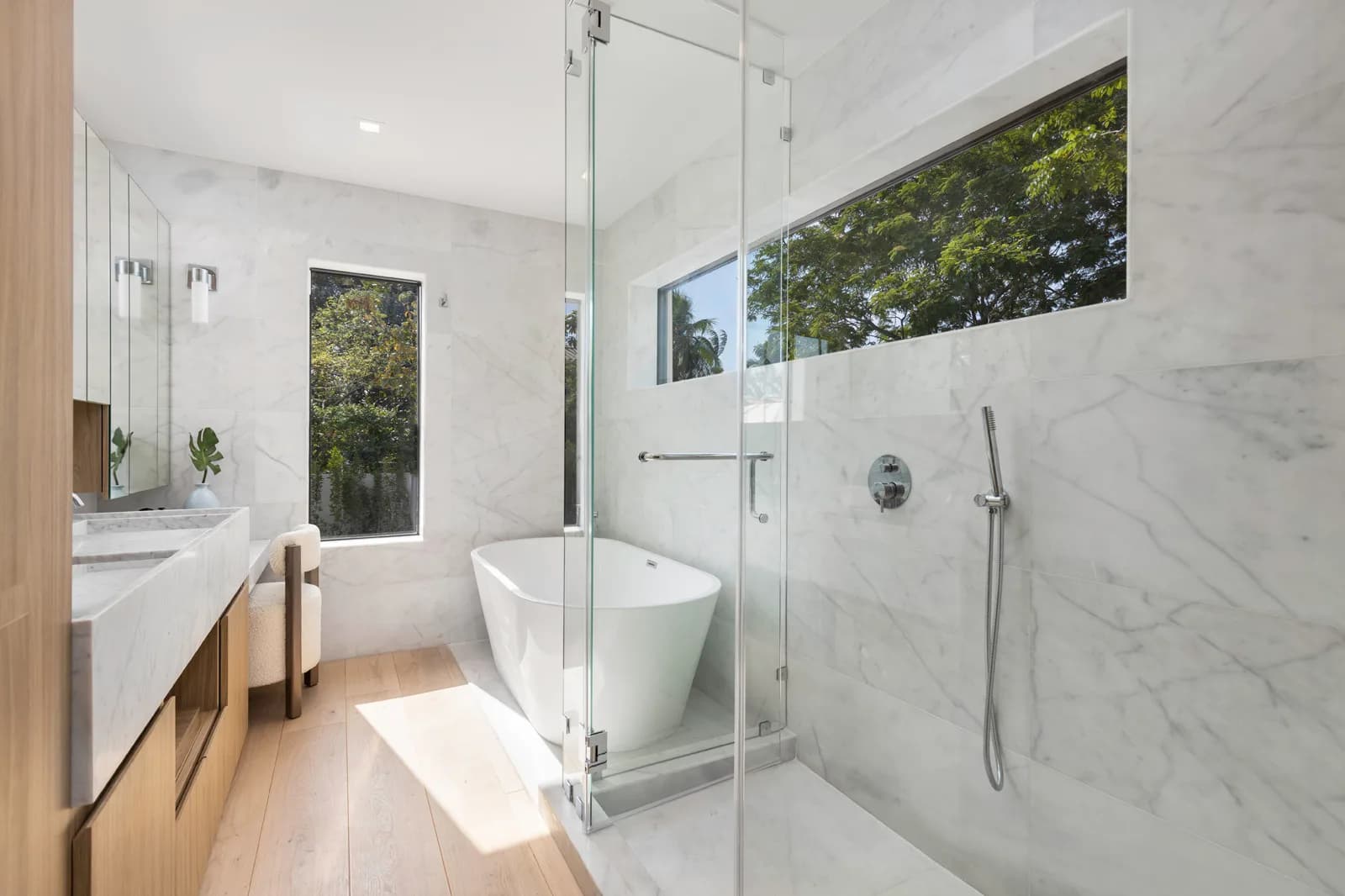
Fourteen Bathrooms, One Rule: Book-Matched Marble at Luxom
Book-matched marble only forgives a joint drawn first. How that seam gets planned, where the mirror and window sit around it, and how the discipline runs across Luxom's Coconut Grove bathrooms.
Development · Aug 3, 2026 · 7 min
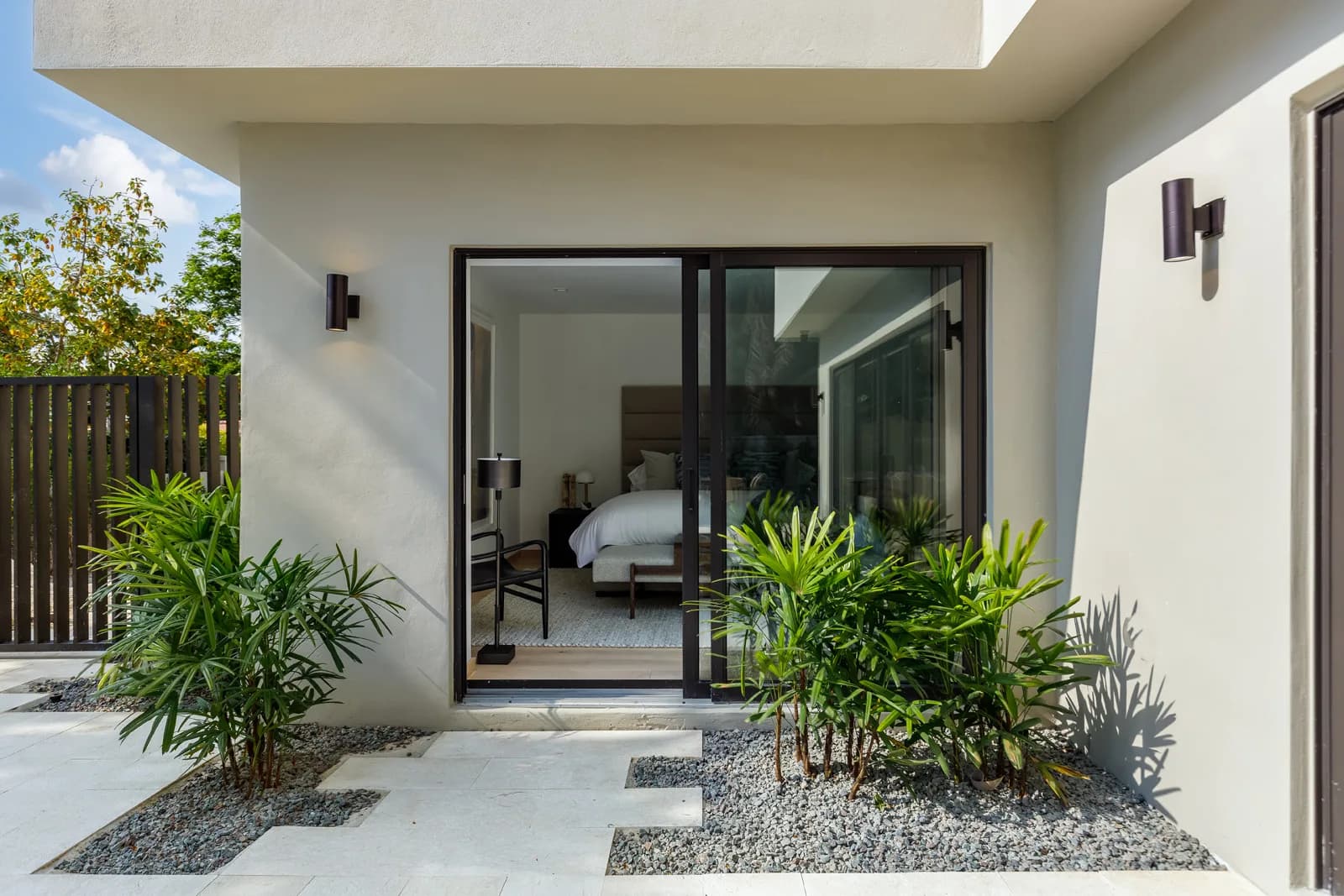
How a Luxom Bedroom Gets Built, Block to Paint
Block, conduit, plaster, then paint: how one of the bedrooms at our Samana Residence in Coconut Grove went from an open block shell to the room in the clip, on the same schedule as the rest of the house.
Architecture · Aug 1, 2026 · 5 min
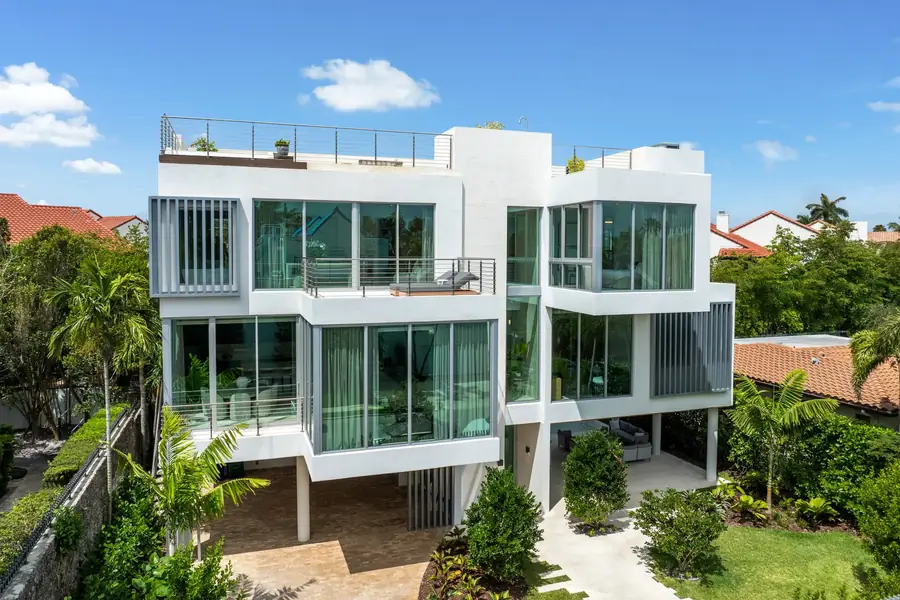
Designing the Crystal Residence Primary Suite Around Its View
Inside the primary suite fit-out at our Crystal Residence in Coconut Grove: how a room actually gets built around a view, and why that decision happens long before the glass goes in.