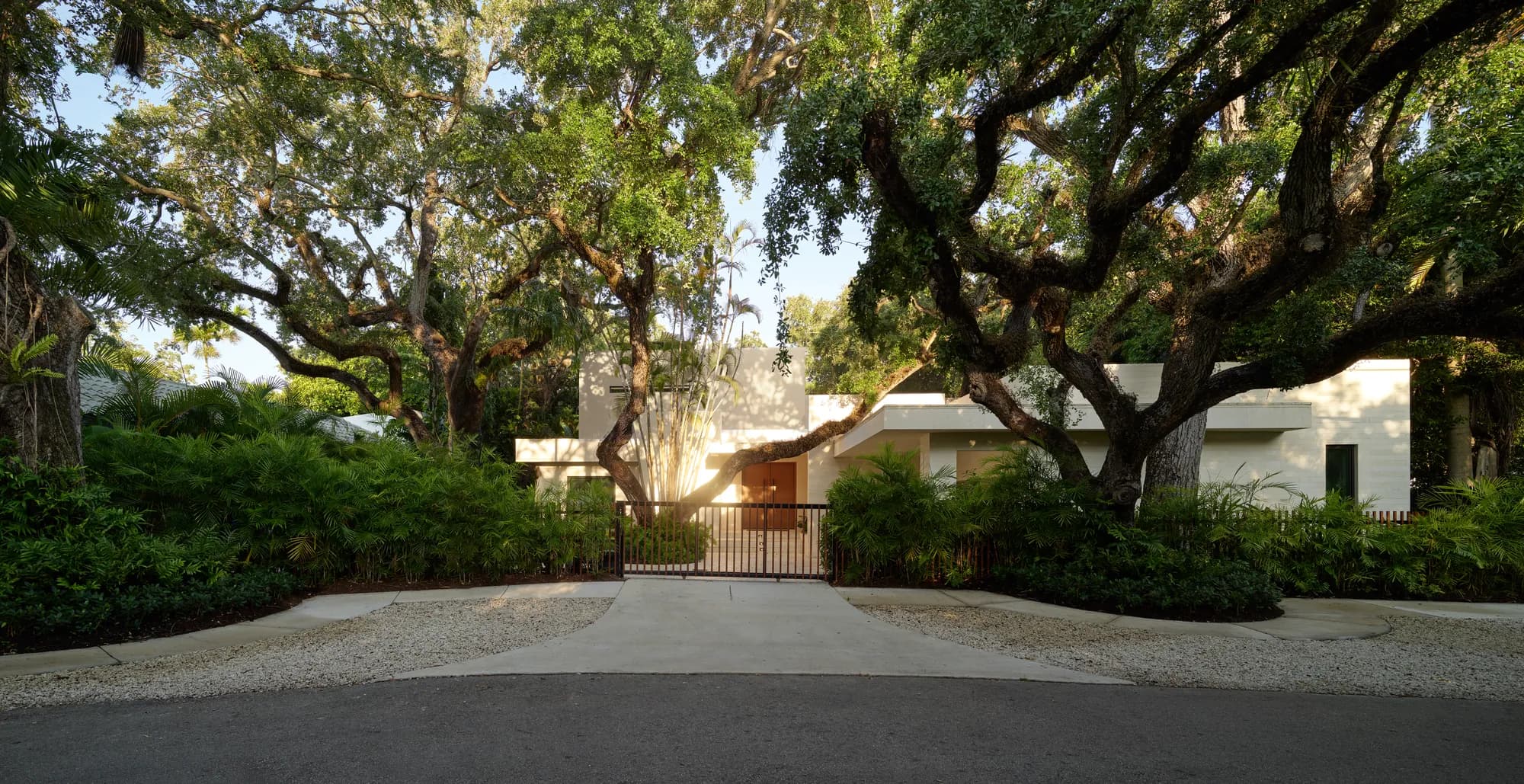
The Details You Only Notice In Person
Joinery, lighting and stone are easy to list and hard to fake. Here is how a Luxom home builds each one by hand, and why a walkthrough proves it in a way no photo can.
Luxom Studio · LUXOM Developments
· 5 min read · Last reviewed
Key takeaways
- Custom millwork is joinery built to fit one specific opening or wall, not a catalog run installed to fit. That is the difference between made and bought.
- Layered, concealed lighting hides its own fixtures in coves and reveals so a room reads as naturally lit, with no visible source to explain where the light comes from.
- Matching stone veining across a seam is a hand process. Slabs are sequenced and turned so the pattern keeps running instead of breaking at the joint.
- None of these three details reproduce well in a photograph. Texture, depth and the absence of a visible light source all read differently at full scale, in person.
- Luxom builds several houses at once, and the joinery, lighting and stone program on each one is carried out by hand rather than specified from a catalog.
Editor's note
A listing photo can show a marble counter and a pendant light in the same frame, and it will always look finished. What it will not show is which parts were built for that specific room and which parts were ordered from a catalog and installed to fit. That difference only shows up close, in person, where a hand runs along an edge or a light source refuses to reveal itself.
This is a walk through three of those differences on the houses we are building right now: the joinery, the lighting and the stone. Each one is a separate trade, each one is finished by hand, and each one is part of the reason a private viewing exists at all.
Joinery built for the room, not ordered from a catalog
The easiest way to tell custom millwork from catalog cabinetry is to look at the opening it sits in. Catalog joinery is a repeated module, sized in a handful of standard widths and installed to fit whatever gap is closest. Custom millwork starts from the opposite direction: a carpenter measures the actual window, wall or recess first, then builds the piece to match it, down to the louver spacing and the reveal at the edge.
Around a bathroom window, that means slatted joinery cut to the exact width of the glass, with each louver angled to filter light and hold privacy without a curtain. It is slower to build and impossible to reorder in a different size once it is cut, which is precisely why it fits the way it does. Other builders rank custom millwork and trim among the finishes that separate high end remodels from builder grade construction, and on our houses it is treated the same way as the stone and the lighting: made for the room, not bought for it. The same discipline runs through the joinery in our piece on fluted wood panels, where the material itself becomes the architectural detail.
Pull quote
Furniture gets bought. Joinery gets built for the one wall it will ever live on.
Concealed lighting, the underrated investment in a luxury home
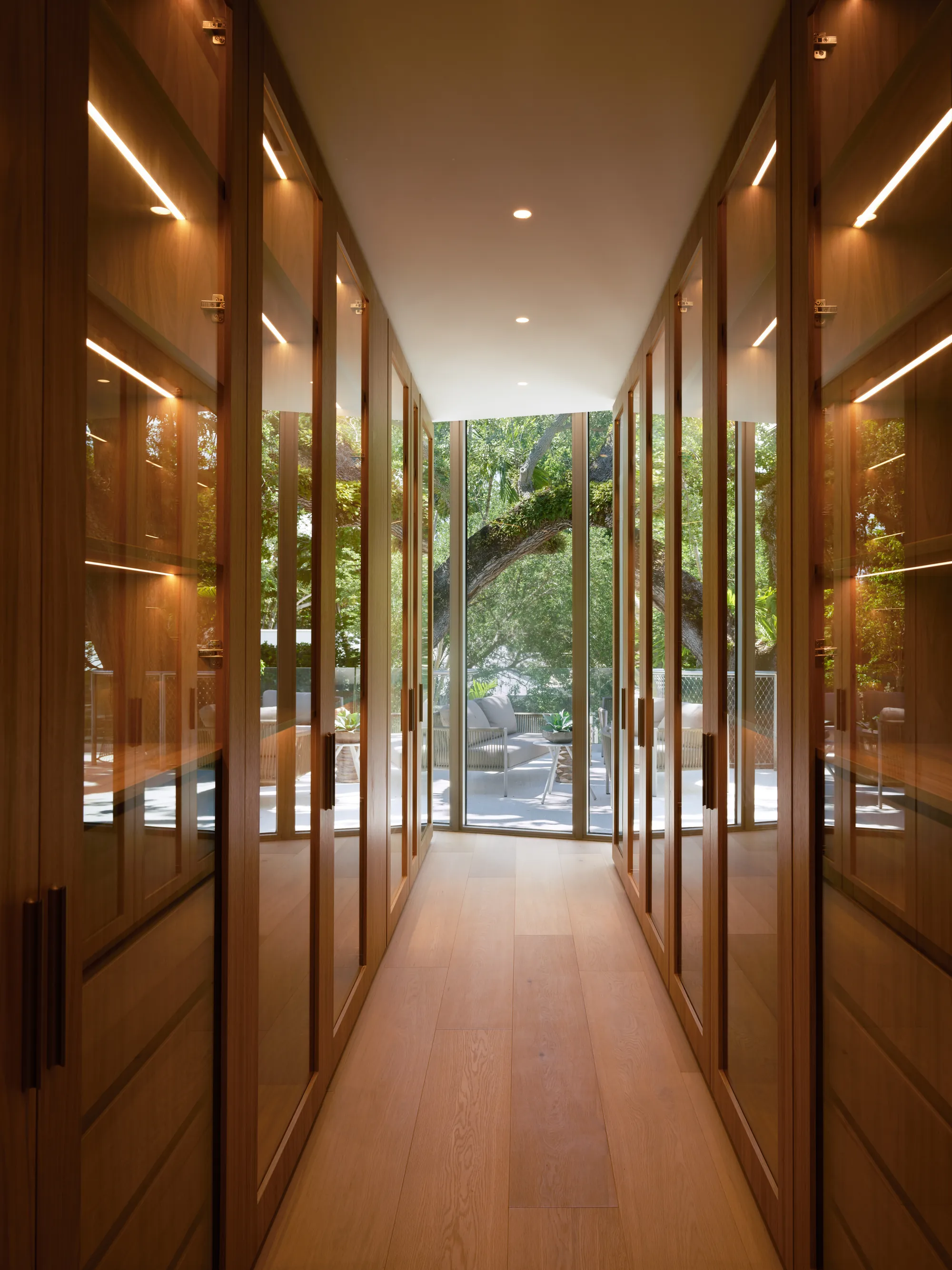
Most rooms are lit by objects: a pendant, a lamp, a row of downlights you can point to. A room lit well is lit by light itself, with no object to point to at all. That is the effect a cove or a reveal is built for: a channel cut into the ceiling or the edge of a wall that hides the fixture entirely and lets only the light spill out, washing a surface instead of aiming at a spot.
Getting there takes planning most homes skip, because the electrical has to be roughed in before the ceiling is closed, and the joinery around it has to be sized to hide the fixture without dimming it. Done well, a living room with floor to ceiling glass onto a garden reads as if it is simply catching the last of the daylight, even after the sun is down. It is not an accident that other designers now call layered, concealed lighting the most underrated investment in luxury home design. We treat it as load bearing to the room, not an accessory added at the end.
Stone veining matched by hand across the seam
Marble and other natural stone are cut from a block in sequence, one slab after another, and each slab carries on the vein pattern of the one before it. Left to chance, a seam between two pieces breaks the pattern and the eye catches it immediately. Matched by hand, the fabricator selects and turns consecutive slabs so the veining keeps running across the joint, whether that joint sits on a waterfall edge of a kitchen island or across a long stretch of counter.
It costs more of the block, because slabs get chosen for how they continue rather than cut wherever they fit most efficiently, and it takes longer on the fabrication floor for the same reason. The payoff is a surface that reads as one continuous piece of stone rather than two pieces glued together. We go deeper on how this plays out across a single kitchen in one slab, three kitchens, where the same marble language repeats across three different builds.
Ambient lighting used to shape a room, not just light it
Concealed sources solve where the light comes from. What happens next, how bright, how warm, how it layers across a room through the evening, is a separate decision, and it is the one most homes leave to whatever fixture came with the room. On the houses we build, lighting is designed the way a floor plan is designed: room by room, with a level of ambient wash set for daytime and a separate, warmer layer for evening, so a space that reads crisp and bright at noon can read quiet and warm after dark without a single fixture changing.
That is the difference between a room that is lit and a room that is designed to be lived in at every hour, not just staged for a single photograph taken at the best hour of the day.
Why a photo cannot show what a private viewing shows
Put a fluted panel, a concealed light source and a hand matched stone seam in the same photograph and the picture will look good. It will not show the depth a fluted surface takes on as light rakes across it, or the fact that a bright room has no visible fixture to explain the light, or the way a vein keeps running under your hand across a seam you cannot find by looking. Photographs compress all three of those details into the same flat plane, and flat is exactly what none of them are.
That gap between what a listing photo can carry and what the house actually is is the reason a private viewing exists. If you want to see the joinery, the lighting and the stone the way they were built to be seen, reach out and we will schedule a walkthrough of a home currently under construction.
Filed under
Questions about craftsmanship details in a Luxom home
01What is the difference between custom millwork and standard cabinetry?
Standard cabinetry is ordered from a catalog run and installed to fit whatever opening exists. Custom millwork is built the other way around: a carpenter measures the actual window, wall or opening first, then builds the joinery to match it exactly, down to the louvers, reveals and reglets. The result costs more in labor because every piece is a one time build, not a repeated module, but it is why a custom room reads as designed rather than furnished.
02Why do luxury homes hide their light fixtures instead of showing them?
A visible fixture becomes an object in the room, competing with the architecture. Concealed lighting, run through coves, reveals and slots built into the ceiling or wall, lets the light do the work without announcing where it comes from. The room reads as if it is simply, naturally bright, which takes more planning during construction since the electrical and the joinery have to be designed together rather than added after the fact.
03How is stone veining matched by hand across a seam?
Natural stone comes from a sequence of slabs cut from the same block, and each slab carries a continuation of the same veining. Matching a seam by hand means selecting and turning consecutive slabs so the pattern keeps running from one piece to the next, at a waterfall edge or across a long counter, instead of resetting at the joint. It takes more of the block and more time on the fabrication floor than cutting stone to size without regard for the pattern. For a longer look at how this plays out across a kitchen, see one slab, three kitchens.
04Can these construction details actually be seen in photos?
Only partly. A photo can show that a counter is marble or that a room is bright, but it flattens the two things that make these details work: the depth of a fluted or louvered surface under real light, and the absence of a visible fixture in a room that is genuinely well lit. Both register instantly when you stand in the space and neither survives compression into a still image, which is the reason we invite people to walk the house rather than judge it from a feed.
05How do I request a private viewing of a Luxom home?
Reach out through our contact page and we will arrange a walkthrough of a home currently under construction or ready for viewing. Seeing the joinery, the lighting and the stone in person is the fastest way to judge the craft behind the finish.
Explore the portfolio
Projects to see


Talk to the studio
If this belongs in your home, our studio will draw the plan.
Initial conversation, 30 minutes. We listen to the brief and respond with a scoped proposal within five working days. You can also read the services page for typical timelines and fees.
Written by Luxom Studio · LUXOM Developments
The design and development studio behind LUXOM residences in Coconut Grove, Miami
Keep reading
From the journal
Materials · Aug 6, 2026 · 7 min
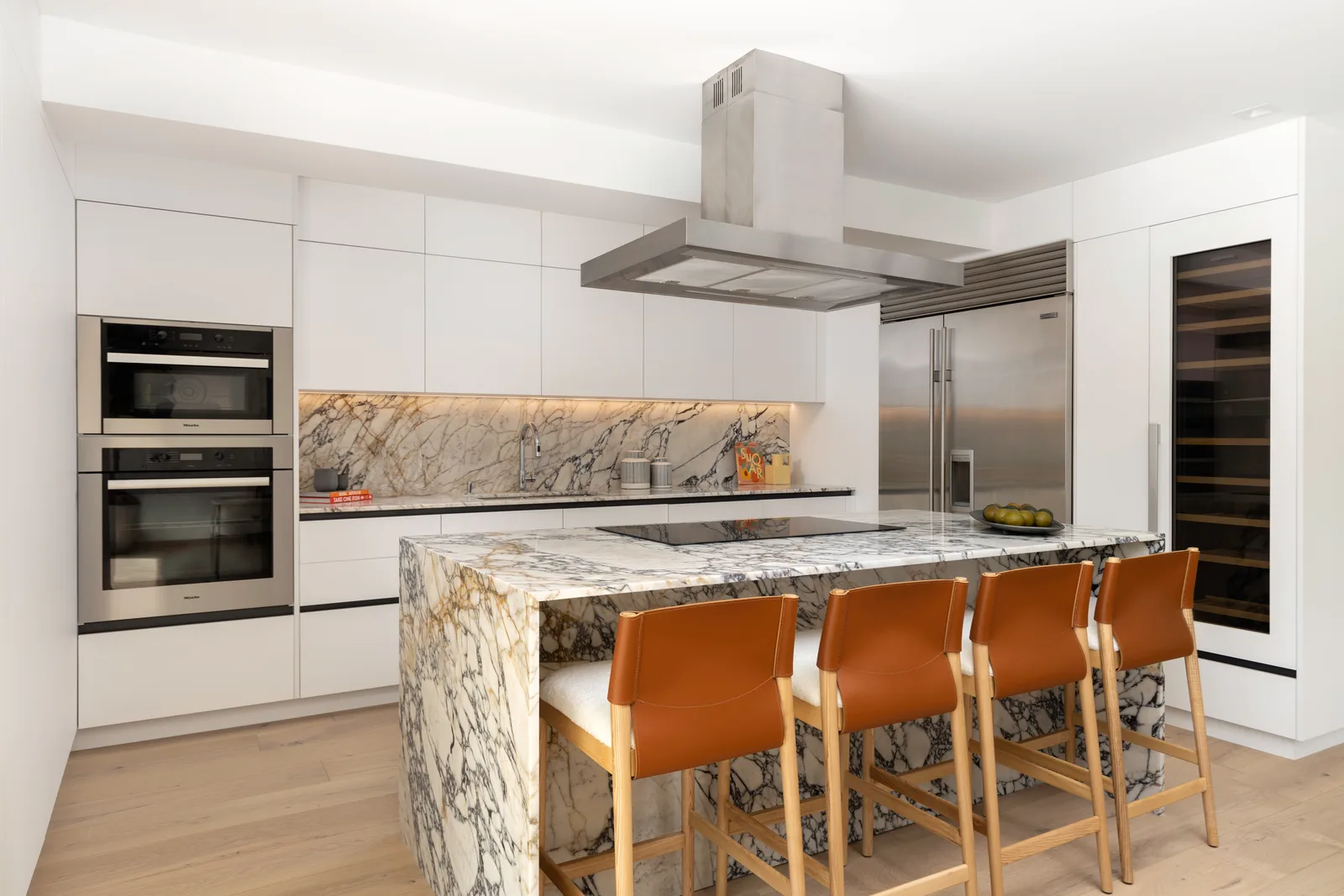
One Slab, Three Kitchens: The Same Marble at Samana, Crystal and Onaway
How one Calacatta marble language runs through three different Luxom kitchens: a single waterfall island at Samana, a full counter to backsplash run at Crystal, and the same stone at a much larger scale at Onaway.
Materials · Jul 25, 2026 · 4 min
Fluted wood: texture as architectural detail
How fluted wood panels turn a flat surface into an architectural detail. Where to use them, which species and finishes work, and how to keep the effect quiet rather than busy.
Materials · Sep 13, 2026 · 4 min
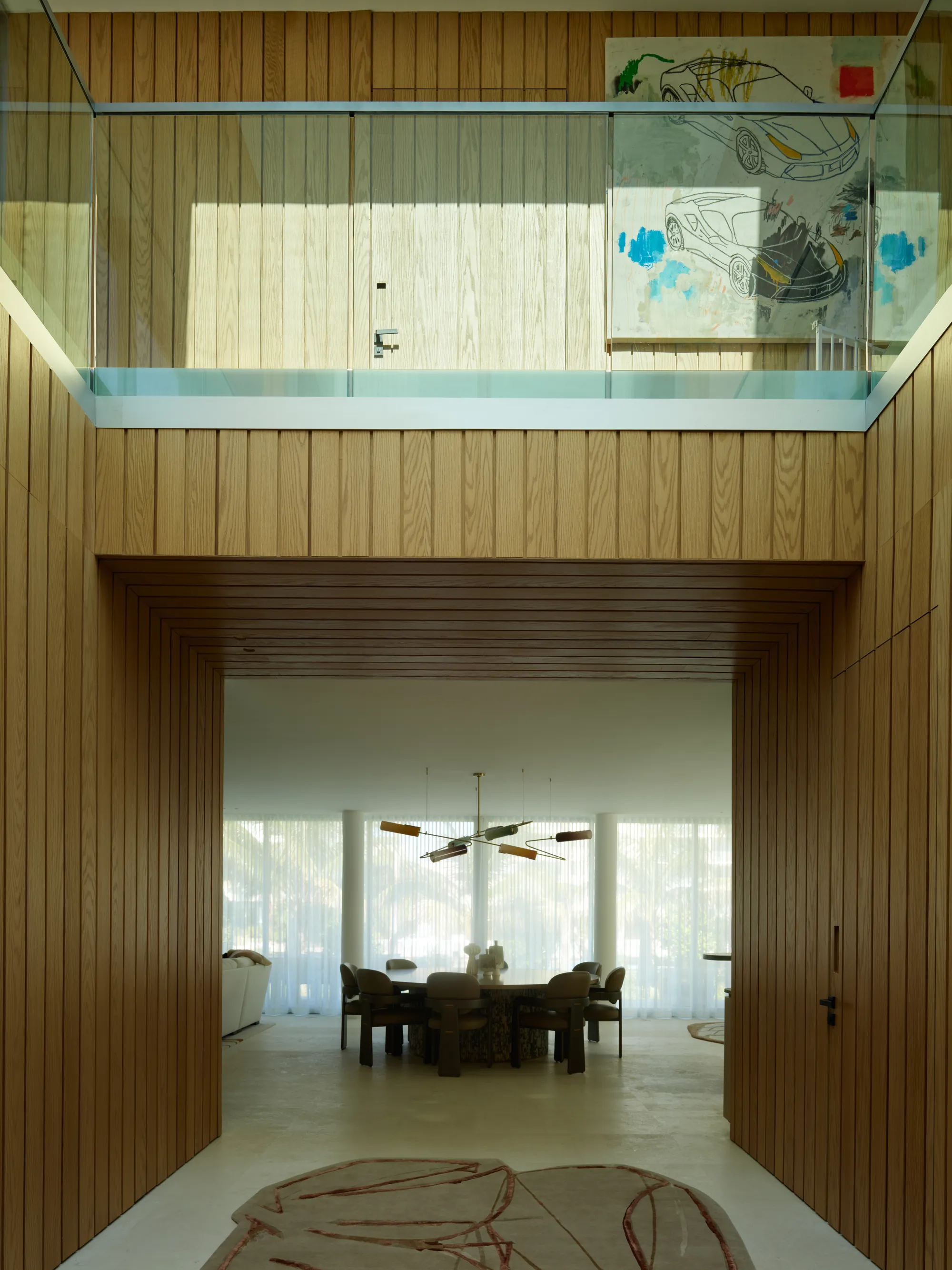
Five Walls That Aren't Painted
Plaster, cement, wood and stone, four crafted finishes we specify instead of a coat of color, and the one rule that decides which wall gets which one.