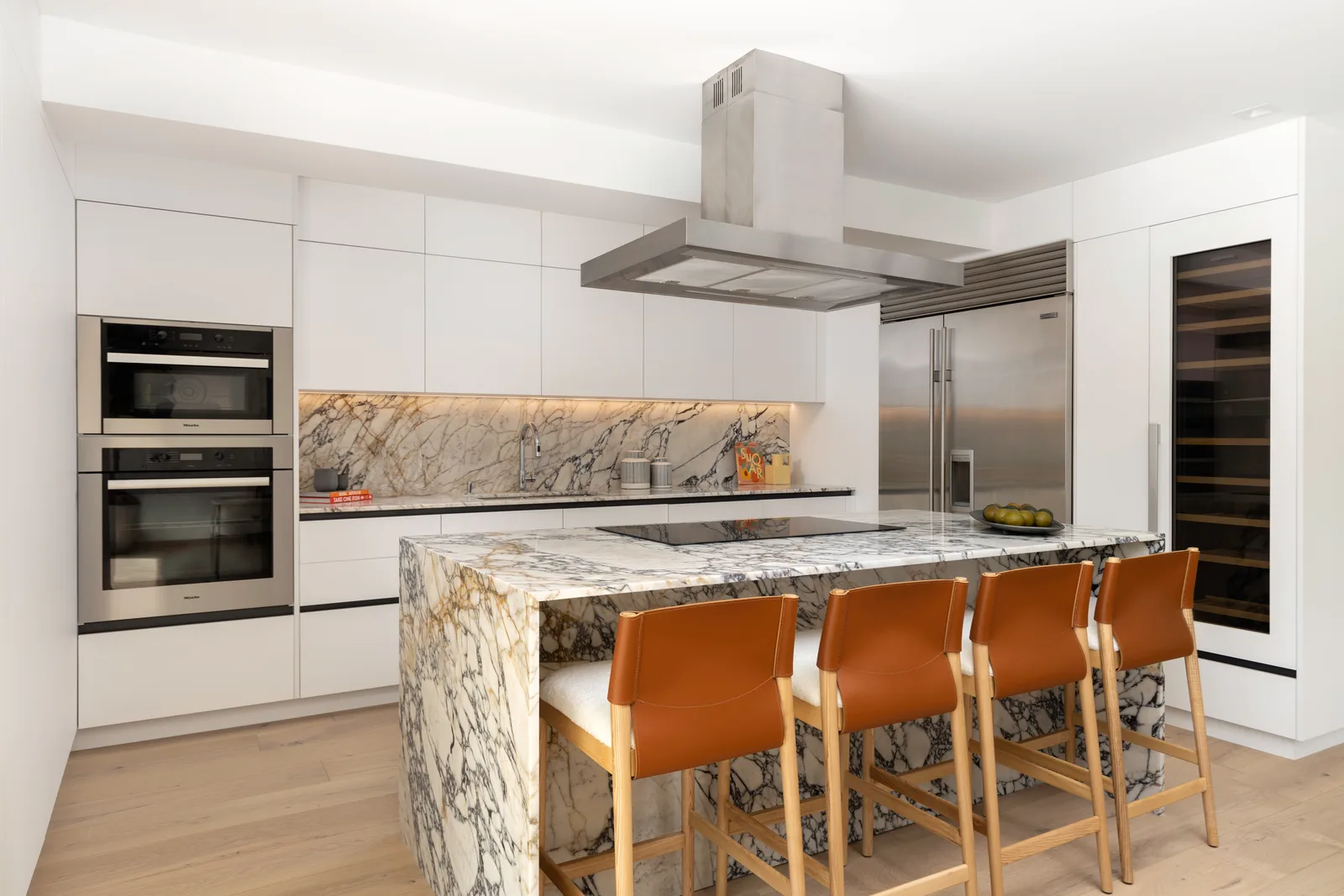
One Slab, Three Kitchens: The Same Marble at Samana, Crystal and Onaway
How one Calacatta marble language runs through three different Luxom kitchens: a single waterfall island at Samana, a full counter to backsplash run at Crystal, and the same stone at a much larger scale at Onaway.
Luxom Studio · LUXOM Developments
· 7 min read · Last reviewed
Key takeaways
- The same Calacatta marble runs through three separate Luxom kitchens, Samana, Crystal and Onaway. What changes from house to house is how much of the room the stone covers, not the material itself.
- At Samana, Calacatta anchors a single waterfall island inside a 3,227 sq ft, single storey home. At Crystal, the same family of stone runs from counter to backsplash across a larger, vertically stacked plan.
- Onaway, an 8 bedroom, 8.5 bathroom estate and one of Luxom's largest deliveries to date, is the scale test: the same material language has to hold across a working kitchen built for a much larger household.
- A continuous, large format slab reads as architecture rather than a finish applied afterward, because the veining is planned as one composition before a single piece is cut, not assembled section by section.
- Calacatta is a harder sell on durability than the photographs suggest. It is a soft, porous marble that etches with acid, so a kitchen that leans on it is specified honed and used with a patina in mind, not treated as an indestructible surface.
From the feed
The carousel we posted opens with three words: one stone, three kitchens. It is a fair description of what the images actually show. The same Calacatta marble appears at the Samana Residence, the Crystal Residence and the Onaway Residence, three different Luxom homes in Coconut Grove, and in each one it does a different job. This is the case for why that is a design decision worth explaining, not a coincidence worth glossing over.
The same marble shows up in three different Luxom kitchens
Samana, Crystal and Onaway are three separate houses, built at different times, for different households, on different plans. What they share in the kitchen is not a style or a mood board reference. It is the same stone, a Calacatta marble with the whiter ground and bolder, warm toned veining that sets it apart from a quieter marble like Carrara. Seeing it again in a second house, and then a third, is not repetition. It is what happens when a material choice is treated as a language rather than a one time finish, something that can be spoken differently depending on the room it is placed in.
That is the actual subject of this piece: not a single kitchen, but what one material is asked to do across three of them. Put plainly, one material can scale from a single waterfall island to a full counter-to-backsplash run without losing its identity, and the rest of this piece walks through how. For the fuller build behind one of these three houses, see how the Samana Residence gets built, start to finish.
At Samana, one slab becomes the kitchen island
The Samana Residence sits at 70 Samana Dr in Coconut Grove, a 3,227 sq ft, single storey pavilion completed in 2022 with four bedrooms and four and a half bathrooms. Its material palette is deliberately narrow: light travertine, white oak, brushed brass and matte plaster carry the house, a calm family of finishes tuned to Miami's light rather than a room competing with itself.
Calacatta marble is the one departure from that quiet backdrop, and it is used with restraint. It anchors the kitchen island, a single waterfall run, counter, front and both return sides cut and matched from the same slab, and it repeats in the bathrooms. Everywhere else in the kitchen, the cabinetry and the surrounding surfaces stay understated, so the island reads as the one deliberate statement in the room rather than one surface among several competing for attention.
At Crystal, the same marble runs from counter to backsplash
The Crystal Residence, at 3560 Crystal View Ct, is a different kind of house: four bedrooms plus a den on a compact, vertically stacked lot, organized as a sequence of floors rather than a single spreading plan. The main floor gathers the kitchen, dining, living and study around a stone base built from Spanish Shell Reef, Milky White and Calacatta Gold, set against Oak Wells timber cabinetry and ipe accents.
Here the same family of marble is not held back to one surface. It runs continuously from the counter into the backsplash, templated as a single connected layout so the veining carries through without a seam breaking the pattern where one surface meets the next. Where Samana isolates the stone to an island, Crystal threads it through the whole working wall of the kitchen. Same material, a different amount of the room asked to carry it.
At Onaway, the material language has to hold at a much larger scale
Onaway is Luxom's largest kind of undertaking: an eight bedroom, eight and a half bathroom estate organized as a series of pavilions around a central pool courtyard, one of the studio's largest deliveries to date. A house built for a household that size asks more of every material choice in it, simply because there is more house for the choice to remain consistent across.
The same Calacatta language carries into Onaway's kitchen, built for a full house rather than a couple or a small family, and it has to do that without reading as diluted, a marble chosen for one modest room stretched thin across a much bigger one. Scaling a material up without losing what made it feel considered in a smaller room is a harder problem than choosing the material in the first place.
Why the same stone can look like three different rooms depending on cabinetry, scale and light, not the stone itself
Large-format, continuous slabs read as architecture rather than a finish applied afterward, and that single fact is why the same marble does not read as repetition across three houses. At Samana, the island sits inside a bright, single storey plan finished in white oak and brushed brass. At Crystal, the same family of stone sits against darker Oak Wells timber cabinetry inside a vertically stacked house organized around a roof garden. At Onaway, it has to hold up inside a kitchen built for an eight bedroom household. Why the same stone can look like three different rooms depending on cabinetry, scale and light, not the stone itself, is really the answer to why none of these three kitchens feels like a repeat of the other two.
What actually stays constant across a developer's kitchens versus what is allowed to vary per house
Line the three kitchens up and the pattern is not that Luxom repeats a finish. It is that the studio treats a material choice as a constant it can apply at different intensities. Samana uses Calacatta as a single, contained gesture. Crystal extends it into a full connective run. Onaway asks it to hold its identity at the scale of a much larger household. What actually stays constant across a developer's kitchens versus what is allowed to vary per house is exactly this: the stone is identical in all three, while the cabinetry, the floor plan, the light and the size of the room it has to carry are what change.
Why Calacatta specifically, and what it asks of a kitchen
This section is really about Calacatta marble's veining, cost tier and durability profile in a working kitchen, not just as an accent surface, because that honesty is what makes the repeated use across three homes a considered choice rather than a marketing flourish. Calacatta earns that kind of repeated use because it reads as a genuine material statement rather than a background surface: a whiter ground than Carrara, with bolder, often gold toned veining, and because good blocks are rarer, a higher cost tier than a quieter stone like Carrara. Each of these three kitchens was planned as one continuous composition before a single piece of stone was cut, the reason a large slab like the Samana island or the Crystal run photographs and lives differently than a countertop pieced together from smaller sections. For how one of these three runs actually gets built, shell to finished stone, see how the Crystal Residence kitchen went from shell to one run of stone, and for the design principles a kitchen like this is built around, see our guide to high-end kitchen design.
It also asks something of the household living with it. Calacatta is a soft, porous marble, and it etches on contact with citrus, wine or vinegar, a dull mark that sealing slows but does not prevent. That is why each of these kitchens specifies a honed rather than polished finish, which hides that wear in a matte surface instead of showing every mark as a bright spot. Used deliberately, on a gathering island or a considered run rather than a high traffic prep zone with no tolerance for patina, it is one of the few stones that looks more resolved with age rather than less. For the fuller picture of what marble will and will not tolerate, including how it compares with lower maintenance stones, see our marble countertops guide and our guide to choosing stone. To see the rest of the portfolio these three kitchens belong to, visit our projects, or get in touch to talk through what a material language like this looks like in your own kitchen.
Samana and Crystal are also two of the fourteen island kitchens surveyed across stone and white oak in why the kitchen island anchors a Luxom floor plan before the rest of the house does, which looks at the same delivered residences from the sequencing question: why the island gets drawn before the walls around it.
The same continuous slab templating described in this piece is one of the fabrication cues discussed in what kitchen precision signals about build quality, where a seamless stone run is treated as evidence of planning and coordination rather than a guarantee about hidden work.
Pull quote
The stone did not change from house to house. What changed was how much of the room we let it cover.
Filed under
Questions about one stone slab across multiple kitchens
01Can the same marble work as a small kitchen island in one home and a full counter to backsplash run in another?
Yes, and the difference is a design decision, not a limitation of the stone. At the Samana Residence, Calacatta marble is used deliberately as a single waterfall island, the counter, the top and both sides cut from a matched run, while the surrounding cabinetry and backsplash stay quiet. At the Crystal Residence, the same family of marble runs continuously from the counter into the backsplash across the main kitchen, dining and living floor, alongside Oak Wells timber cabinetry. Neither use is more correct. An island treatment concentrates the stone as a single gesture in an otherwise calm room, while a full run threads it through the whole space as the connective material. The choice depends on how much visual weight the kitchen is meant to carry against the rest of the plan.
02What is Calacatta marble and how is it different from Carrara?
Calacatta and Carrara are both white Italian marbles, but they read very differently once they are cut into a slab. Calacatta has a whiter background and bolder, more defined veining that often carries warm gold or grey tones, and because clean blocks of it are rarer, it costs more than Carrara. Carrara is greyer and quieter, with soft, feathery veins on a cooler white ground. Luxom uses Calacatta specifically where a kitchen is meant to read as a statement material, the Samana island and the Crystal counter run both lean on that boldness, rather than the more restrained backdrop Carrara would give. For the full comparison, see our marble countertops guide.
03Is Calacatta marble tough enough for a full working kitchen, not just an accent surface?
It depends on what "tough" is being asked to mean. Calacatta is a soft, porous, calcium carbonate stone, so it scratches more easily than quartzite or granite, and it etches, a dull mark left by acid from citrus, wine or vinegar, on contact. Sealing reduces staining but does not stop etching, since etching is a chemical reaction with the stone itself. That is why the kitchens in this piece specify a honed rather than polished finish, honed hides etching and light wear in the matte surface instead of showing every mark as a dull spot. Used this way, on a gathering island at Samana or a counter run at Crystal, it holds up well. Used as a high traffic prep surface around a cooktop with no tolerance for patina, it is the wrong stone. Our marble countertops guide covers the honest maintenance picture in full.
04Why does a continuous stone slab look more architectural than a countertop pieced together from sections?
Because the veining and the joins get planned as a single composition before any stone is cut, rather than assembled section by section after each piece of cabinetry is finished on its own schedule. When an island, a counter and a backsplash are templated together as one connected layout, the vein pattern carries an unbroken line from one surface to the next. Template each section separately and the seams, and the mismatched veining either side of them, show. We walk through exactly how that sequencing works, cabinetry first, then one continuous template, in how the Crystal Residence kitchen went from shell to one run of stone.
05Does repeating the same stone across multiple homes make them look the same?
No, because the stone is one variable in a room that is otherwise built differently each time. Samana pairs Calacatta with white oak and brushed brass inside a single storey, travertine grounded plan. Crystal pairs it with darker Oak Wells timber cabinetry inside a vertically stacked house organized around a roof garden. Onaway scales the same material language up to serve an 8 bedroom household, where the kitchen has to work at a size and a pace neither of the other two homes was built for. The stone is the constant. The cabinetry, the floor plan, the light and the household it is built for are what actually change the room.
Explore the portfolio
Projects to see


Talk to the studio
If this belongs in your home, our studio will draw the plan.
Initial conversation, 30 minutes. We listen to the brief and respond with a scoped proposal within five working days. You can also read the services page for typical timelines and fees.
Written by Luxom Studio · LUXOM Developments
The design and development studio behind LUXOM residences in Coconut Grove, Miami
Keep reading
From the journal
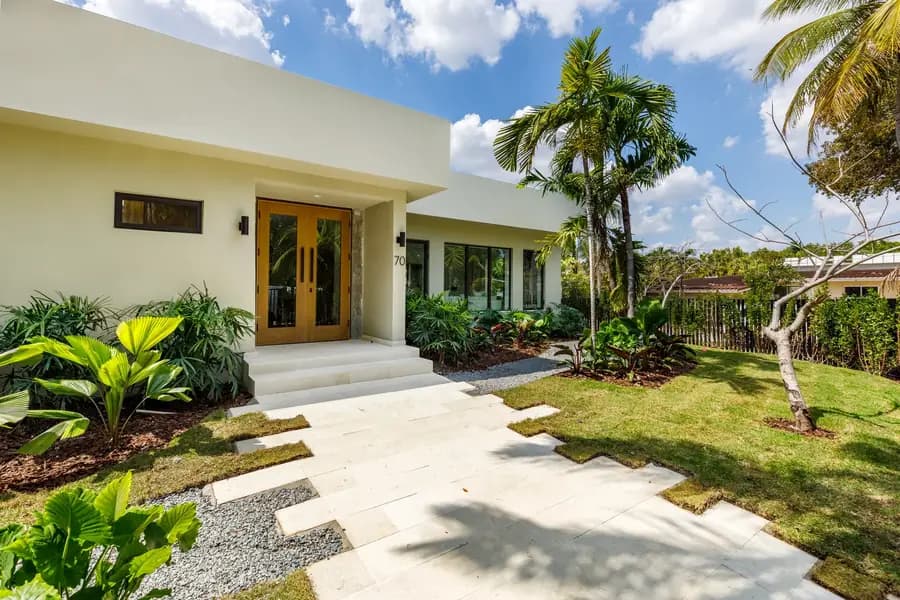
Development · Aug 1, 2026 · 6 min
Building the Samana Residence, Start to Finish
From an empty Coconut Grove lot to a finished 3,227 square foot home: how the Samana Residence went up, phase by phase, built and finished start to finish by the same family behind every Luxom home.
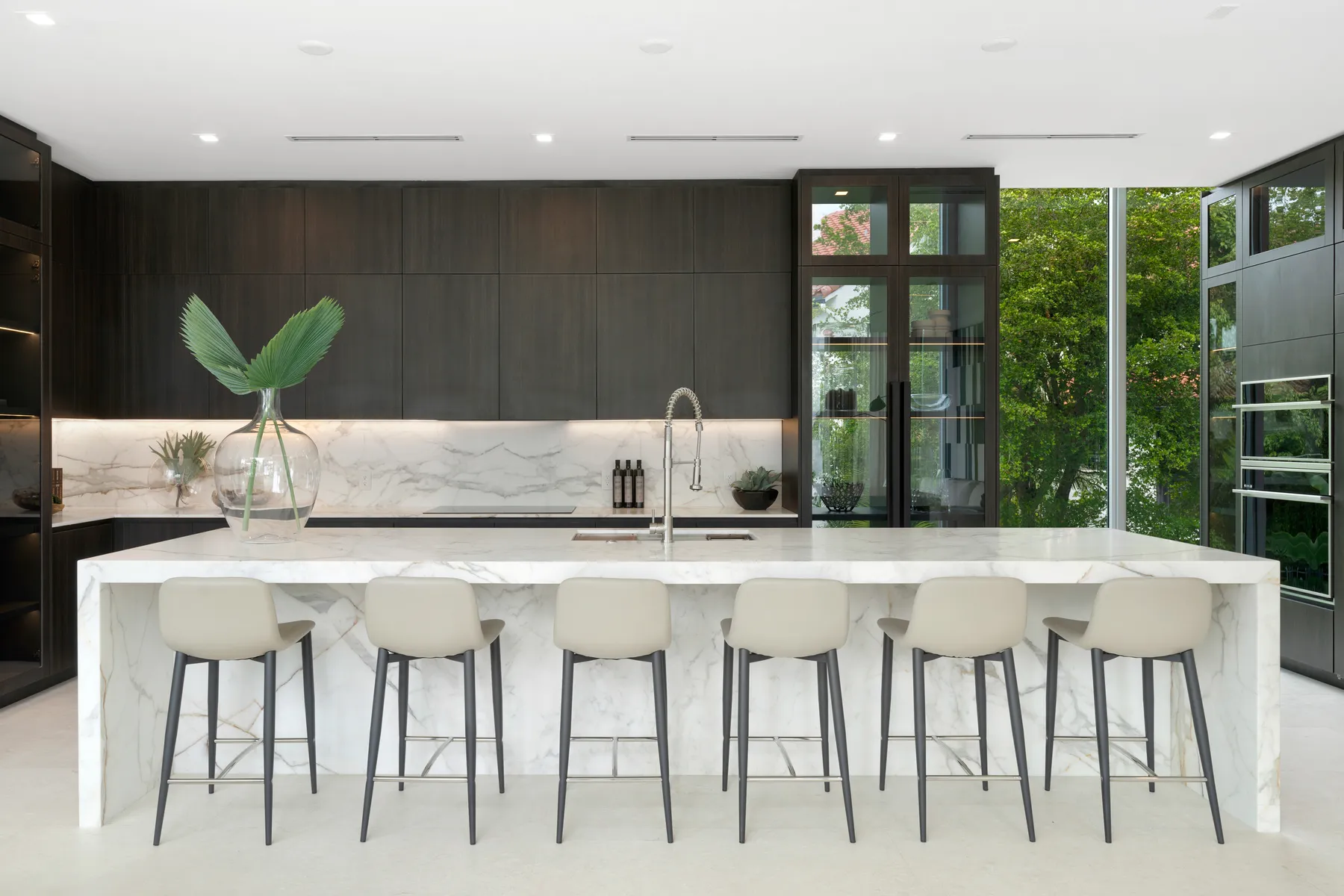
Development · Aug 4, 2026 · 6 min
How the Crystal Residence Kitchen Went From Shell to One Run of Stone
Inside the kitchen fit-out at our Crystal Residence in Coconut Grove: the concrete shell, the rough-in, and why the counter, island, and backsplash only became one run of stone once everything under it was locked.
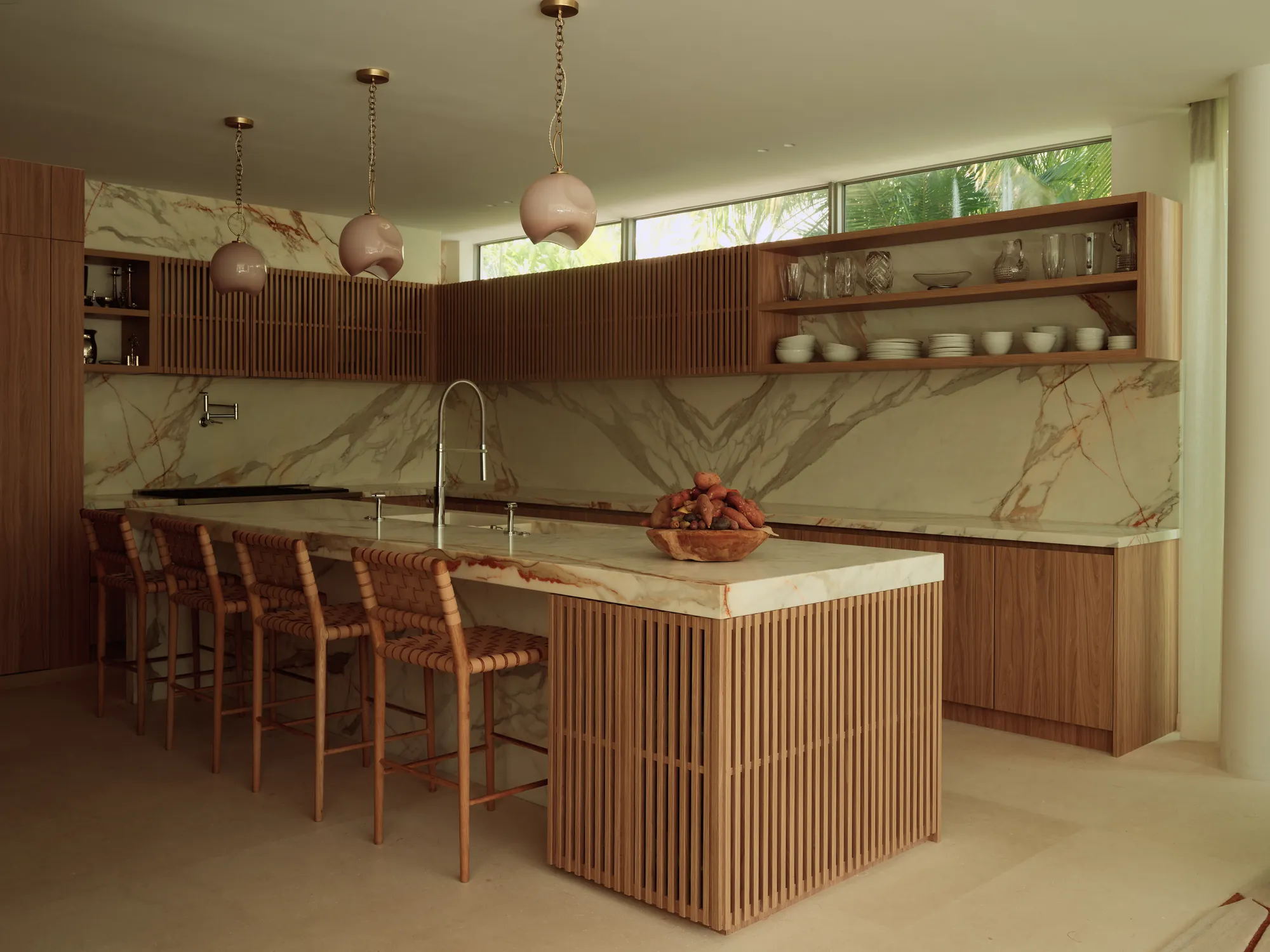
Materials · Jul 22, 2026 · 4 min
Marble countertops: types, care, and where they belong
A clear guide to marble countertops: the main types, what the stone will and will not tolerate, and the rooms where marble earns its place rather than becoming a maintenance problem.