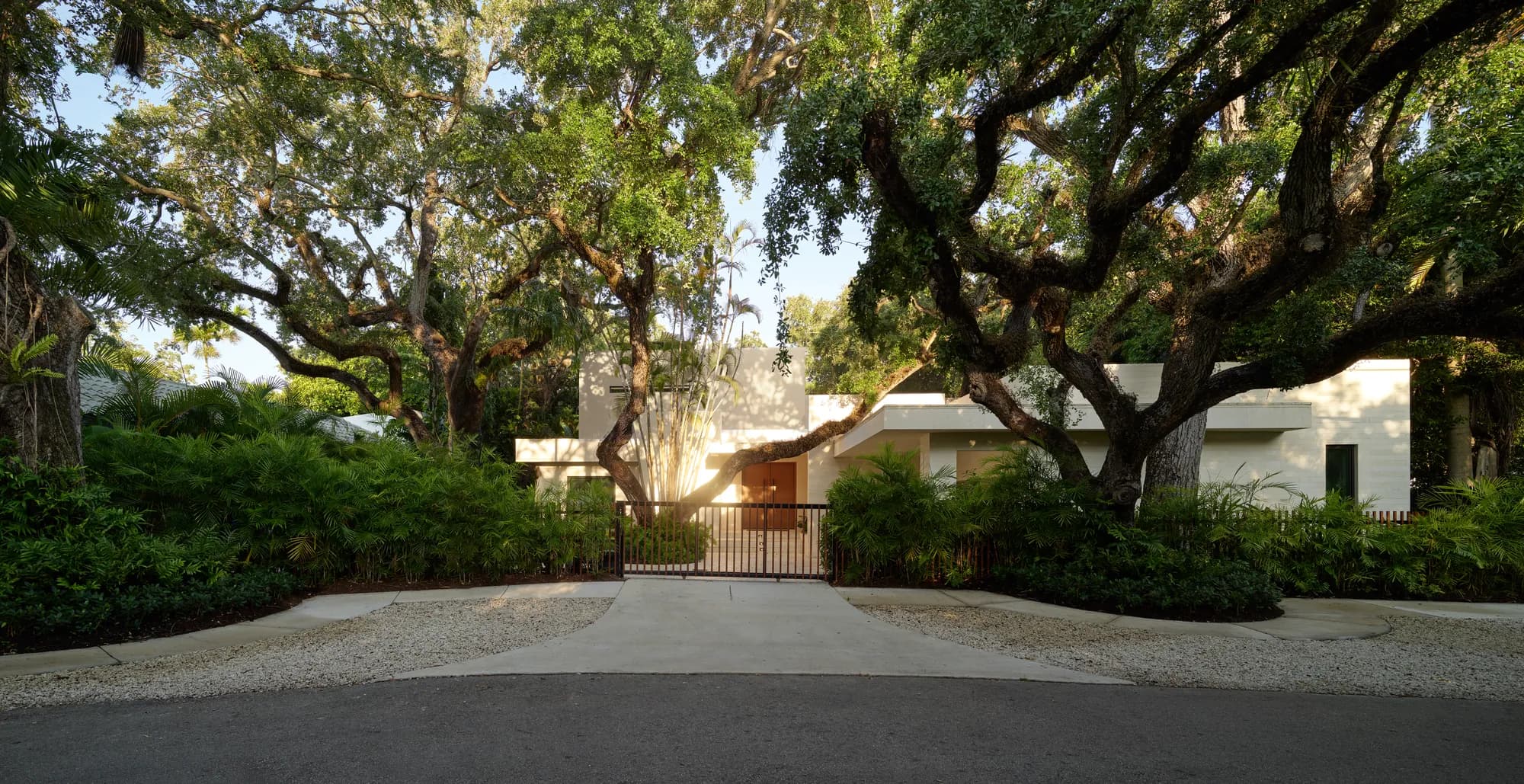
Design is the cost you never see on the invoice
Every luxury build pays for design somewhere. When one studio designs, builds and finishes the home, that cost never shows up as its own line, it is folded into every dollar spent downstream.
Luxom Studio · LUXOM Developments
· 5 min read · Last reviewed
Key takeaways
- Architect fees for high end custom homes commonly run 8 to 15 percent of construction cost, and are usually billed as their own professional services line, separate from the construction contract.
- On an $8.2M Luxom development, architecture and engineering typically account for 5 to 7 percent of the total budget, roughly $410,000 to $575,000, folded directly into the project cost rather than invoiced as a separate fee.
- A decision made on paper during design is cheap to change. The same decision made after a wall is closed can cost three to five times as much, because it now involves demolition and rework, not just a revised drawing.
- Custom architect led design typically adds 10 to 15 percent to a property's value compared to a comparable home without it, value that shows up at resale, not on the invoice that built the home.
- Simon Bissu leads architecture and Margaret Bissu leads interiors inside the same studio that builds the home, so design decisions get made alongside construction sequencing instead of handed off after the fact.
From the studio
Look at a construction budget and you will find a line for the structure, a line for finishes, a line for systems. You will not find a line for design. That does not mean design was free. It means the cost moved somewhere you cannot see it as its own number.
In a traditional build, that line exists, and it belongs to a separate business: an architecture firm invoicing its own fee before a contractor ever breaks ground. Why design does not appear as its own line item when one studio designs, builds and finishes the home comes down to that same structural difference. At Luxom, design, construction and finish sit inside one studio, so the cost is still there, it is just distributed across every decision that studio makes, from the first sketch to the final walkthrough.
What a design fee actually buys in a traditional build
What an architecture and design fee typically covers in a traditional luxury build, and the usual percentage range, is the first thing worth naming plainly. In the traditional sequence, architect fees for high end custom homes commonly run 8 to 15 percent of total construction cost, and can exceed that on highly detailed projects. That fee is priced and invoiced as its own deliverable, separate from what a general contractor later charges to build what was drawn.
Most of that money does not go toward a rendering or a mood board. It goes toward construction documents, the technical backbone used for permitting, pricing and construction, and usually the single most labor intensive phase of an architect's scope. A complete, coordinated set of construction documents is the clearest protection a project has against cost overruns and schedule delays once building actually starts.
Design was never free. It just stopped being its own line
The fee does not disappear when one studio designs, builds and finishes the home. It gets absorbed into the work itself.
A decision on paper is cheap, the same decision in the field is not
Why a decision made on paper is cheap and the same decision made after the wall is closed is expensive is the reason design is worth protecting, whether it is billed separately or folded into the studio's own work, comes down to timing. A decision made on paper, before anything is built, is a redrawn wall, a revised material call, a reworked layout. It costs design time, and nothing more.
The same decision made after a wall is closed, a slab is poured, or cabinetry is ordered is a different problem. It now means demolition before it means rebuilding, on a schedule that was not built to absorb either. Field decisions commonly cost three to five times what they would have cost on paper, because the cost is no longer just the new choice, it is undoing the old one first.
That is the pattern behind almost every construction budget that runs over: not a single bad decision, but a decision that got made too late, in the wrong phase, at the wrong cost. Protecting the design phase is not a preference for process. It is the cheapest place in the entire build to make a decision.
Where design value shows up later
Where design value shows up later: at resale, in the construction schedule, and in the finish budget, not as a number a buyer can point to on the invoice that built the home. It shows up later, in three places. First, at resale: custom architect led design typically adds 10 to 15 percent to a property's value compared to a comparable home without it. Second, in the construction schedule: a fully coordinated document set is what keeps permitting and plan review from stalling a project in a jurisdiction where both are demanding. Third, in the finish budget: decisions made correctly at the design stage do not have to be revisited, reordered or reworked once construction is underway.
Architecture and engineering are not overhead on a development budget. They are the mechanism that controls every other line, structural, mechanical, and eventually, finish. We break down exactly how that plays out at the $8.2M scale in an $8.2M development cost breakdown.
Pull quote
You are already paying for design. The only question is whether you are paying for it on paper, where it is cheap, or in the field, where it is not.
How design lives inside a Luxom budget
How Luxom's in-house design, build and finish model changes where that cost lives without removing it starts with the number itself. On a Luxom development at the $8.2M scale, architecture and engineering typically account for 5 to 7 percent of the total budget, roughly $410,000 to $575,000. The percentage is not unusual. What is different is where that work sits: inside the same studio that builds and finishes the home, rather than billed by a separate firm before a contractor is even hired.
Simon Bissu leads architecture and Margaret Bissu leads interiors inside that same family studio, which means design decisions get made alongside construction sequencing, not handed off after the fact and hoped to survive contact with the site. It is the same structural argument we make in why a typical build pays for four profits, not one: removing the handoffs between separate companies does not remove the cost of the work, it removes the layers of margin and delay stacked around it.
Comparing an architect only path to a design-build studio that carries the whole project is its own decision, one we lay out in architect vs. design-build. If you are planning a build in Coconut Grove and want to see what that decision looks like on your lot, reach out through contact.
Pull quote
You are already paying for design. The only question is whether you are paying for it on paper, where it is cheap, or in the field, where it is not.
Filed under
Questions about design cost in a luxury home budget
01Why doesn't a Luxom budget show design as its own line item?
Because design is not a service purchased from an outside firm. In a traditional build, an architect is a separate business that invoices its own fee before a general contractor ever breaks ground. At Luxom, design, construction and finish sit inside one studio, so the work that would otherwise be billed as an architecture fee is the studio's own work, folded into land, construction and finish decisions from the first sketch. The cost has not disappeared. It has moved inside the same structure we describe in why a typical build pays for four profits, not one.
02What percentage of a luxury home budget normally goes to architecture and design?
Architect fees for high end custom homes commonly range from 8 to 15 percent of total construction cost, and can run higher on highly detailed projects, usually billed as a distinct professional services line separate from the construction contract. On a Luxom development at the $8.2M scale, architecture and engineering typically account for 5 to 7 percent of the total budget, roughly $410,000 to $575,000, a figure we break down category by category in an $8.2M development cost breakdown.
03What does a design and architecture fee actually pay for, beyond the drawings?
It pays for the document set that governs everything downstream, the structural integrity of the building, the coordination of every system before a wall is closed, and the permitting submissions that have to hold up under plan review in one of the most demanding building jurisdictions in the country. Construction documents are usually the most labor intensive phase of that fee, because they are the technical backbone used for permitting, pricing and construction, not just a rendering of what the house will look like.
04Why does a design change made during construction cost more than the same change on paper?
A decision left open in the drawings gets made on site, under schedule pressure, after materials are already ordered or a wall is already framed. At that point, changing it means demolition and rework on top of the original cost, not just a revised drawing. Field decisions commonly cost three to five times what the same decision would have cost in the design phase, which is why the projects that overspend on construction almost always underspent on design.
05Does hiring an architect, or paying for design, actually increase a home's value?
Custom architect led design typically adds 10 to 15 percent to a property's value compared to a comparable home without it. That value shows up later, at resale and in how the home performs over time, not as a line a buyer can point to on the invoice that built it. It is the same logic behind why Luxom treats architecture and engineering as the mechanism that controls every other budget line, not as overhead.
Explore the portfolio
Projects to see


Talk to the studio
If this belongs in your home, our studio will draw the plan.
Initial conversation, 30 minutes. We listen to the brief and respond with a scoped proposal within five working days. You can also read the services page for typical timelines and fees.
Written by Luxom Studio · LUXOM Developments
The design and development studio behind LUXOM residences in Coconut Grove, Miami
Keep reading
From the journal
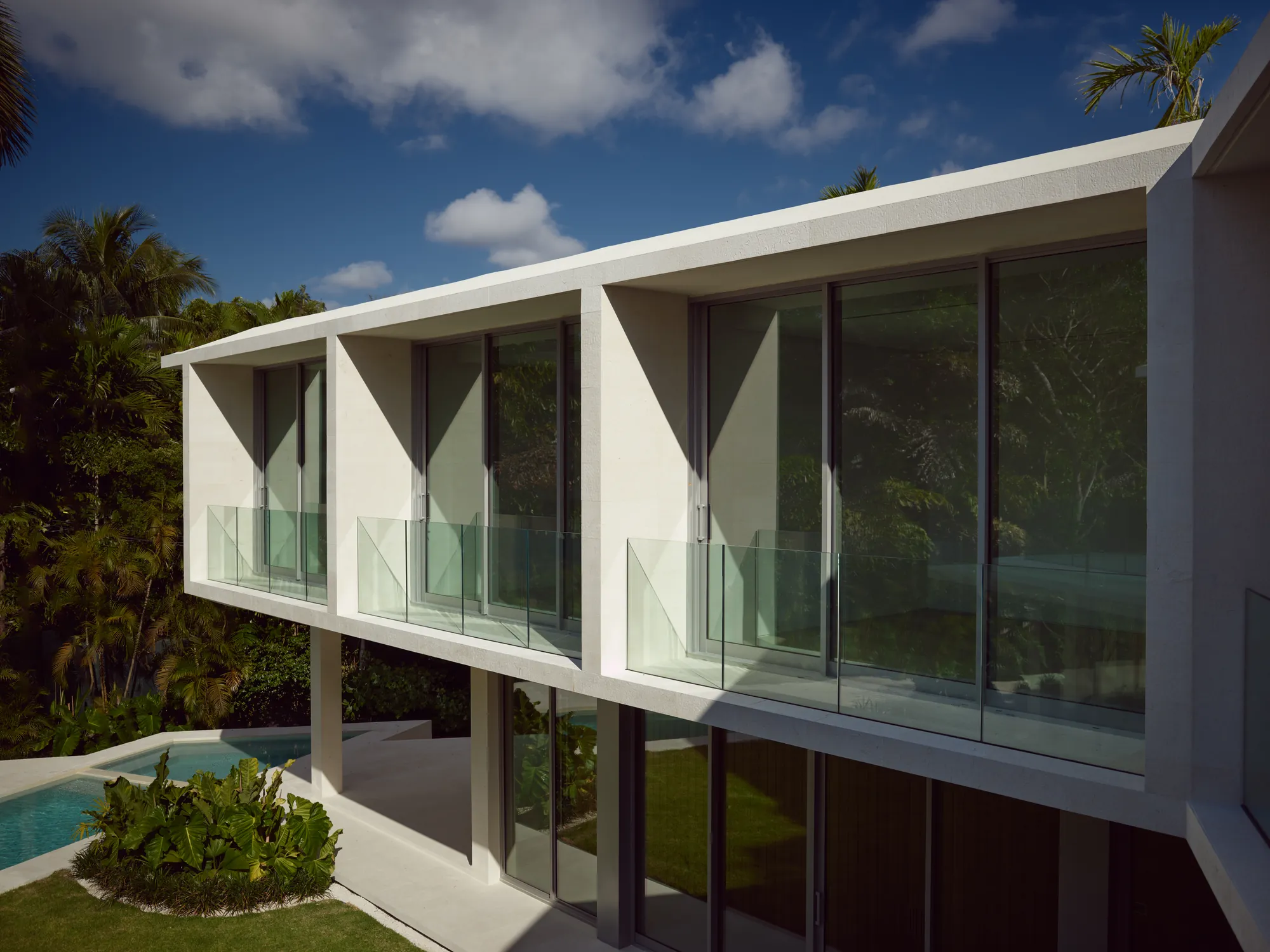
Development · Aug 5, 2026 · 5 min
Why a typical build pays for four profits, not one
Design, construction and finish usually sit with three or four separate companies, each pricing its own margin. Building it all in-house removes that stack for a Coconut Grove home, not just the coordination.
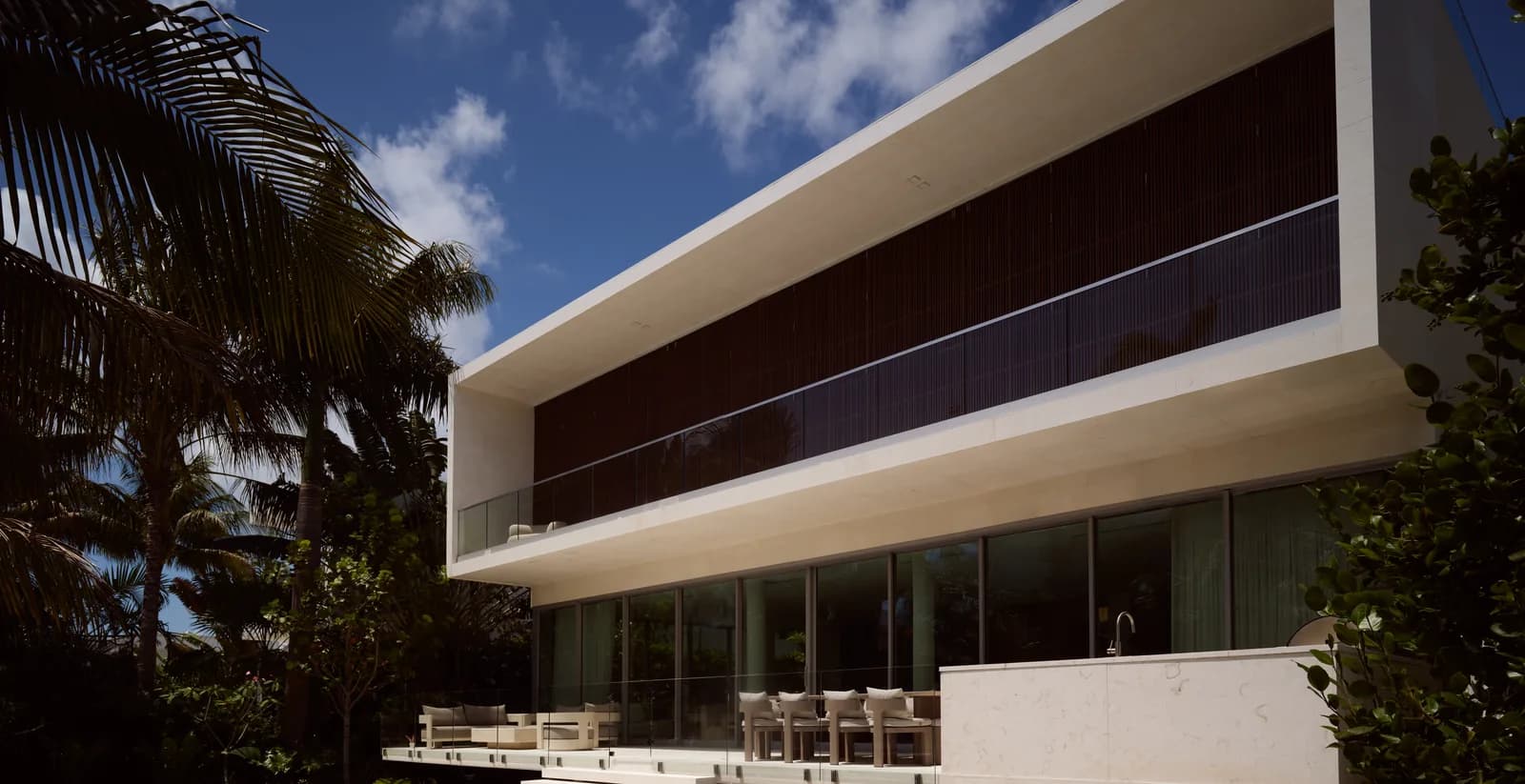
Development · Jul 14, 2026 · 7 min
An $8.2M development cost breakdown, from land to finish
How a luxury development budget at this scale divides across land, architecture, construction and finishes: the categories, the logic behind each one, and what they mean for a buyer.
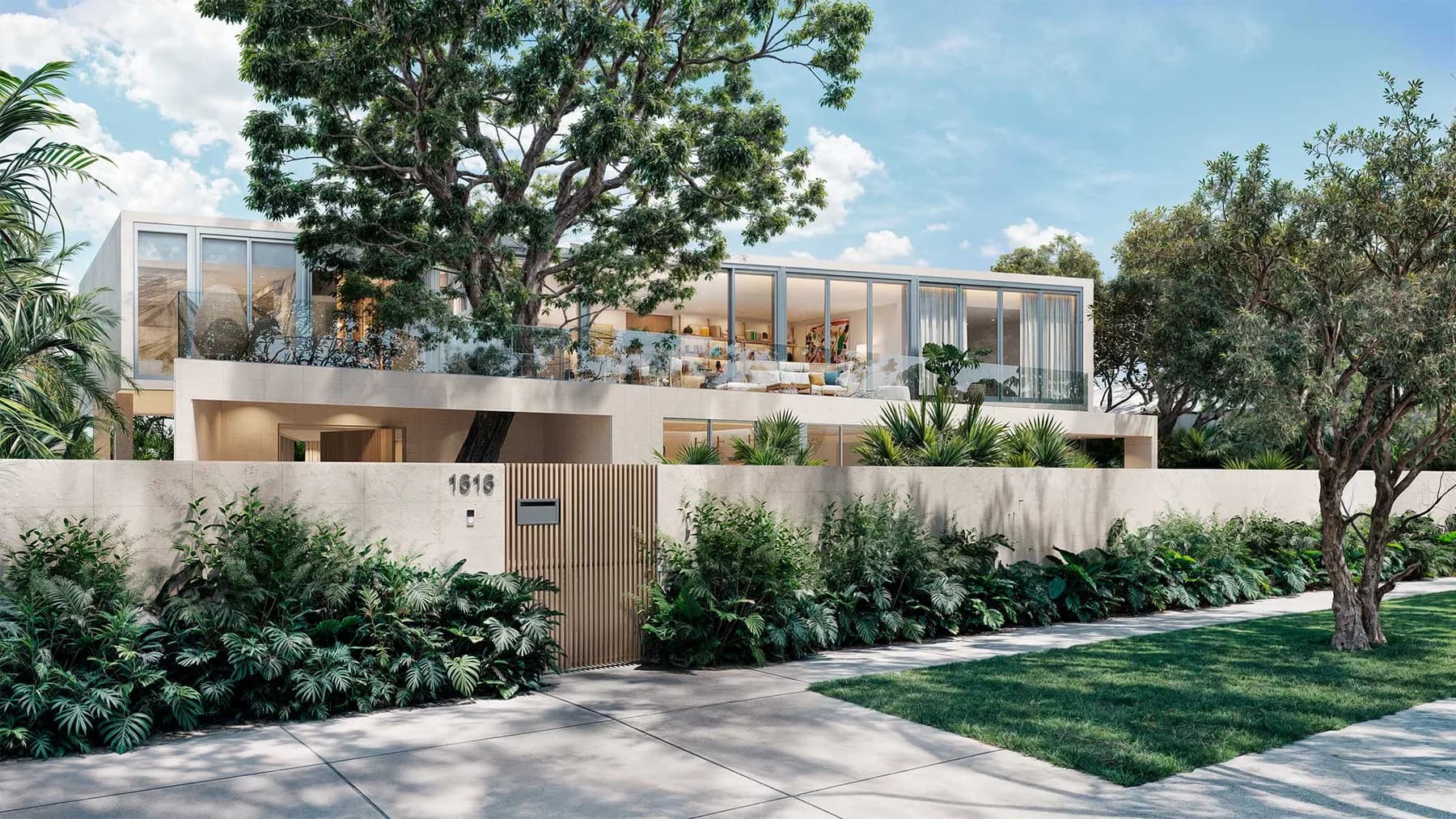
Architecture · Jul 29, 2026 · 4 min
Architect vs. design-build: which your project needs
Two ways to build a home in Miami: hire an architect and manage the rest yourself, or hire one design-build team that owns the whole thing. How to tell which fits.