
Why the Land, Not the House, Is the Asset in Coconut Grove
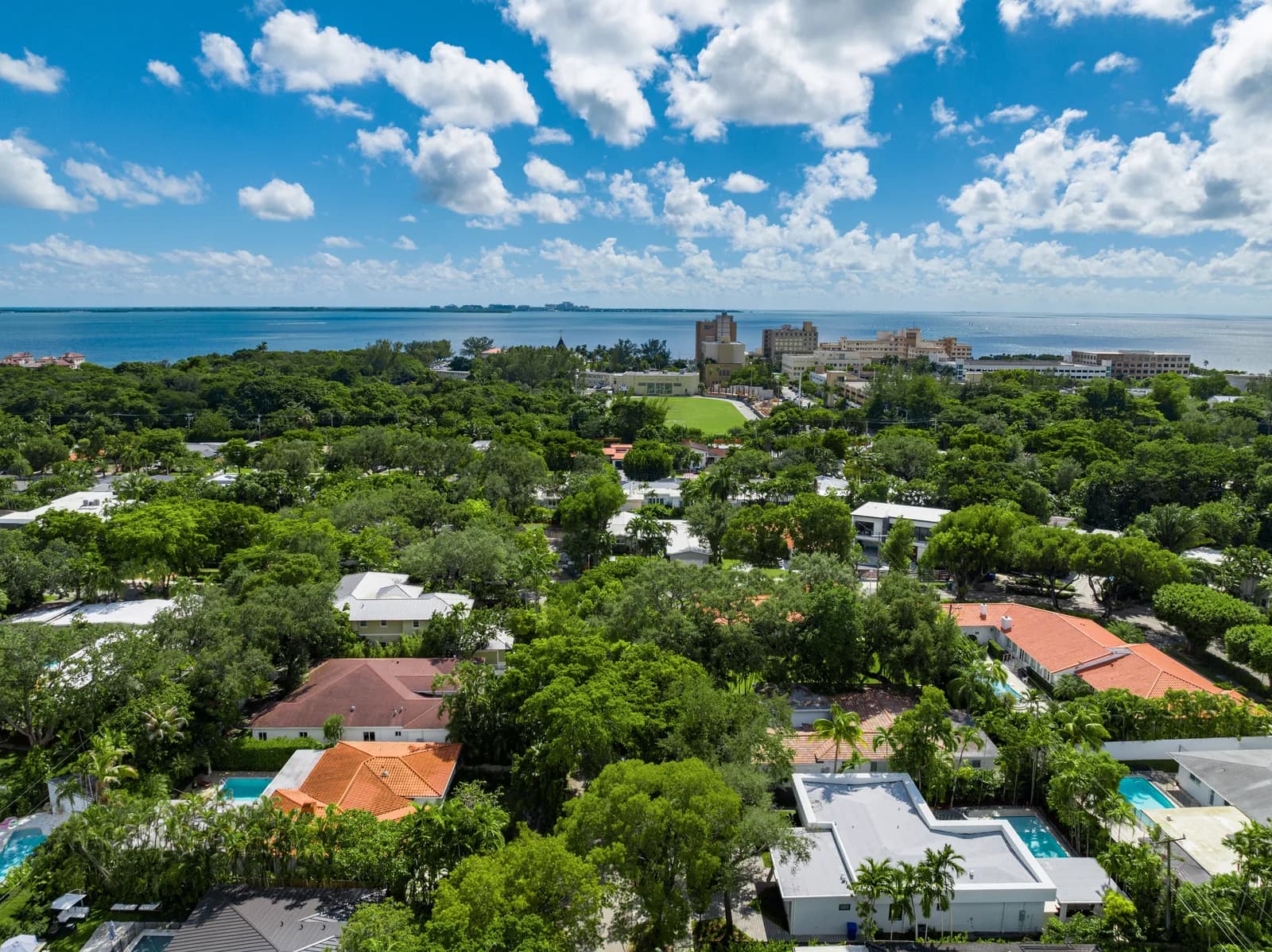
An old or ordinary house on a good Coconut Grove lot rarely moves the price. The land underneath it, and what it is legally allowed to become, is what a buyer is actually paying for.
Samuel Bissu · Developments
· 5 min read · Last reviewed
Key takeaways
- On a valuable Coconut Grove lot, an ordinary or dated house barely moves the sale price. Buyers and builders are pricing the land and what it is legally allowed to become, not the structure standing on it today.
- Miami-Dade County's parcel record tracks real property as land, buildings and other permanent improvements as components of one file, not a single merged number, so land value is already visible as its own line.
- Appraisers and builders both price a teardown or redevelopment candidate against highest and best use, the most profitable legally permitted use of the land, which can be far above what the current house is worth.
- Zoning sets the ceiling on what a Coconut Grove lot's land can become. A 2025 City Commission denial of a lot split on Poinciana Avenue shows the county enforcing that ceiling directly, independent of any house on the property.
- The same land-first logic runs whether a lot stays whole or gets split into two buildable sites. Luxom underwrites the dirt first in both cases, and the house comes after.
From the developer
People walk a Coconut Grove teardown and start pricing the kitchen, the roof, the pool. None of that is what actually sets the number.
It's not the house. It's the dirt. In Coconut Grove the lot is the asset, and the house is just what you build on top of it. That single idea explains why two properties with wildly different houses on them can carry nearly the same price tag, and why an outdated house on the right block is never the discount it looks like on a listing photo.
This guide walks through what "the lot is the asset" actually means when a house is already standing on it; how land value and building value get tracked as separate line items on a Florida parcel record; highest and best use: why the existing house's condition barely matters to a builder's offer; how Coconut Grove zoning and lot size set the ceiling on what the dirt is worth; and how this connects to splitting one lot into two, the mirror case already covered on the site.
The house isn't what you're buying
Walk two Coconut Grove properties on the same size lot: one with a dated 1980s house, one with an empty, cleared parcel. If the lot itself is comparable, so is the price, once you account for demolition cost on the first one. That surprises people the first time they see it, because everything about how a house is marketed, staging, square footage, finish level, points a buyer toward the structure.
But once a lot crosses into "worth redeveloping" territory, the calculation flips. Builders price a teardown by what they can build on the land after demolition, not by the condition, age or features of the house currently standing on it. The house stops being an asset and starts being a line item, one more cost to clear before the real project, the land, gets built out.
What highest and best use actually means
Appraisers have a term for the standard that decides this: highest and best use, the most profitable, physically possible and legally permitted use of a given piece of land. It is the lens that explains why a rundown house can sit on a lot worth several times what the structure would fetch on its own.
That standard is what appraisers actually apply when they value a teardown or lot-split candidate, and it can diverge sharply from the value of the house currently on the property. The house is a temporary condition. The zoning envelope, what can legally be built on that footprint, is the permanent one, and it's the permanent one that gets priced.
The house is temporary. The land's buildable rights are not
A house is a temporary structure. The zoning envelope underneath it, what the land is legally allowed to become, is the asset that survives every renovation, teardown and resale.
How Miami-Dade tracks land value separately
This isn't just an appraisal convention, it's built into how the county keeps its own records. Miami-Dade County defines real property as land, buildings and all other permanent improvements on the land, tracked as components of a single parcel file rather than one blended number. Land and structure are already separated in the record long before a buyer, builder or appraiser ever gets involved.
That separation is exactly why a Coconut Grove teardown negotiation almost never centers on the house. Everyone at the table, seller, buyer, lender, appraiser, is working from a record that already treats the dirt as its own line.
What a builder actually prices on a teardown lot
For Luxom, this shows up before any design work starts. The acquisition decision for a Coconut Grove property runs on the land: lot size, frontage, zoning envelope, and what the county will actually permit on that footprint, the same acquisition-first discipline we walk through in where luxury developers actually make money. The house on the lot today factors in mainly as a demolition line item, not as value carried forward into the deal.
Pull quote
The same logic, applied to a split
Zoning doesn't just set what a single lot can become, it sets the ceiling on the land itself, independent of any house sitting on it. A 2025 Miami City Commission decision made that concrete: the Commission unanimously denied a proposal to divide a 21,000 square foot Coconut Grove lot at 4055 Poinciana Avenue into three 7,000 square foot parcels because the resulting lots fell under the Neighborhood Conservation District's average lot size of 11,712 square feet for that street. No house was on trial in that hearing. The land's buildable rights were.
We ran the same underwriting logic in same land, split smart: why one lot split changes the math, which covers what happens when a lot's zoning allows it to become two buildable sites instead of one. A single, unsplit lot is just the one-parcel version of that same question: what is this land, specifically, legally allowed to become, and what is that worth, independent of whatever house happens to be standing on it today. Getting the lot size and boundaries right before running any of that math starts with measuring the parcel correctly, which is what our acre versus hectare land size guide walks through.
The same land-first math also runs in the opposite direction, combining several lots into one instead of splitting or valuing a single parcel, which we cover in land assemblage in Coconut Grove. Whichever direction the deal runs, split, assembled or left whole, the question being priced never changes: what is this dirt legally allowed to become.
If you're evaluating a Coconut Grove property, whether it's a single lot with a dated house on it or a larger parcel worth assembling, reach out through contact and we'll walk the land, not the listing photos, with you.
Pull quote
It's not the house. It's the dirt. In Coconut Grove the lot is the asset, and the house is just what you build on top of it.
Filed under
Questions about why land value, not house value, drives price on a Coconut Grove lot
01Why does an old or ordinary house on a valuable Coconut Grove lot sell close to the price of the empty lot next door?
Because the house isn't the asset the market is pricing. Once a lot is worth redeveloping, buyers and builders price it against highest and best use, the most profitable legally permitted use of the land, and an old structure is usually treated as a cost to remove rather than a source of value. Builders in this position ignore the existing home's condition, age and features and price only what they can build on the lot after demolition. See how what a builder actually prices on a teardown lot breaks down further down this page.
02How do builders decide what they can pay for a teardown property?
They work backward from the land, not forward from the house. Teardown properties are valued for their land and location rather than the existing structure, with cost per square foot of land, not living space, as the relevant metric. That number gets checked against zoning and lot size before an offer is made; see how Coconut Grove zoning sets the ceiling on what a given lot can become.
03Does Miami-Dade County track land value separately from the value of the structure on it?
Yes, as components of the same parcel record rather than one merged figure. Miami-Dade County defines real property as land, buildings and all other permanent improvements on the land, which is why a buyer or appraiser can look at a single Coconut Grove parcel and separate what the dirt is worth from what the structure on it is worth. We cover how the county tracks land value in more detail below.
04What is highest and best use, and why does it matter more than the current house's condition?
Highest and best use is the most profitable, physically possible and legally permitted use of a piece of land, and it is the standard appraisers apply to a teardown or lot-split candidate. It can diverge sharply from the value of the house currently standing on the property, because the house is temporary and the zoning envelope underneath it is not. Read the full breakdown in highest and best use above.
05How does the 'same land, split smart' idea from lot splitting connect to how a single, unsplit lot is valued?
It's the same underwriting question asked at a different scale. Whether a lot stays whole or gets divided into two buildable sites, as we cover in same land, split smart: why one lot split changes the math, the value being priced is always the land's buildable rights under current zoning, never the house sitting on it. A single unsplit lot is just the one-parcel version of that same question.
Explore the portfolio
Projects to see


Talk to the studio
If this belongs in your home, our studio will draw the plan.
Initial conversation, 30 minutes. We listen to the brief and respond with a scoped proposal within five working days. You can also read the services page for typical timelines and fees.
Written by Samuel Bissu · Developments
Developer and founder of LUXOM Developments, boutique residences in Coconut Grove, Miami
Keep reading
From the journal
Development · Aug 8, 2026 · 6 min
Same Land, Split Smart: Why One Lot Split Changes the Math
Two developers can buy the identical lot in Coconut Grove and walk away with two different deals. The difference isn't the house, it's whether the land gets split into two buildable sites or built as one.
Development · Jul 8, 2026 · 3 min
Where luxury developers actually make money
It isn't the house. The margin is decided the day you buy the land, and protected by everything you refuse to cheapen.

Guides · Aug 1, 2026 · 5 min
Acre vs Hectare: What a Coconut Grove Lot Actually Measures
An acre and a hectare are not close in size, and mixing them up changes how a Coconut Grove lot compares to a listing abroad. Here is what each unit actually measures.