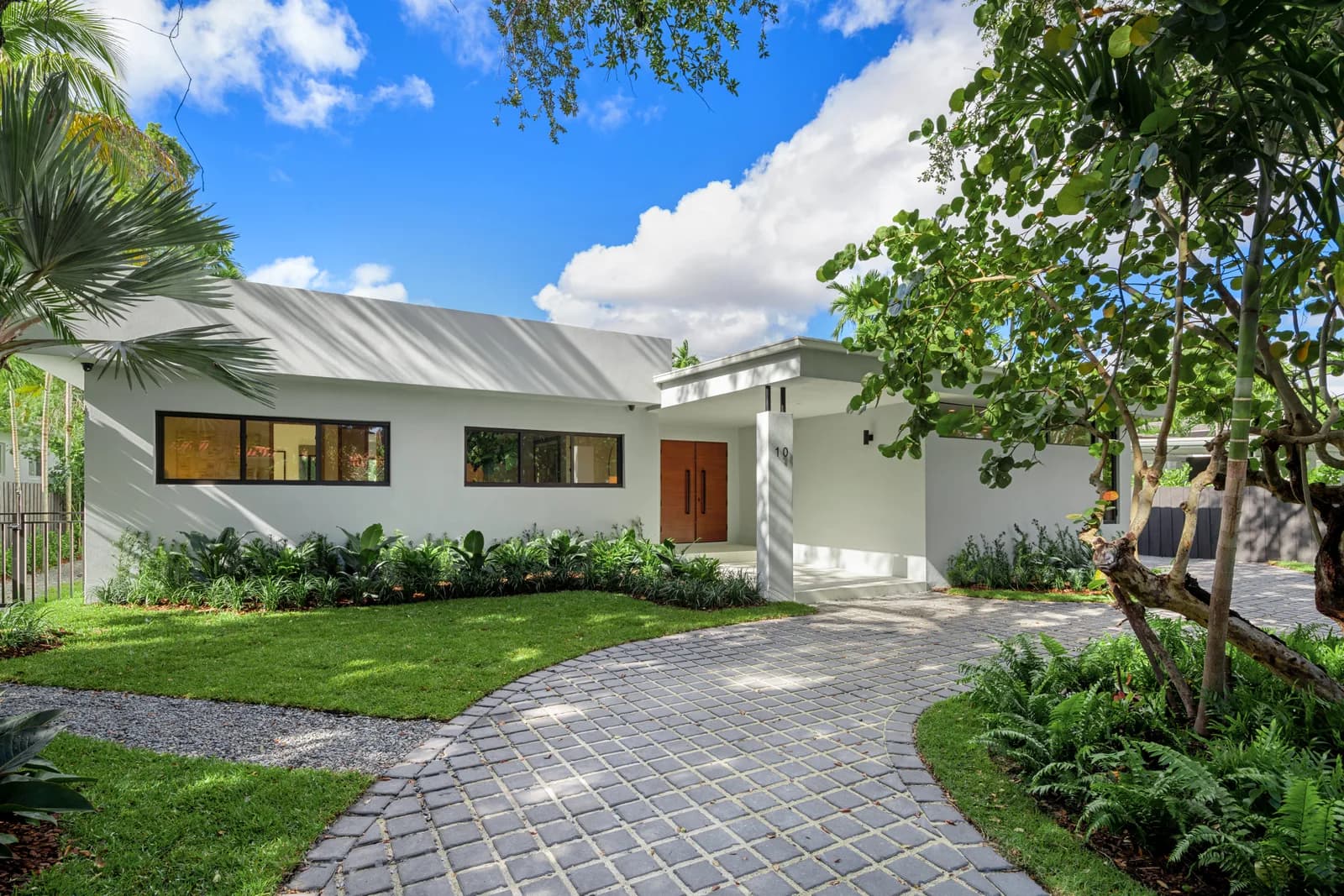
Driveway Materials: The Last Line Item and the First Impression
Cobblestone, exposed aggregate, poured concrete, gravel and pavers. How each driveway material looks on day one and in year ten, what it asks of a Miami lot, and why it belongs in the budget from the start.
Luxom Studio · LUXOM Developments
· 5 min read · Last reviewed
Key takeaways
- The driveway is built last, after the heavy trucks leave, which is exactly why it gets cut when the contingency is spent. It is also the largest surface in the front yard and the first thing anyone sees.
- Cobblestone, natural stone setts, is the one that ages beautifully. It lasts for generations, takes on patina instead of stains, and can be lifted and relaid if roots or utilities need access.
- Exposed aggregate and poured concrete are durable and economical, but concrete cracks and stains. Control joints decide where it cracks, and the finish decides how much you notice.
- Gravel is soft, permeable and inexpensive but migrates, ruts and washes in heavy rain unless it is edged and stabilized. Pavers are repairable unit by unit and can be laid with permeable joints.
- In Miami every driveway has to move summer storm water, respect tree roots and zoning limits on paved area, and usually needs a permit where the apron meets the street. Budget it at design stage, not at handover.
From the feed
The reel we posted showed five driveways and said one of them ages beautifully. The caption made the more uncomfortable point: nobody budgets the driveway, and everybody sees it first. It is the last line item on a build and the first impression of the house, often the largest single surface in the front yard. This is the exterior guide we promised, covering cobblestone, exposed aggregate, poured concrete, gravel and pavers, how each one looks on day one and in year ten, and what a Miami lot asks of all of them.
Why the driveway gets cut from the budget
The driveway is built at the very end of a project, after the heavy trucks and equipment have finished, because they would destroy a finished surface. By then most of the contingency has usually been spent on the surprises every build produces, and the driveway is the obvious place to save. The result is a beautiful house approached across a surface that was chosen because it was cheap.
That is backwards. From the street, the driveway can occupy more of the view than the facade. It frames the entrance, guides the eye to the door and sets the tone before anyone steps out of the car. Design it with the house and the landscape, give it a line in the budget from day one, and plan a temporary construction route so the trucks do not ruin the ground you intend to plant.
Cobblestone: the one that ages beautifully
Cobblestone driveways today are usually made of setts, small, roughly squared blocks of natural stone, most often granite, laid in sand or mortar. They are the oldest driveway material on this list and the longest lasting, measured in generations rather than years. They do not stain so much as weather, taking on a patina that makes them look more settled every year. This is the one the reel meant.
They are also repairable: individual stones can be lifted and relaid when a root needs room or a utility needs access. The tradeoffs are cost, mostly in skilled labor, and texture, since the uneven surface is less comfortable for heels and wheels. Many designs use cobblestone for borders, aprons or a motor court and a smoother material for the main run.
Exposed aggregate: the textured one
Exposed aggregate is concrete whose top layer of cement paste is washed away before it fully hardens, revealing the stones mixed into it. The result is a grippy, textured surface that hides dirt and minor stains far better than smooth concrete, and the choice of aggregate, its color and size, gives real control over the look.
It shares concrete's habits: it needs control joints, it can crack, and it benefits from sealing. It can also be rough on bare feet, which matters if the driveway doubles as a path to the pool. Done with a carefully chosen stone and crisp joints, it is durable and quietly handsome.
Poured concrete: the plain one
Plain poured concrete is the most economical driveway, and in a pale, broom finished or lightly sandblasted surface it can be clean and modern. Its character comes almost entirely from its joints: straight, deliberate saw cut lines that divide it into large panels read as design, while random cracks read as neglect.
Concrete will crack, because it shrinks and moves; control joints decide where. It also stains. Oil drips show, and in South Florida irrigation with iron rich well water can leave orange marks that are hard to remove, so aim sprinklers away from paving or treat the water. Pale concrete also reflects heat and glare. Chosen deliberately and detailed carefully, it works. Chosen by default, it is the surface people most often regret.
Gravel: the soft one
Gravel is the most relaxed driveway material: inexpensive, permeable, soft against planting, with a crunch that announces arrivals. It suits garden led, informal houses and long approaches through trees.
Left to itself, it migrates into beds and lawns, ruts under tires, washes out in heavy rain and lets weeds through. The solutions are underneath and at the edges: a properly compacted base, firm edging on every side, a stabilizing grid that holds the stones and an angular gravel that locks together. Even then, plan for occasional raking and topping up, and give people a paved path to the front door.
Pavers: the flexible one
Pavers, units of concrete, clay or natural stone laid on a compacted base, are among the most common driveway materials for good reason. They come in every size and color, they can be laid in patterns or as large calm slabs, and any damaged unit can be lifted and replaced. That makes them practical around trees, whose roots move, and over utilities that may need access.
Pavers can also be laid with wider joints filled with gravel or grass, which makes the driveway permeable and softens it visually. Their weaknesses are settlement, if the base is not compacted properly, and joints that collect weeds and need topping up with sand. Large format pavers with tight, consistent joints read as modern and refined; small, busy patterns tend to date.
Pull quote
A driveway is a facade you drive on. Draw it with the house, or the house will spend its life apologizing for it.
What a Miami lot asks of any driveway
Whatever you choose, a Miami driveway has to move water. Summer storms deliver heavy rain quickly, so the surface should fall away from the house toward planting, drains or a permeable zone. A fall of around 1 to 2 percent is a common rule of thumb. Many local codes also limit how much of a lot can be covered with impervious surfaces, so permeable materials can matter for zoning as well as drainage.
Trees matter too. Many Coconut Grove lots come with mature canopy trees near the street, and their roots need air and water; driving and paving over them carelessly damages both the tree and the driveway. Pavers and setts can bridge roots more gracefully than a continuous slab. Where the driveway meets the street, the apron usually sits in the public right of way and typically needs its own permit. Plan the turning space, the lighting and the transition to the front door at the same time, as part of the facade the whole street reviews. If you are planning a house and want the approach to be as considered as the rooms, talk to us.
Pull quote
Nobody walks into a house and compliments the driveway. Everybody notices when it is wrong, and they notice before they reach the door.
Filed under
Questions about driveway materials and exterior design for a Miami home
01What is the best driveway material for a luxury home?
The one that suits the architecture and still looks right in twenty years. For a traditional or Mediterranean house, natural stone setts, the material usually called cobblestone, are hard to beat: they last for generations and look better as they age. For a modern house, large format concrete or stone pavers, a carefully jointed exposed aggregate, or a pale poured surface with crisp saw cut joints can be equally refined. Gravel suits a softer, garden led approach if it is properly edged and stabilized. What matters more than the material is the design around it: the way the driveway curves through the planting, how it meets the entry and the street, how it drains and how it is lit at night. A driveway designed with the facade, rather than added after it, does a great deal of the work of making an entrance read as grand.
02Why does concrete crack, and can you prevent it?
Concrete shrinks as it cures and moves with temperature and with the ground beneath it, so some cracking is expected in any slab. You cannot prevent it entirely, but you can decide where it happens and make it far less likely elsewhere. Control joints, the straight grooves cut or tooled into the surface at regular intervals, create weak lines so the concrete cracks inside the joint, where you do not see it. A well compacted base, the right reinforcement, proper curing and good drainage underneath all reduce random cracking. Design can also make joints part of the look: a pattern of saw cut lines that divides a driveway into large, deliberate panels reads as intentional. In South Florida, also plan for staining, especially the orange marks that irrigation with iron rich well water can leave on pale concrete, which our concrete section covers.
03Are permeable driveways a good idea in Miami?
Often, yes. A permeable driveway, gravel, pavers with open or grass joints, or a purpose made permeable paving system, lets rain soak into the ground instead of running off, which helps during heavy summer storms and can reduce the drainage infrastructure a lot needs. It can also help with zoning, since many codes limit how much of a lot can be covered with impervious surfaces, and with existing trees, whose roots need air and water. The tradeoffs are maintenance and base preparation: open joints can collect debris and weeds, and the base has to be designed to carry vehicles while still draining. Whether a permeable surface counts toward your pervious area depends on local rules, so confirm it before you rely on it. See what a Miami lot asks of any driveway for the wider picture.
04Is a gravel driveway practical?
It can be, with the right construction and realistic expectations. Gravel is inexpensive, drains freely, looks soft and natural next to planting, and its crunch tells you when someone arrives. Its problems are movement and maintenance: loose gravel migrates into lawns and beds, ruts under car tires, washes away in heavy rain and lets weeds through. Most of those problems are solved underneath, with a properly compacted base, firm edging along every side and a stabilizing grid that holds the stones in place. Choose an angular gravel, which locks together better than round pea gravel, and plan for occasional raking and topping up. Gravel is less comfortable for heels, strollers and wheelchairs, so many designs pair a gravel motor court with a paved walk to the front door. See our gravel section.
05When should the driveway be built during construction?
Last, but it should be designed and budgeted first. The final driveway surface goes in at the end of construction, after concrete trucks, cranes and delivery vehicles have finished with the site, because heavy equipment would damage a finished surface. That timing is exactly why driveways get underfunded: by the time they are built, the contingency has often been spent on surprises elsewhere. The fix is to design the driveway with the house and landscape, include it in the budget from the start, and plan a temporary construction access that does not compact or damage the areas you want to plant. Drainage, utilities and any permits for the apron where the driveway meets the street should be planned early too. For how surprises like this add up on a build, read our piece on construction cost overruns.
Explore the portfolio
Projects to see


Talk to the studio
If this belongs in your home, our studio will draw the plan.
Initial conversation, 30 minutes. We listen to the brief and respond with a scoped proposal within five working days. You can also read the services page for typical timelines and fees.
Written by Luxom Studio · LUXOM Developments
The design and development studio behind LUXOM residences in Coconut Grove, Miami
Keep reading
From the journal

Architecture · Sep 24, 2026 · 5 min
What Makes an Entrance Read as Grand, Not Just Big
A tall foyer is not a grand entrance. It takes a sequence: compression before release, one sightline that resolves, and a single material carried through. Here is how that gets decided.
Architecture · Aug 29, 2026 · 7 min
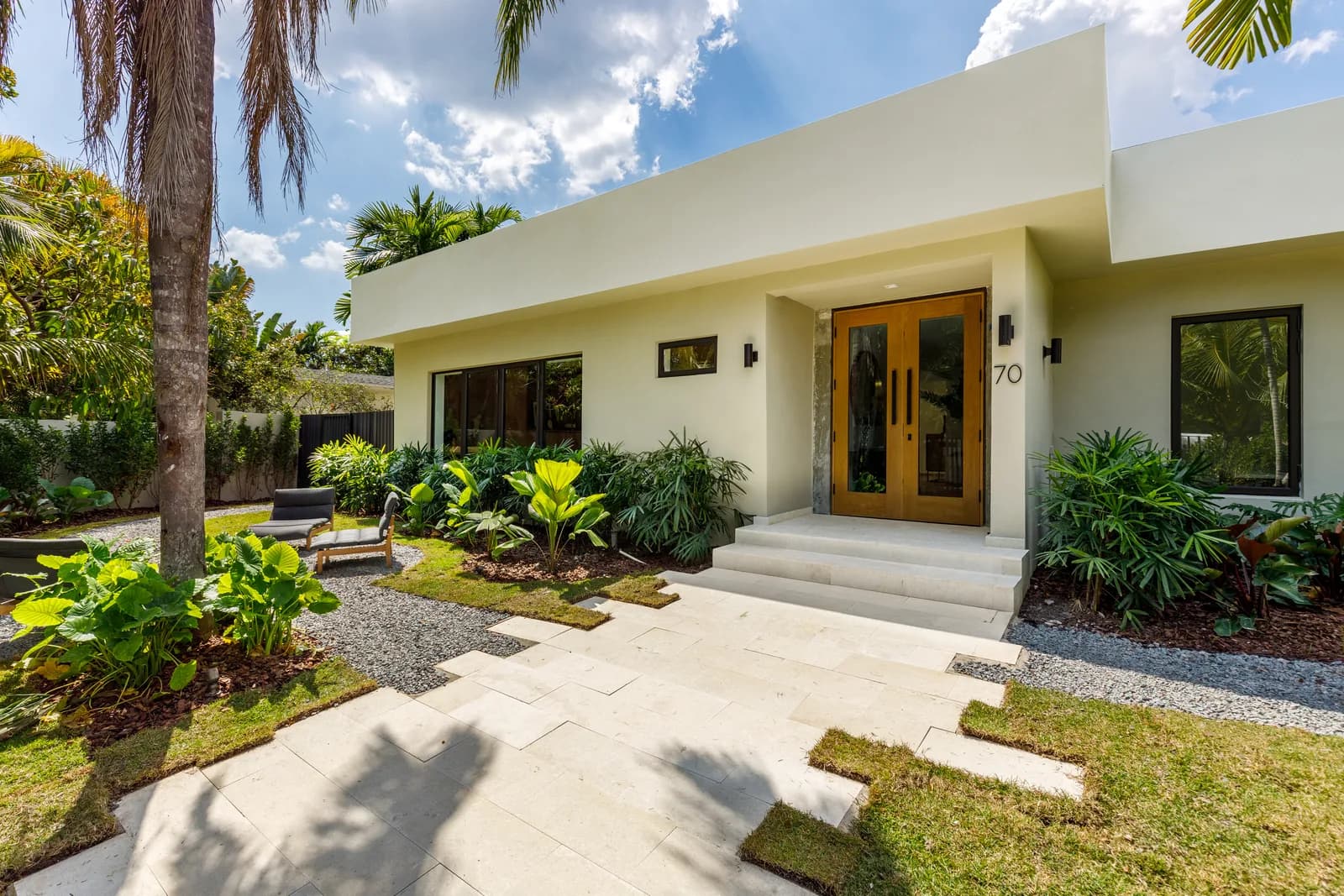
The Facade Is the One Thing the Whole Street Reviews
Fourteen Luxom elevations later, the facade comes down to four decisions: white stucco, glass, an oak door and a canopy worth keeping. Here is how those four hold together.
Development · Sep 23, 2026 · 4 min
What Causes Construction Cost Overruns on a Coconut Grove Build
Cost overruns rarely come from bad math. They come from split teams, padded bids and unclear accountability. Here is how Luxom's integrated model closes the gap.