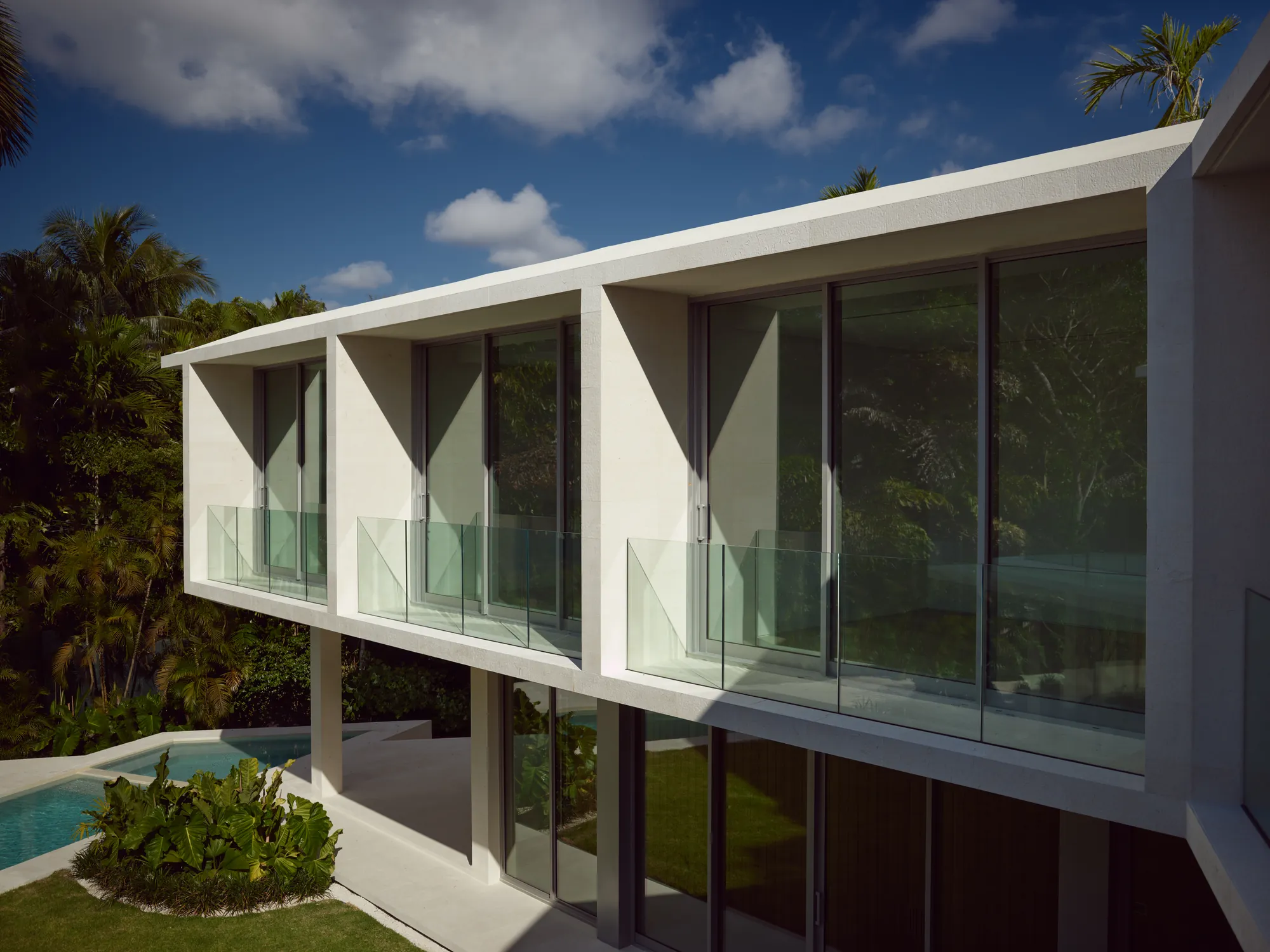
Why the Best Coconut Grove Homes Sell Before They Are Finished
The best new construction in Coconut Grove rarely reaches an open listing. Here is what building design, construction and finish under one team actually buys a buyer who commits before the walls are finished.
Luxom Studio · LUXOM Developments
· 7 min read · Last reviewed
Key takeaways
- Coconut Grove is largely built out, so new supply comes from teardown and rebuild rather than new land, and many of the neighborhood's most desirable homes sell off market through private networks before they are ever publicly listed.
- Single family supply in the Grove runs close to 6.5 months, and well finished properties move quickly, which is why a buyer who waits for a public listing is often choosing from what is left, not what was best.
- Committing to a home before it is finished only makes sense when one team controls the design, the construction and the finish, because that is what turns a pre completion sale from a bet on coordination into a bet on a single accountable plan.
- A buyer weighing a pre completion commitment should be checking who is actually accountable for the finished result, not just the render, the timeline or the price per square foot other new construction in the neighborhood is asking.
- Luxom's track record on this, the Onaway, Ingraham, Cherokee and Broadview residences, was built the same way: one team, design through the last coat of paint, which is also why a home currently on the boards can be spoken for before it reaches a listing.
Market POV
We posted three lines recently that said more than most market recaps do: the best houses are spoken for before they are finished, by the time a render becomes a photo the keys often already have a name, and that certainty is what building end to end actually buys a buyer. Here is the fuller argument behind that, and what it means for anyone watching Coconut Grove for the next home worth having.
The best Coconut Grove homes never reach an open listing
Coconut Grove is largely built out. What little new supply exists comes almost entirely from tearing down an older home and building a new one, not from new land coming onto the market, and that keeps single family inventory thin, close to 6.5 months of supply by recent counts. Tight supply changes how the best homes actually change hands. A well finished property does not sit waiting for the widest possible pool of buyers to find it through a public listing. It moves to whoever is already watching the neighborhood, often through an agent or a direct developer relationship, and market coverage of the area has been direct about it: many of Coconut Grove's most desirable homes sell off market, through private networks, before a sign ever goes up. Reporting on Coconut Grove's gated enclaves puts the scale of that scarcity at fewer than 10 sales a year across all of them combined.
New construction sells this way even more than resale does. Presale pricing on branded new construction entering the neighborhood has been reported in the 3,000 to 4,000 dollar per square foot range, and boutique branded projects are entering the market deliberately rather than as an oversupply wave, which is a signal of demand getting ahead of the finished product, not behind it. A buyer who waits for a home to appear on a public search is not choosing from everything the Grove has to offer. They are choosing from what nobody wanted to commit to earlier.
What being spoken for actually means before a home is finished
Being spoken for before a home is finished means a buyer has committed based on the plan, not the finished photograph: the lot, the layout, the material palette, the team's record on the last house they built, all agreed before the last wall is painted. That is a different decision than buying a listed home, and it asks something different of the seller. A finished listing lets a buyer evaluate exactly what they are getting. A pre completion commitment asks the buyer to trust that what gets built will match what was promised, on a timeline that has not happened yet.
That trust has to be earned by something more concrete than a rendering. It is earned by who is actually accountable for turning the plan into the house, and that is the part most coverage of the Coconut Grove market skips past. Being told to seek out a developer relationship is not the same as knowing what makes one worth trusting.
Building design, construction and finish under one team is what makes that safe
A pre completion commitment is only as safe as the number of parties who have to stay coordinated to deliver it. On a typical build, an architect designs the home, a general contractor is hired to build it, and that general contractor in turn coordinates a layer of subcontractors and finish suppliers, each with their own schedule, their own margin and their own incentive to protect their piece of the job rather than the buyer's outcome. Every one of those handoffs is a place a delay, a dropped detail or a miscommunication can happen, and on a home that is not finished yet, the buyer has no finished product to fall back on if it does.
Building design, construction and finish under one team removes that risk at the source. The same team that draws the plan is the team that builds it and the team that finishes it, which means there is one schedule instead of four, one point of accountability instead of a chain of contracts, and no handoff where the buyer's intent can get lost between the drawing and the finished room. That is not a marketing distinction. It is the structural reason a buyer can reasonably commit to a home before it is finished with one developer and should think twice with another: certainty is not a promise a developer makes, it is a function of how few parties actually control the outcome.
Pull quote
The best houses are spoken for before they're finished.
What to verify before you commit to a home that is not finished yet
A rendering tells a buyer almost nothing about whether a pre completion commitment is safe. What actually matters is who is responsible for the result and what they have already delivered. Before committing to a home that is not finished, a buyer should be asking whether the same team controls the design, the construction and the finish, or whether those pieces sit with separate companies who only meet at handoffs. They should be asking to see finished work, not just plans, from that same team, ideally on a comparable scale and in the same neighborhood, where the materials and the standards can be checked against something real rather than a specification sheet. And they should be asking what happens if a decision needs to change mid build, since a single accountable team can absorb that kind of change far more easily than a chain of separate contracts renegotiating scope with each other.
None of that shows up in a listing photo, because a home that is spoken for before it is finished was never going to reach a listing photo in the first place. It shows up in the developer's own track record, which is the one thing a buyer can actually check before the walls are up.
The track record behind that certainty
Luxom's own answer to that question is its build record in Coconut Grove: the Onaway, Ingraham, Cherokee and Broadview residences were each designed, built and finished by the same team, start to finish, the same discipline behind every Luxom home rather than a case made once and not repeated. That is also why a home currently on the boards can be spoken for before it reaches a listing. The certainty a buyer is being asked to trust is not new for the project in question. It is the same team's standard, applied again.
If you are weighing whether a pre completion commitment makes sense for a home you have your eye on in Coconut Grove, our guide to where luxury developers actually make money and why a typical build pays for four profits, not one both walk through the same in house model from the cost side. Our piece on building bespoke versus buying existing covers the adjacent decision once you have decided to build rather than buy, and how the Ingraham Residence went up, start to finish shows what that same process actually looks like on the ground. For the general phases every Luxom home follows before it ever reaches this stage, see our guide to building a custom luxury home in Miami, start to finish.
Ask about what is coming before it is listed
The homes that are worth being spoken for in Coconut Grove rarely wait for a public listing, and by the time one does reach the open market, the version of it that a buyer could have shaped from the plans is already gone. If you want to know what Luxom currently has on the boards before it reaches that stage, get in touch, or read through our services for how the design, build and finish process runs end to end, from the first drawing to the last coat of paint.
Pull quote
The best houses are spoken for before they're finished.
Filed under
Questions about buying a home before it is finished in Coconut Grove
01Why do the best homes in Coconut Grove sell before they are finished?
Because the neighborhood is largely built out. New supply comes almost entirely from tearing down an older home and building a new one, not from new land, which keeps single family inventory thin, close to 6.5 months of supply by recent counts. In a market that tight, a well finished new construction home does not need to wait for a public listing to find a buyer. The people already watching the neighborhood, often through an agent or a developer relationship, commit during the build, and the home never reaches an open listing at all.
02What does off market mean in Coconut Grove real estate?
An off market sale is one that closes without a public listing: no sign, no open house, no MLS entry a general search would surface. In Coconut Grove specifically, market coverage has noted that many of the area's most desirable homes sell this way, through private networks rather than a public process. For new construction, that usually means a buyer commits directly with the developer or their broker while the home is still being built, based on the plans, the finishes and the team's track record rather than a finished listing photo.
03Is it safe to commit to a home before construction is finished?
It depends entirely on who is accountable for finishing it. Committing before completion is safe when one team controls the design, the construction and the finish end to end, because there is a single plan and a single party responsible for delivering it. It is a much riskier bet when a project passes through an architect, a general contractor and a separate finish crew as three or four different contracts, since a delay or a dropped detail at any handoff becomes the buyer's problem to chase down. The question to ask before committing is not whether the render looks right. It is who actually finishes the house, and whether that is one team or several.
04What is the difference between hiring a general contractor and buying from a developer who builds end to end?
A general contractor typically coordinates a project that an architect designed and that separate subcontractors and finish suppliers execute, which means several companies, each with their own schedule and their own margin, have to stay aligned for the result to come together on time. A developer who builds end to end designs, constructs and finishes the home with the same team from the first drawing to the last coat of paint, so there is no handoff where accountability can get lost. That is also the structural reason an end to end developer can offer a buyer certainty before a home is finished: there is one plan and one team responsible for keeping it, not several.
05How much housing inventory is actually available in Coconut Grove right now?
Recent market reporting puts single family supply in Coconut Grove at roughly 6.5 months, with land scarcity limiting new inventory mostly to teardown and rebuild rather than new land coming online. Some new construction, including presale pricing reported in the 3,000 to 4,000 dollar per square foot range for branded residences entering the market, is absorbing demand before it shows up as public inventory at all. For a buyer relying only on public listings, the number of homes that actually fit a specific brief, in the right pocket of the neighborhood, finished to a genuinely high standard, is smaller than the headline supply figures suggest.
06How do buyers get early access to a home before it is listed?
Usually through a direct relationship with the developer or their team, asked for before a project reaches the point of a public listing. That is the mechanism behind most off market activity in Coconut Grove: a buyer or their advisor asks what is currently on the boards, not what is currently listed. If you want to see what Luxom has underway before it reaches that stage, our contact page is the direct route, and our services page explains how the design, build and finish process actually runs end to end.
Explore the portfolio
Projects to see


Talk to the studio
If this belongs in your home, our studio will draw the plan.
Initial conversation, 30 minutes. We listen to the brief and respond with a scoped proposal within five working days. You can also read the services page for typical timelines and fees.
Written by Luxom Studio · LUXOM Developments
The design and development studio behind LUXOM residences in Coconut Grove, Miami
Keep reading
From the journal
Development · Jul 8, 2026 · 3 min
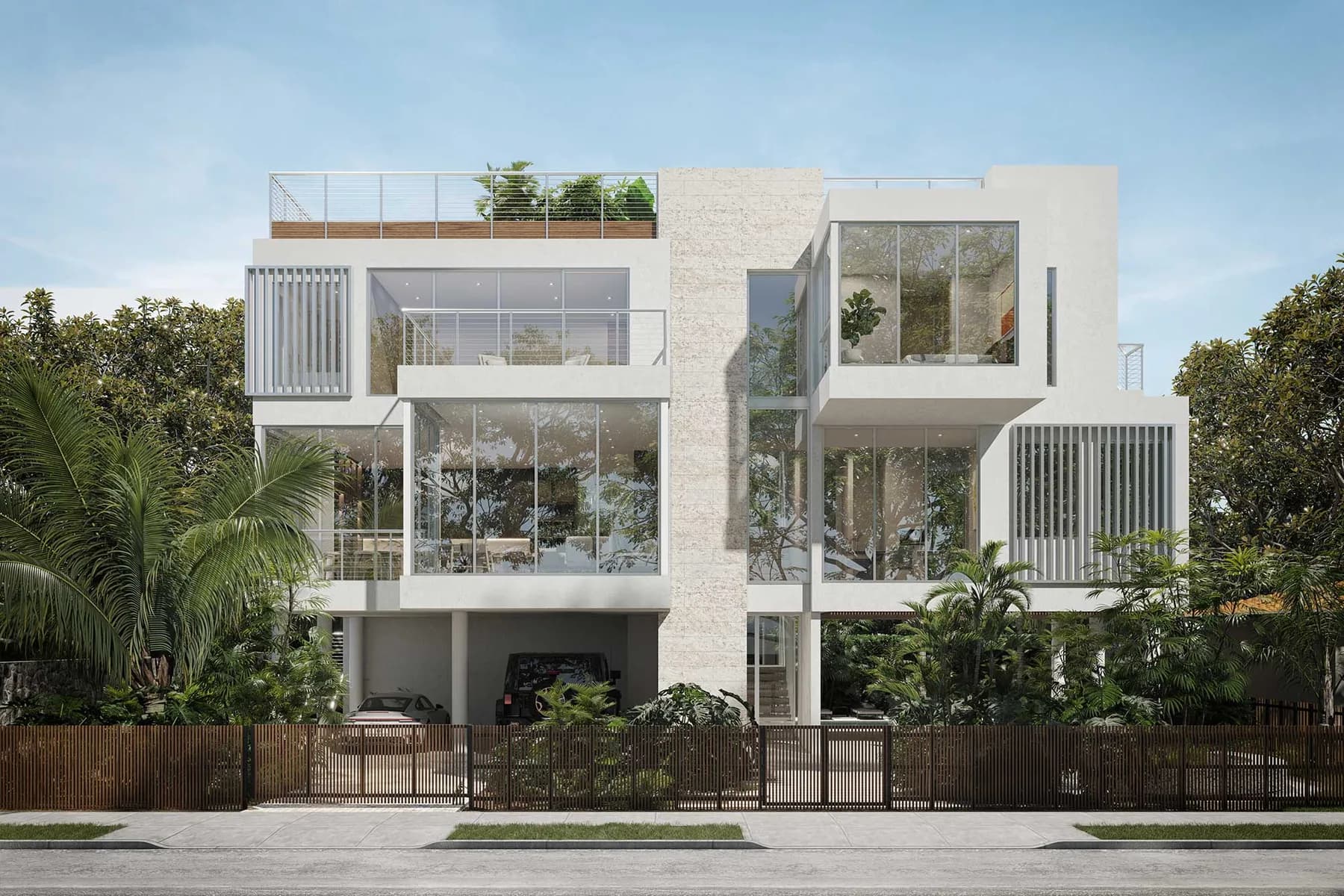
Where luxury developers actually make money
It isn't the house. The margin is decided the day you buy the land, and protected by everything you refuse to cheapen.
Development · Aug 5, 2026 · 4 min
Why Integrated Design and Construction Reduce Handoffs
Architecture, construction and interiors can be split across separate scopes. An integrated team gives a Coconut Grove client one place to resolve the decisions that cross those boundaries.
Development · Aug 3, 2026 · 5 min
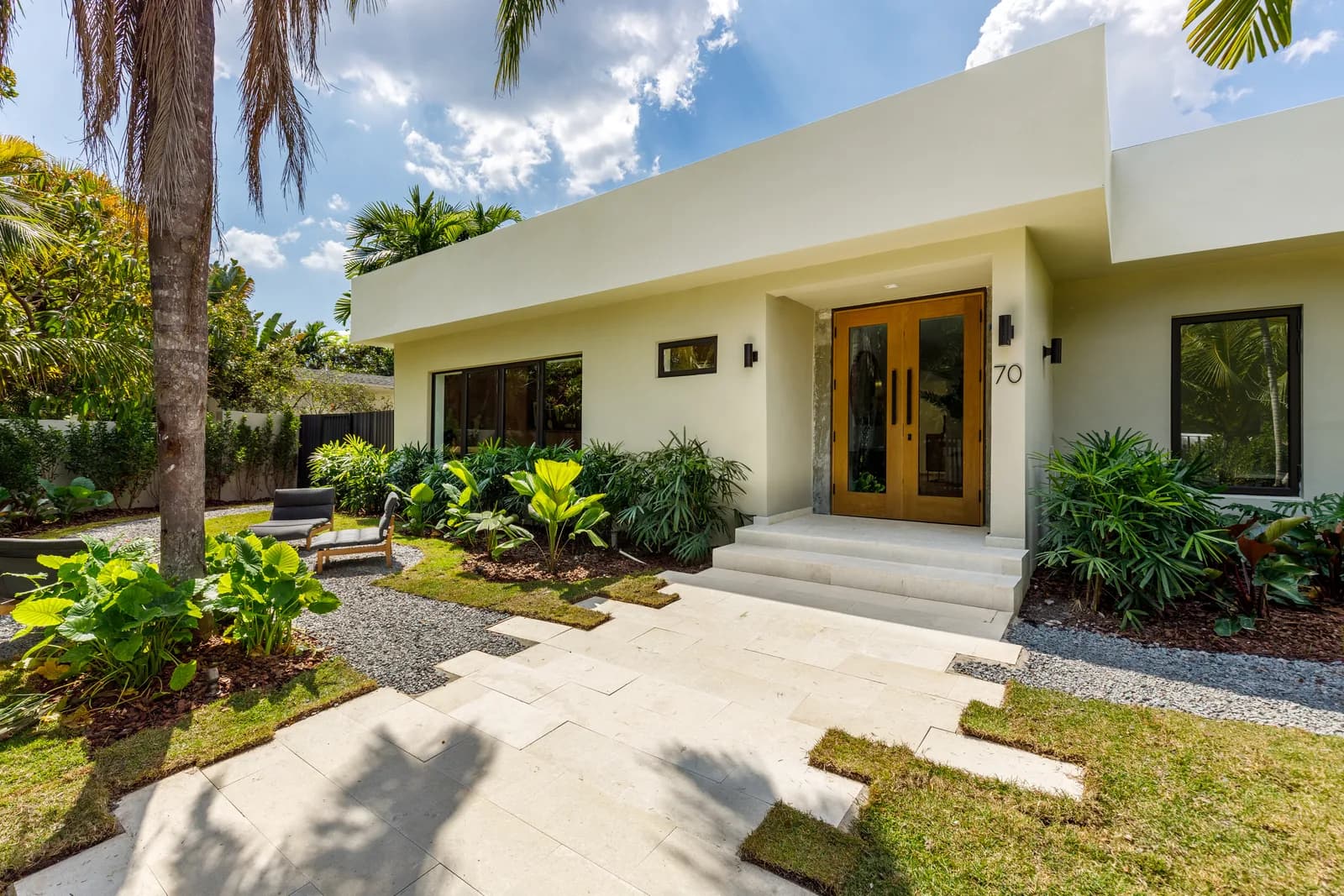
Building bespoke vs. buying existing: what you actually inherit
What buying an existing house in Coconut Grove actually hands you, and what building bespoke removes: the layout, the finishes and the compromises you never chose.