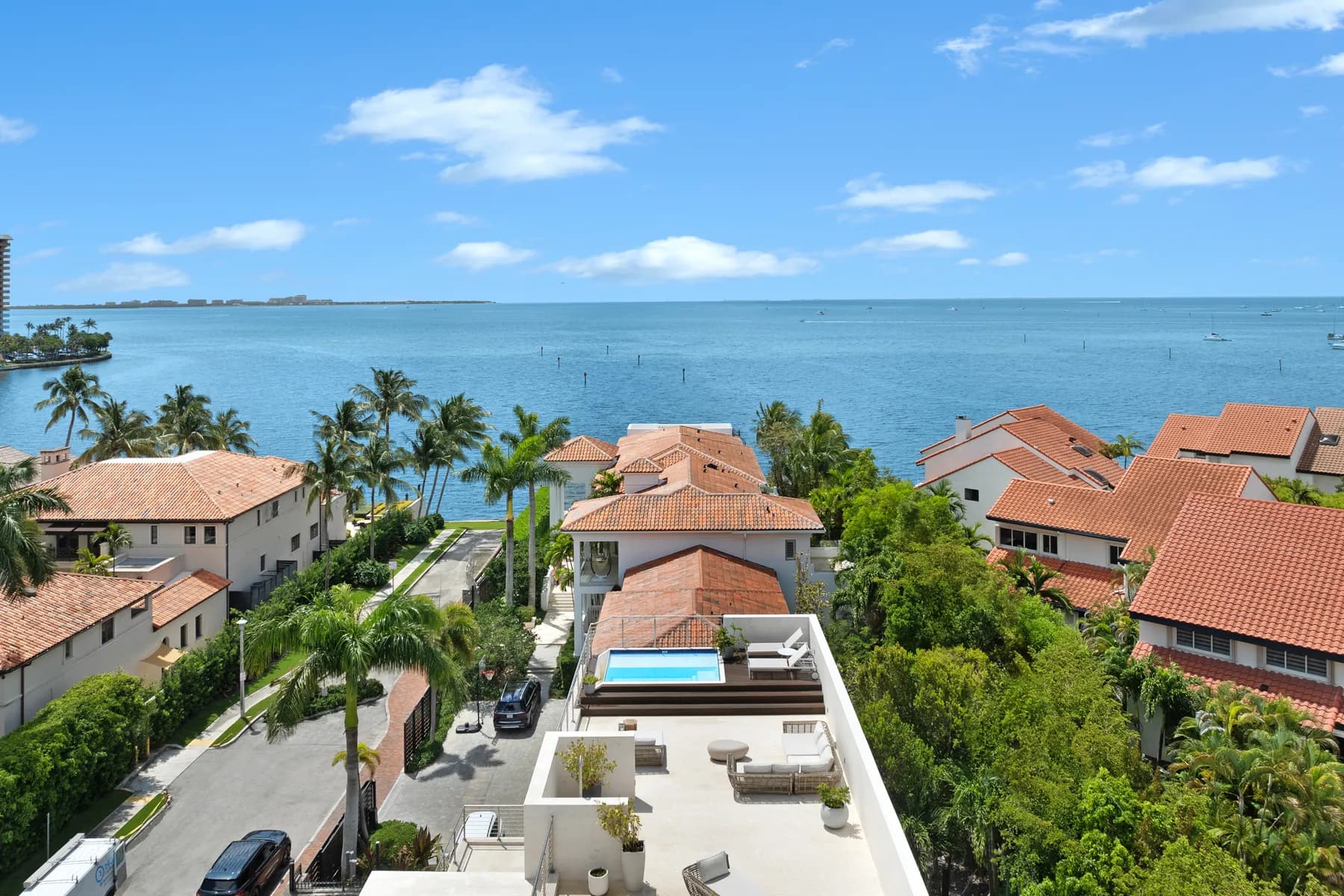
What waterfront actually costs in Coconut Grove
Inland, you can always build again or add on later. On the water, the view and the direct access are fixed by the lot itself, which is the real reason waterfront never trades like ordinary land.
Luxom Studio · LUXOM Developments
· 5 min read · Last reviewed
Key takeaways
- Inland, a house that feels too small can be fixed later with an addition or a second story. On the water, the shoreline in front of the lot is fixed the day the property line is drawn, and nothing behind it can add more.
- Coconut Grove's neighborhood median sale price reached about 2.6 million dollars, close to 909 dollars per square foot, up 52.7 percent year over year as of June 2026, and true waterfront parcels price above that median.
- Riparian rights, the legal water access that comes with true waterfront, attach to the land itself under Florida law, not to whatever gets built on it, which is why they need their own diligence before closing.
- The premium on a waterfront lot is not really a premium on the house. It is the price of a view and a stretch of frontage that will never be any different than it is on closing day.
- Luxom's approach to acquisition treats the land, and what it faces, as the decision that sets the ceiling on a project's value, before a single wall goes up.
From the developer
We keep hearing the same objection about waterfront in the Grove: the house costs about the same to build whether the lot faces open water or sits a street behind it, so why does the water add so much to the price. It does not add to the house. It adds to the one thing a lot on dry land can always fix later and a lot on the water never can.
What waterfront actually means for a lot in the Grove
Not every lot near the water is a waterfront lot. Coconut Grove's shoreline runs through a mix of open Biscayne Bay frontage, protected canal frontage, and lots that simply sit a street or two back from either. The difference matters more than the address suggests. Open bay frontage means an unobstructed view and, often, deeper water that can take a larger boat. A protected canal gives calmer water and easier dockage but a narrower view. A lot two streets back from either one gets the neighborhood and none of the water.
True waterfront also usually comes with riparian rights, covered in more detail below, and the physical ability to build a permitted dock. A listing can describe a property as water view or water adjacent without either one attaching to it. Knowing which kind of lot is actually in front of you is the first diligence question, well before price ever comes up.
Why the house is never the scarce part
Here is the part that gets missed. Inland, if a house feels too small in ten years, there is almost always a path to more: an addition, a second story, sometimes the lot next door. The structure is rarely the real constraint. On a waterfront lot, that path does not exist. The shoreline in front of the property is fixed the day the property line is drawn, and nobody is creating more of it.
That is the actual trade a buyer is making. Inland, you are paying for a house you can always change later. On the water, you are paying for a view and a stretch of frontage that will be no different the day you close than it was the day the lot was platted, no matter what gets built on top of it. The structure is worth what any comparable structure is worth. The water access is worth what it is worth precisely because nothing behind it can add more of it.
Pull quote
You are not paying for the house. You are paying for the part of the lot that can never be rebuilt: the view and the water it sits on.
The premium sits on top of an already rising median
None of this happens in a market that is standing still. Coconut Grove's overall neighborhood median sale price reached about 2.6 million dollars, close to 909 dollars per square foot, up 52.7 percent year over year as of June 2026, and true waterfront parcels price above that median, not at it, according to public Coconut Grove market data. Miami's oceanfront and bayfront land supply is effectively fixed, and that scarcity is part of what keeps waterfront pricing resilient even when the broader market cools, as cost of ownership research on Miami waterfront also points out.
A rising median lifts every lot in the neighborhood. A fixed supply of shoreline is what keeps the waterfront portion of that median rising faster than the rest.
Riparian rights are the diligence layer most buyers skip
A true waterfront parcel usually carries riparian rights, the legal water access rights that attach to the upland under Florida law and pass with the land itself, not with whatever gets built on it (Florida Statutes section 253.141). That single fact is why two visually similar lots on the same canal can carry very different value: one with clear riparian rights and a permitted, structurally sound dock, and one without either.
Standard title insurance often treats riparian rights as an exception rather than a covered item, which means this is not something to assume from a listing photo. It is something to confirm before the lot, not the house, gets valued, ideally with the same attorney who will handle the closing.
What we build once a site faces the water
Grove Isle, the one Luxom residence built directly on Biscayne Bay, started from that premise rather than from a floor plan. The bay is the dominant feature in every room that warrants it, and the interior approach there was to strip finishes back to the view rather than compete with it: light stone, linen textures, almost nothing that fights the quality of the water outside. The house was designed around what the lot already had. It could not have been designed around more of it, because there was no more to add.
That is the brief every waterfront project starts from with us: figure out exactly what the water gives the site before deciding what the house should do with it.
The choice, plainly
Inland, the house is the variable. You can rebuild it, add on to it, or refinish it, and the land underneath rarely changes what it was worth on its own. On the water, the land is the variable that already decided the outcome before anyone drew a floor plan. What a waterfront buyer is paying for is not a bigger house. It is the one part of the lot, the open view and the direct access to the water, that can never be replaced once it is gone.
If you are weighing a waterfront lot in the Grove against building inland, our services page walks through how we run that process end to end, and you can start a scoped conversation through the contact page. For the fuller argument behind why land, not construction, decides a project's value, see where luxury developers actually make money.
The same price per square foot benchmark cited above is calculated against conditioned living area, not total covered area. See under air square footage: what actually prices a Miami home for how that distinction works on a waterfront lot.
Pull quote
You are not paying for the house. You are paying for the part of the lot that can never be rebuilt: the view and the water it sits on.
Filed under
Questions about waterfront property value Coconut Grove
01Why does waterfront property in Coconut Grove cost more than an inland lot of the same size?
Because the premium is not really attached to the house. Inland, a home can be rebuilt, expanded or refinished if it no longer fits, so the structure rarely holds a fixed ceiling on value. A waterfront lot's open view and direct water access are fixed by the parcel itself and by Miami's limited oceanfront and bayfront land supply, so nothing built later can add more of either. That scarcity, not the square footage on top of it, is what a buyer is actually paying for. Source: cost of ownership research.
02What does waterfront actually mean for a lot in Coconut Grove?
It depends on which kind of frontage the lot has. Some Grove properties sit on open Biscayne Bay with an unobstructed view and deeper water, others sit on a protected canal with calmer water and easier dockage but a narrower view, and some are simply near the water without directly fronting it. True waterfront usually also carries riparian rights and the physical ability to build a permitted dock, which a listing description alone will not confirm. See our guide to building a custom luxury home in Miami for how a site's water access shapes a project from the first drawing.
03What are riparian rights and why do they matter when building on the water?
Riparian rights are the legal water access rights that attach to an upland parcel under Florida law (Florida Statutes section 253.141) and pass with the land itself, not with whatever gets built on it. A lot with clear riparian rights and a permitted, structurally sound dock is a meaningfully different asset than a visually similar lot without either, and standard title insurance often treats riparian rights as an exception rather than a covered item. Confirming them is diligence on the land, not on the house.
04Is it better to build directly on the water or buy inland and expand the house later?
That depends on which constraint matters more to you. Inland, you are buying flexibility: if the house does not fit in ten years, there is usually a path to more space through an addition or a rebuild. On the water, you are buying something that cannot be added later at any price: direct access and an open view over the bay. Neither choice is wrong, but they are not the same trade, and treating them as interchangeable is how buyers end up disappointed with either one. Talk through a specific lot with us on the contact page.
05How much of a premium does true waterfront carry over Coconut Grove's neighborhood median?
Coconut Grove's overall neighborhood median sale price reached about 2.6 million dollars, roughly 909 dollars per square foot, up 52.7 percent year over year as of June 2026. True waterfront parcels with usable dockage price above that median, reflecting the added scarcity of direct water access on top of an already tight neighborhood market. Source: Coconut Grove waterfront market data.
06Does Luxom build custom homes directly on the water in Coconut Grove?
Yes. Grove Isle, one of the residences profiled in our tour of four Coconut Grove residences, sits directly on Biscayne Bay and was designed around uninterrupted water frontage rather than added square footage. If you are weighing a specific waterfront lot, reach out through our contact page to talk through what the site allows.
Explore the portfolio
Projects to see


Talk to the studio
If this belongs in your home, our studio will draw the plan.
Initial conversation, 30 minutes. We listen to the brief and respond with a scoped proposal within five working days. You can also read the services page for typical timelines and fees.
Written by Luxom Studio · LUXOM Developments
The design and development studio behind LUXOM residences in Coconut Grove, Miami
Keep reading
From the journal
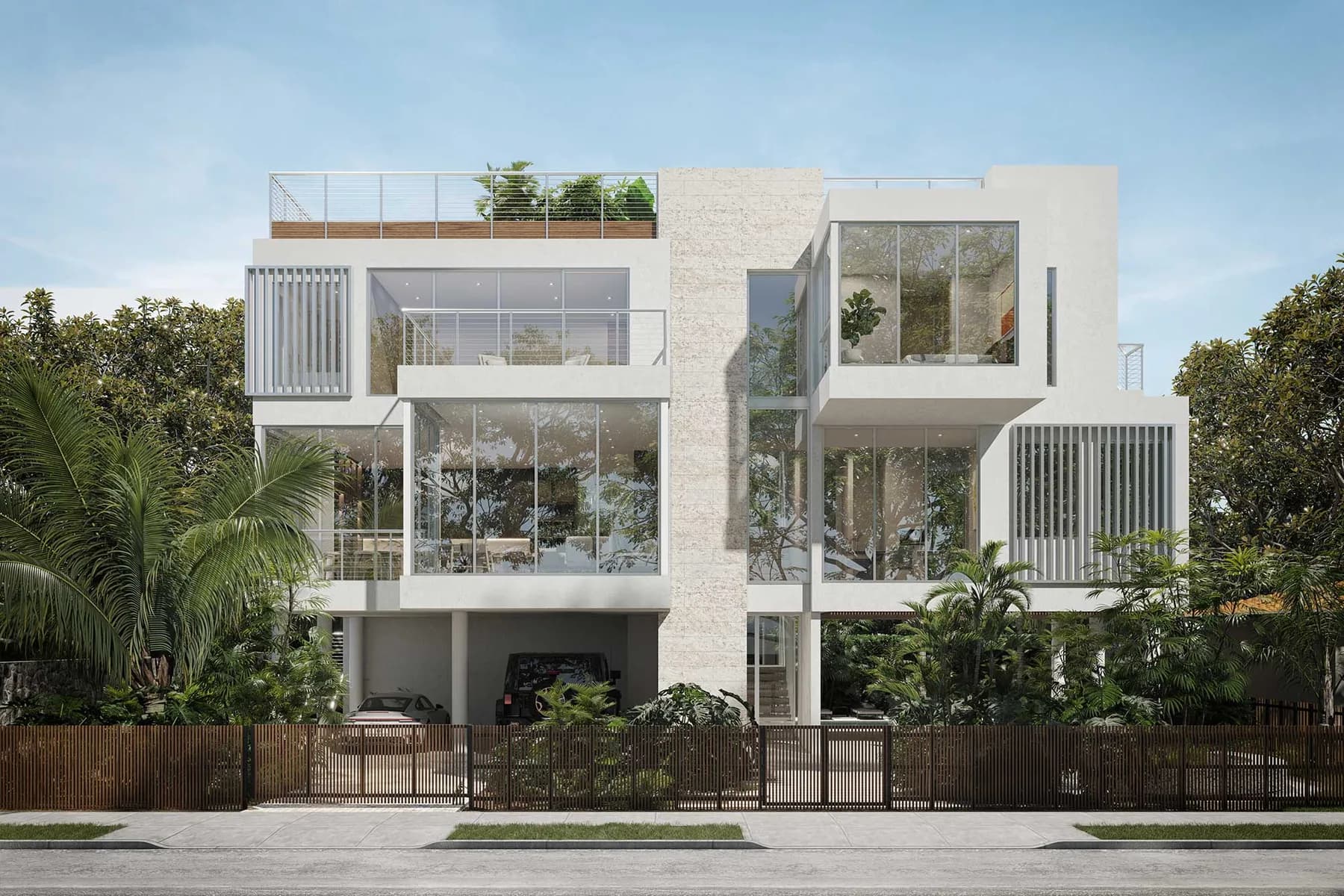
Development · Jul 8, 2026 · 3 min
Where luxury developers actually make money
It isn't the house. The margin is decided the day you buy the land, and protected by everything you refuse to cheapen.
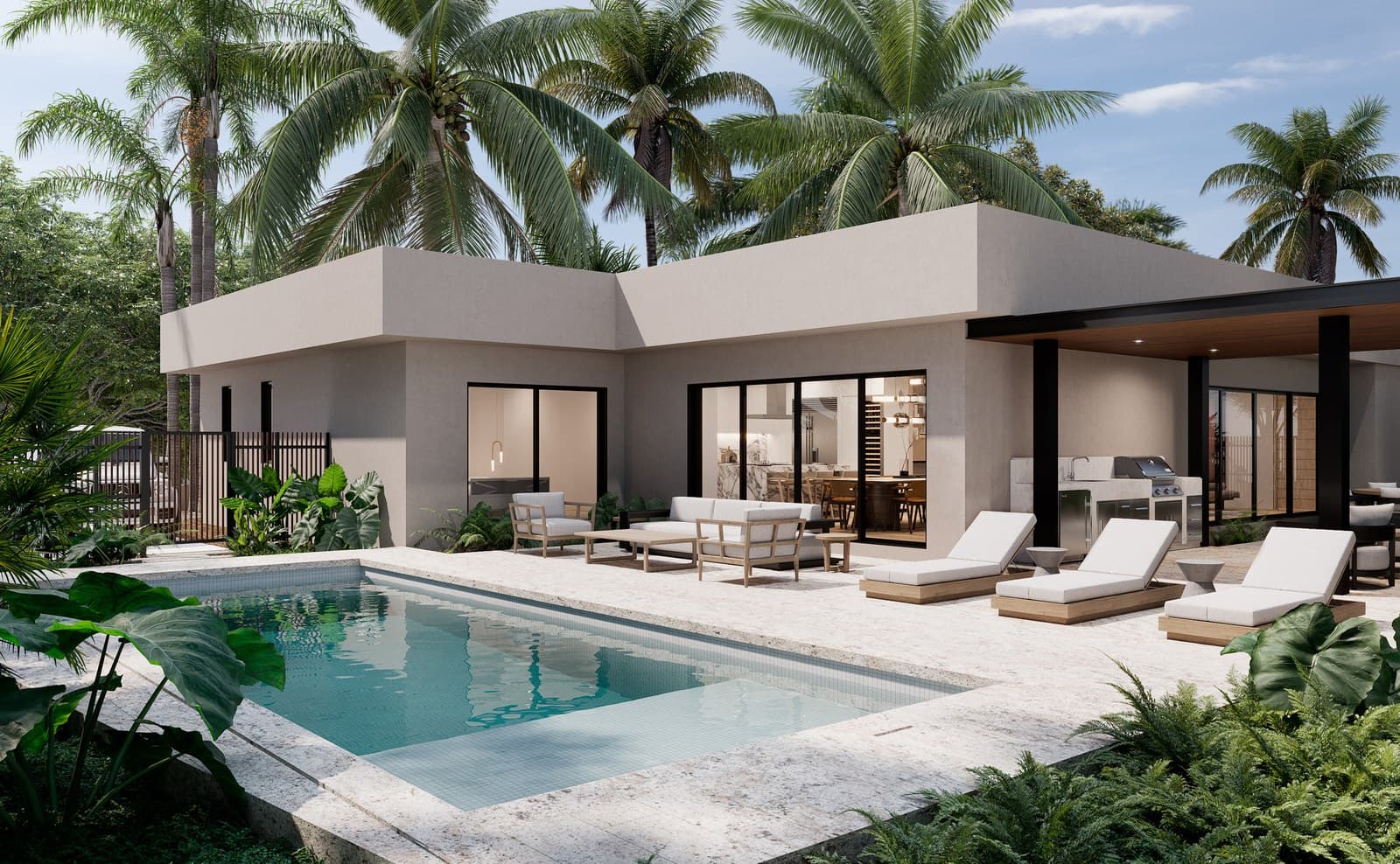
Residences · Aug 8, 2026 · 6 min
Four residences, four ways to live in Coconut Grove
Every Luxom home starts with a question: how do you want to live? Four residences in Coconut Grove, four distinct architectural answers. A closer look at what makes each one different.
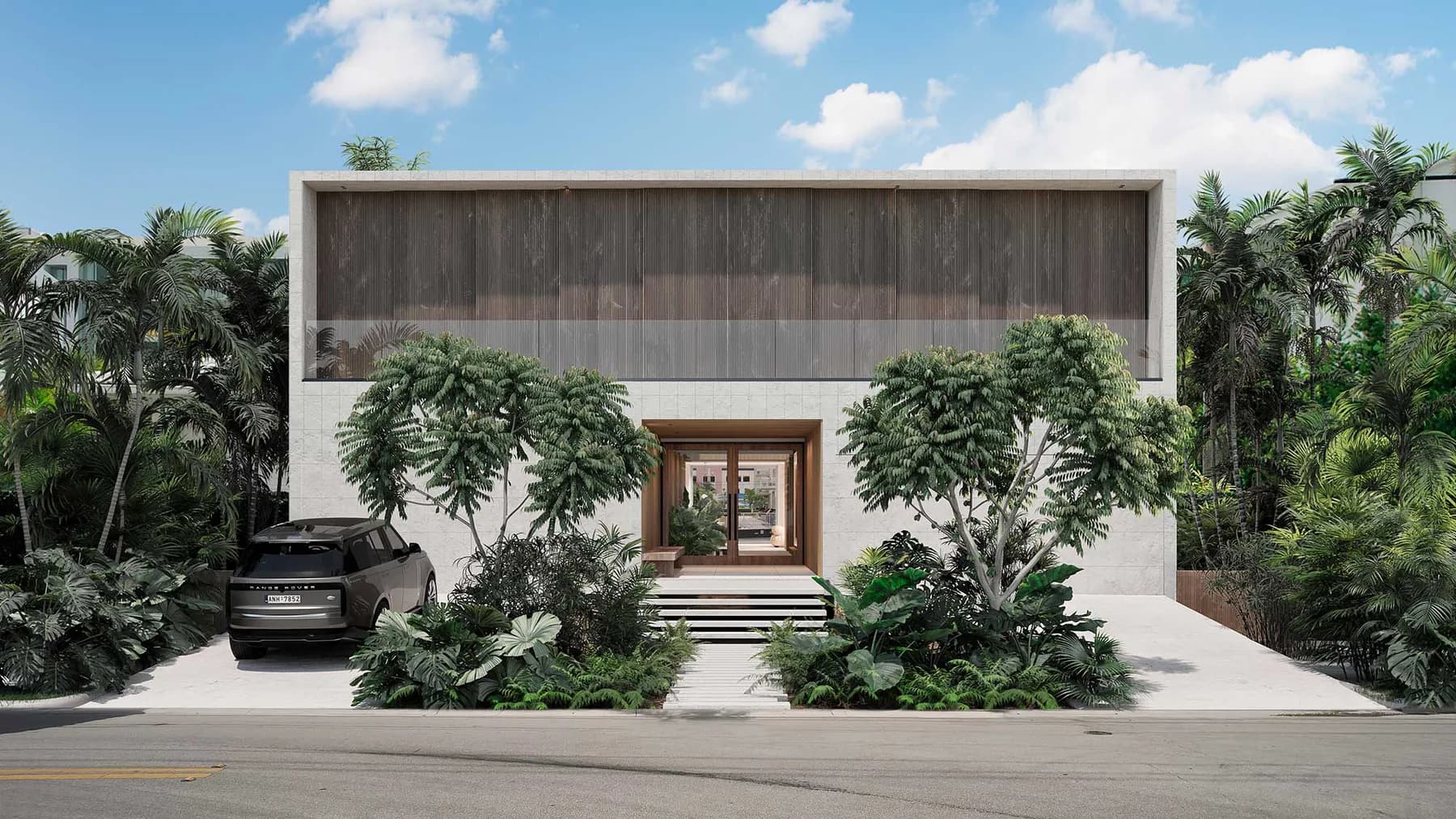
Development · Jul 23, 2026 · 5 min
Building a custom luxury home in Miami, start to finish
What it takes to build a custom luxury home in Miami, from land and design through permitting and finish. The real sequence, the local constraints, and where a builder earns their keep.