The Living Room Furnishing Order We Used at Onaway
Rug first, sofa second, lighting and tables third, the art last. That order is not a styling preference. It is why the Onaway living room reads as finished instead of decorated.
Luxom Studio · LUXOM Developments
· 5 min read · Last reviewed
Key takeaways
- The rug goes down first because it sets the scale of the seating area before a single other piece is chosen, and every purchase after it has to answer to that size, not the other way around.
- The sofa is picked to sit on the rug that already exists, which is why buying the sofa first is the most common sequencing mistake and usually ends with a rug that reads too small.
- Lighting and the coffee and side tables come once the seating is fixed, because they are layered around where people actually sit, not decided in isolation.
- The art or the sculptural object goes up last, once the room already works without it, because a wall piece chosen too early has to be designed around instead of chosen to complete what is already there.
- At Onaway, this order was followed piece by piece in the finished living room, and the same sequence, not a longer list of individual purchases, is what a household can reuse in a different room entirely.
From the walkthrough
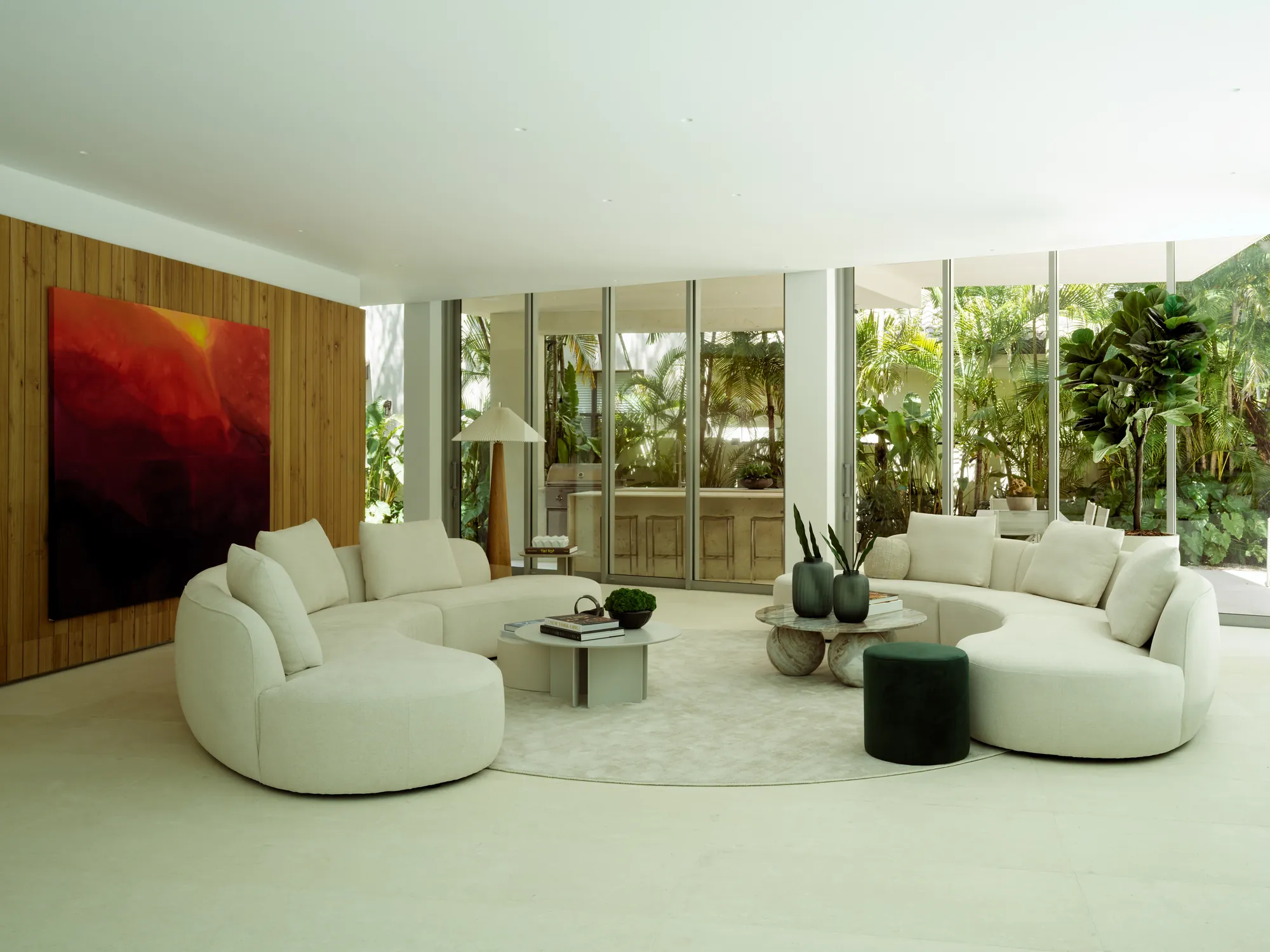
The clip we posted of the Onaway living room moves fast: rug, sofas, a floor lamp, the coffee tables, and then the painting going up on the wood paneled wall. It looks like styling. It is actually a sequence, and it is the same sequence a good furnishing job follows in any living room, not just a residence this size.
The rug goes down first, before anything else is chosen
Every other decision in the room answers to the rug, so the rug has to be chosen before the room has a single other piece in it. Its size sets the boundary of the seating area. Its palette and texture set the range the rest of the room has to work within, whether the next pieces lean warmer, cooler, more textured, or more restrained. Choosing it first is not a styling preference. It is the only order that lets the sofa, the tables, and the lighting be sized and toned to something that already exists, instead of guessed at in a bare room.
Skip this step, or do it last, and the room usually shows it: a rug that reads too small once the furniture is in, floating in the middle of the space instead of anchoring it. That single mistake, sofa first and rug second, is the one Studio Llano's furnishing guide calls out first, and it is the same reasoning that governed the Onaway living room before a single other piece went in.
The sofa is sized to the rug, not the other way around
Once the rug is on the floor, the sofa is the next decision, and it is now a much narrower one than it would have been in an empty room. The rug has already set the dimensions of the seating area, so the sofa, or in Onaway's case the pair of curved cream sofas, is chosen to sit within that boundary rather than to define it. That is the actual value of doing the rug first: it turns an open ended furniture decision into one with real constraints.
This is also where the most common sequencing error shows up. Decorilla's piece on what the pros always get right names buying the sofa before the rug as the single most frequent mistake in furnishing a living room, because it is usually the largest and most visually demanding piece in the room, and it is easy to let it dictate everything else by default rather than by design.
Lighting and the tables are layered around the seating that is already fixed
With the rug and the seating resolved, lighting and the surface pieces, coffee tables, side tables, come next, and they are chosen relative to what already exists rather than independently. A floor lamp gets placed where it actually lights a corner people use, not wherever there happens to be an empty spot. A coffee table is sized to sit comfortably in front of the sofas that are already there, low enough and proportioned to the seating rather than chosen as a standalone object first.
Crate & Barrel's guide to arranging living room furniture describes this same layering logic in general terms: furniture placement follows the conversation area that is already established, not the other way around. Objects and smaller accessories, plants, decorative pieces, follow the same principle once the tables and lighting are set.
The Onaway living room followed this order piece by piece
The clip is compressed into seconds, but the sequence it shows is the one described above, followed in a real, finished room rather than in the abstract. The rug goes down first. The curved cream sofas follow, sized to sit on it. The stone coffee tables and the cone floor lamp come next, placed around the seating rather than guessed at first. Plants and smaller objects fill in around those anchors. Only once all of that is standing on its own does the large abstract painting go up on the wood paneled wall, the very last piece placed in the room.
That closing move is deliberate, not decorative. The painting did not have to carry the room, because the room already worked without it. Its job was narrower and easier: complete a space that was already resolved. For the architecture that this living room sits inside, a wing of pavilions wrapped around a central pool courtyard, see Onaway Residential: eight bedrooms built around one pool courtyard.
Pull quote
The art goes up last because it is the decision you make once the room already works without it, not the decision that decides the room.
Why the art or the wall piece goes up last, not first
Choosing a large painting or a sculptural piece before the rest of the room exists forces every later decision to answer to it: the sofa color has to work with it, the rug has to not compete with it, the tables have to sit quietly beneath it. That is a harder brief than the room needs, and it usually shows in a room that feels arranged around one object rather than lived in.
Waiting until the room already reads as finished changes the job entirely. The painting in the Onaway living room did not have to set the palette or carry the wall on its own. It had a resolved room, rug, sofas, lighting, tables, already standing behind it, and its only task was to complete what was already working. That is the same principle behind the general design language across Luxom interiors, covered in more depth in our guide to warm minimalism, where restraint in the early decisions is what makes the later ones, art included, easier to get right.
This living room sits inside one of four Coconut Grove residences with very different premises about how to live; see four residences, four ways to live in Coconut Grove for how Onaway compares to the other three. The same restraint, choosing fewer, more deliberate pieces rather than filling every surface, also runs through our guide to organic modern interior design. For the room by room plan and gallery of the full residence, visit the Onaway project page, or watch the full furnishing clip on Instagram.
Pull quote
The art goes up last because it is the decision you make once the room already works without it, not the decision that decides the room.
Filed under
Questions about order to furnish a living room, rug sofa lighting art sequence
01What order should you furnish a living room in?
Start with the rug, then the sofa, then the lighting and the tables, and finish with the art or the sculptural object on the wall. Each step is scaled to the one before it: the sofa is sized to the rug that already exists, the lamp and the tables are placed around the seating that is already fixed, and the art is chosen last because by then the room already works and the wall piece only has to complete it, not carry it. See how this played out in the finished Onaway living room.
02Why does the rug go first when furnishing a room?
The rug is the piece that sets the scale of the whole seating area, so choosing it first gives every later purchase a size and a palette to answer to. Buy the sofa first instead and the rug gets chosen to fit around furniture that is already in the room, which is the most common reason a finished living room ends up with a rug that reads too small for the space. Studio Llano's guide to furnishing a living room lists the same order for exactly that reason.
03How do you choose the right rug size for a sofa?
The rug should be large enough that at minimum the front legs of the sofa and the seating pieces around it sit on it, not floating just past its edge on bare floor. Getting this wrong in the other direction, sofa first, is the single most cited sequencing error in furnishing guides. Decorilla's piece on what the pros always get right walks through the sizing math in more detail.
04What comes after the sofa when furnishing a living room?
Once the seating is fixed, lighting and the coffee and side tables come next, because both are layered around where people actually sit rather than decided on their own. A floor lamp is placed relative to a reading corner that already exists, and a coffee table is sized to the sofa and the rug beneath it, not chosen first and built around later. Crate & Barrel's guide to arranging living room furniture covers this layering in more general terms.
05Why does the art or the wall piece go up last?
Because a room that already works, rug, seating, lighting, tables all resolved, gives the art something to complete instead of something to design around. Choosing the piece over the sofa too early forces the rest of the room to match a single object instead of the object answering to a room that already reads as finished. In the Onaway living room walkthrough, the painting was the very last piece placed, once the rest of the room already stood on its own.
Explore the portfolio
Projects to see


Talk to the studio
If this belongs in your home, our studio will draw the plan.
Initial conversation, 30 minutes. We listen to the brief and respond with a scoped proposal within five working days. You can also read the services page for typical timelines and fees.
Written by Luxom Studio · LUXOM Developments
The design and development studio behind LUXOM residences in Coconut Grove, Miami
Keep reading
From the journal
Architecture · Aug 29, 2026 · 6 min
Onaway Residential: Eight Bedrooms Built Around One Pool Courtyard
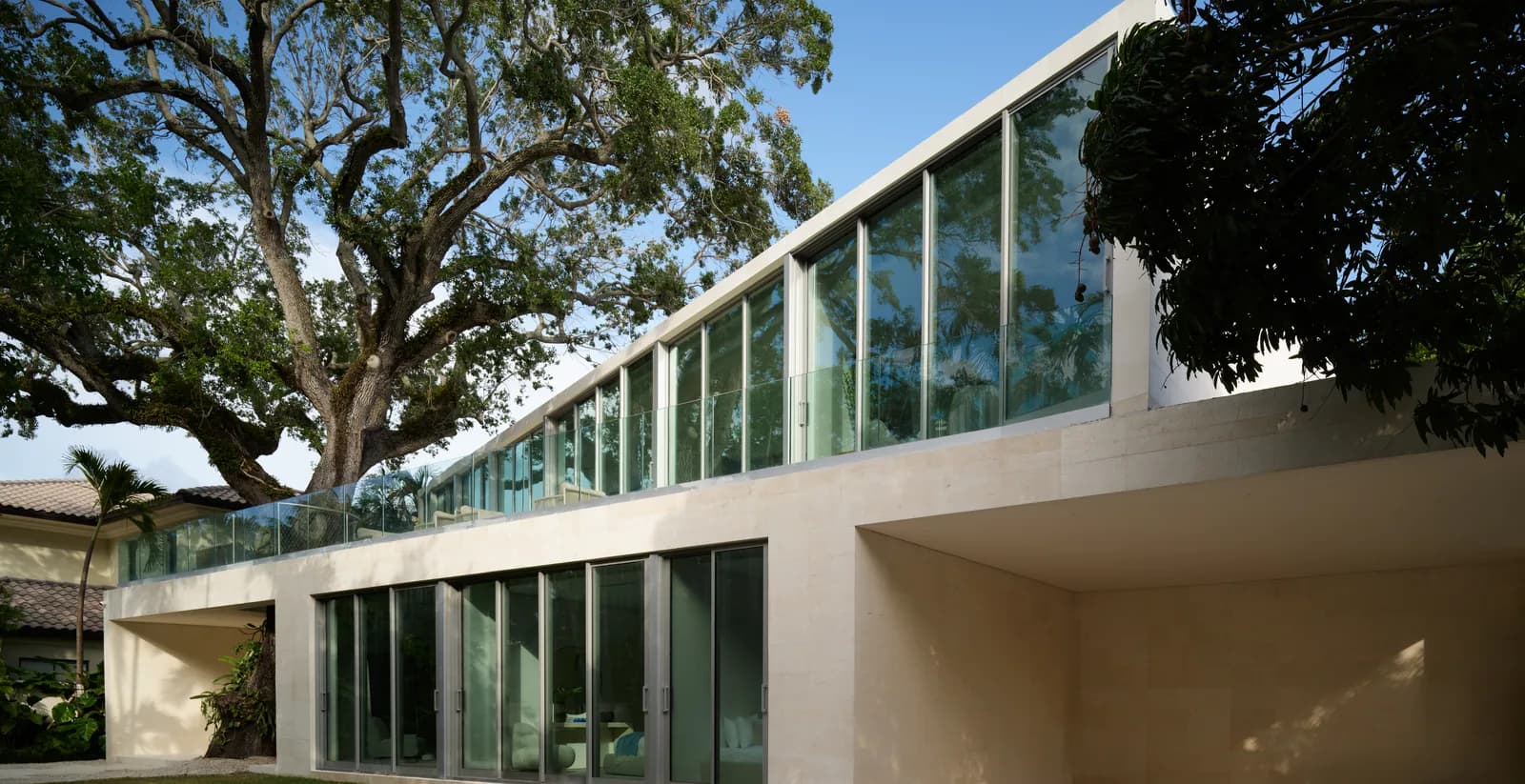
Onaway is not one block with rooms inside it. It is a series of pavilions wrapped around a central pool courtyard, and that single decision is what gives all eight bedrooms their own light.
Residences · Aug 8, 2026 · 5 min
Four residences, four ways to live in Coconut Grove
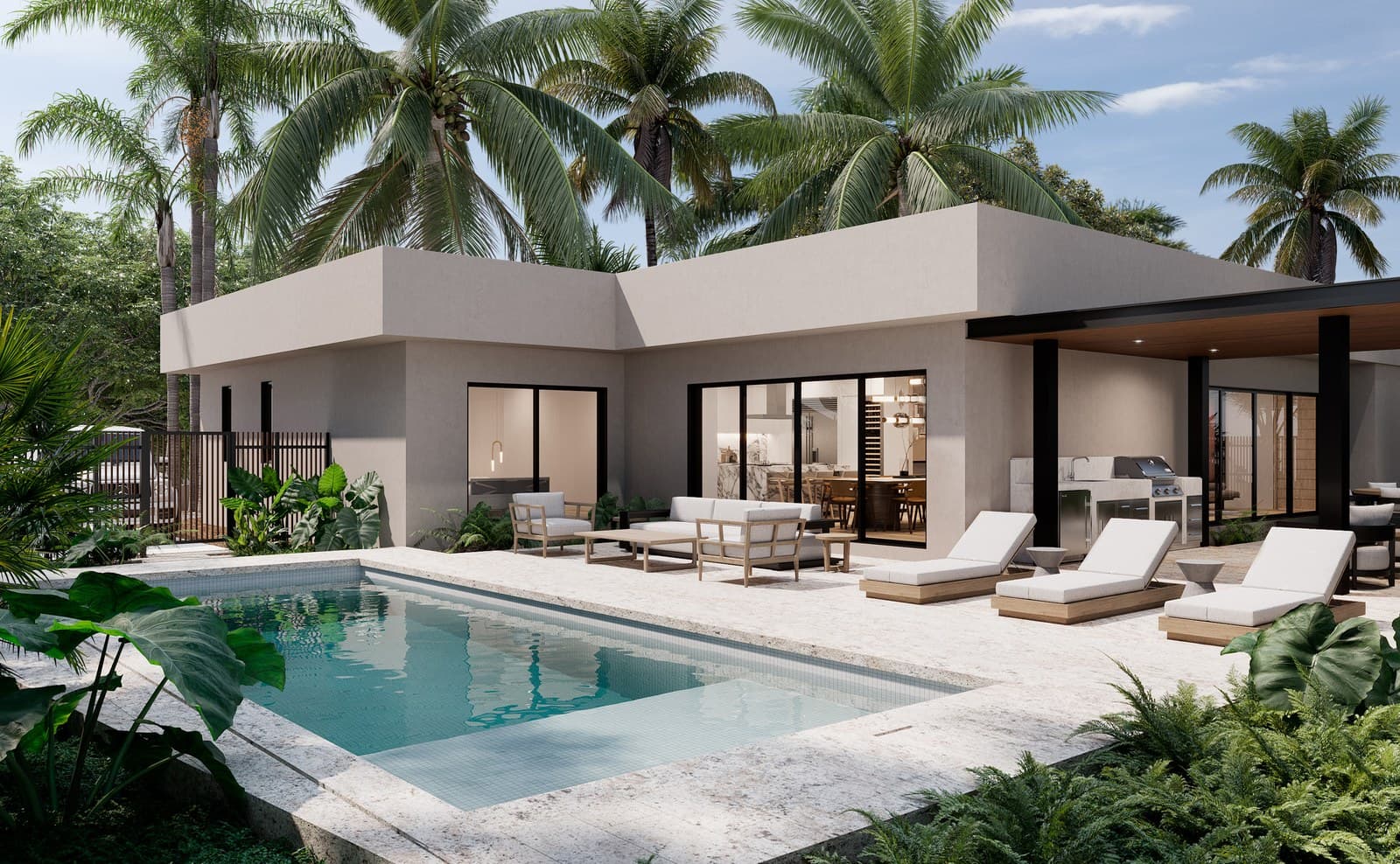
Every Luxom home starts with a question: how do you want to live? Four residences in Coconut Grove, four distinct architectural answers. A closer look at what makes each one different.
Interiors · Jul 12, 2026 · 3 min
Warm minimalism: luxury without the cold
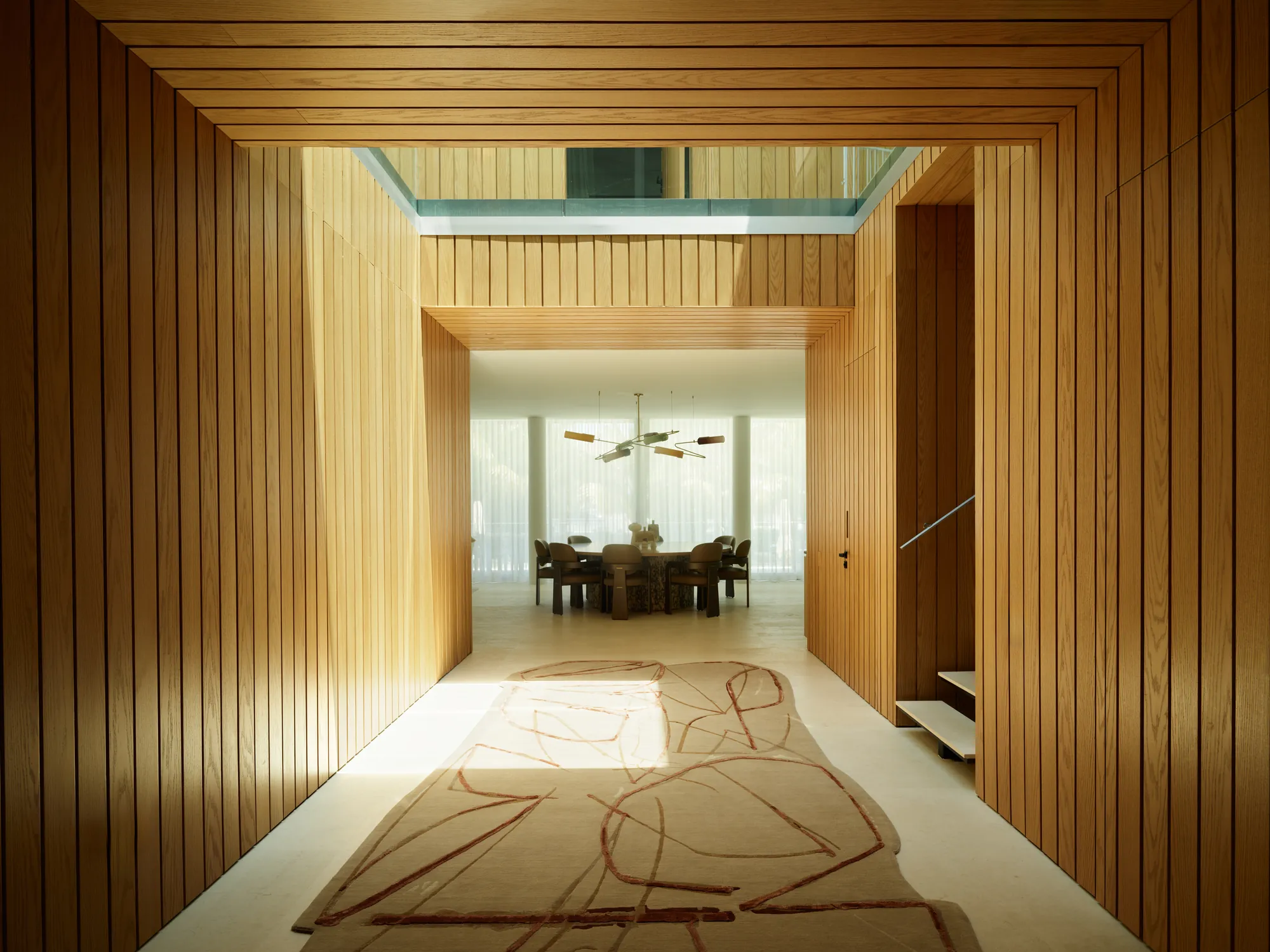
The branch of minimalism that keeps the calm and loses the chill. How material, light and texture turn a spare room into one you want to stay in.