What a Flower Shaped Building Teaches a Coconut Grove Home
The Lotus Temple's petal shells are structure, not decoration. Here is what that logic actually transfers to a custom Coconut Grove house.
Luxom Studio · LUXOM Developments
· 4 min read · Last reviewed
Key takeaways
- Most search results for flower inspired architecture are wedding decor, a single art installation, or an AI-generated mood board, not a documented building.
- The Lotus Temple in New Delhi is a real, completed example: 27 free standing marble clad petals arranged in clusters of three, forming nine sides.
- The petals are structural shells, not applied ornament, and they work with nine surrounding pools to cool the hall passively.
- A hand carved marble petal shell is monument scale and monument budget. It does not transfer to a single family house.
- What does transfer is the underlying decision: let a shape's angle and orientation do climate work, instead of adding a flower motif as decoration afterward.
Editor's note
Search "flower inspired architecture" and most of what comes back is wedding decor, a single art installation, or an AI-generated style board. None of it is a documented building a homeowner could learn a real design lesson from.
One building earns that conversation: the Lotus Temple in New Delhi. Its petal shells are structure, not ornament. This piece separates what that principle costs at monument scale and what part of it actually transfers to a custom Coconut Grove house.
Why a flower shaped building is engineering, not ornament
A flower silhouette shows up in architecture more often as a styling theme than as a structural decision. The search results for this topic prove it: wedding arches, a Korean art installation built from a flower cushion motif, a fashion blog's window display, and an AI-generated "Greenhouse Renaissance" mood board with no named architect or completed building behind it. None of that is architecture in the structural sense. It is decoration borrowing a flower's outline.
The Lotus Temple is different because the petal shape is doing load bearing and climate work, not just visual work. That distinction, structure deciding the form instead of decoration applied over a resolved frame, is the same test we apply to other precedent buildings in what Gaudi's structural principle means for a Miami house.
Inside the Lotus Temple's twenty seven petals
Per its entry on Wikipedia, the Bahai House of Worship in New Delhi, known worldwide as the Lotus Temple, was designed by architect Fariborz Sahba and completed in 1986. The building is formed from 27 free standing, marble clad petals, arranged in three clusters of nine, which together create nine sides around a central hall. Each petal is a thin concrete shell faced in marble, engineered to be self supporting rather than hung on a separate frame. Nine pools surround the building and work with the petal geometry for passive cooling of the hall inside, reducing how much the structure depends on mechanical air conditioning.
Pull quote
A petal on the Lotus Temple is not there to look like a flower. It is there because that angle sheds heat and carries its own weight.
What is monument scale, not house scale
Twenty seven hand finished, marble clad concrete shells are a religious monument's budget and construction timeline, not a single family home's. The Lotus Temple took roughly a decade from design to completion and involved structural engineering most residential budgets never touch. A literal petal shaped roof, or marble cladding cut to a curved shell, does not belong on a Coconut Grove house any more than Gaudi's hand carved limestone facade does, a comparison we walk through in the same terms in what Gaudi's structural principle means for a Miami house.
What does transfer to a Coconut Grove home
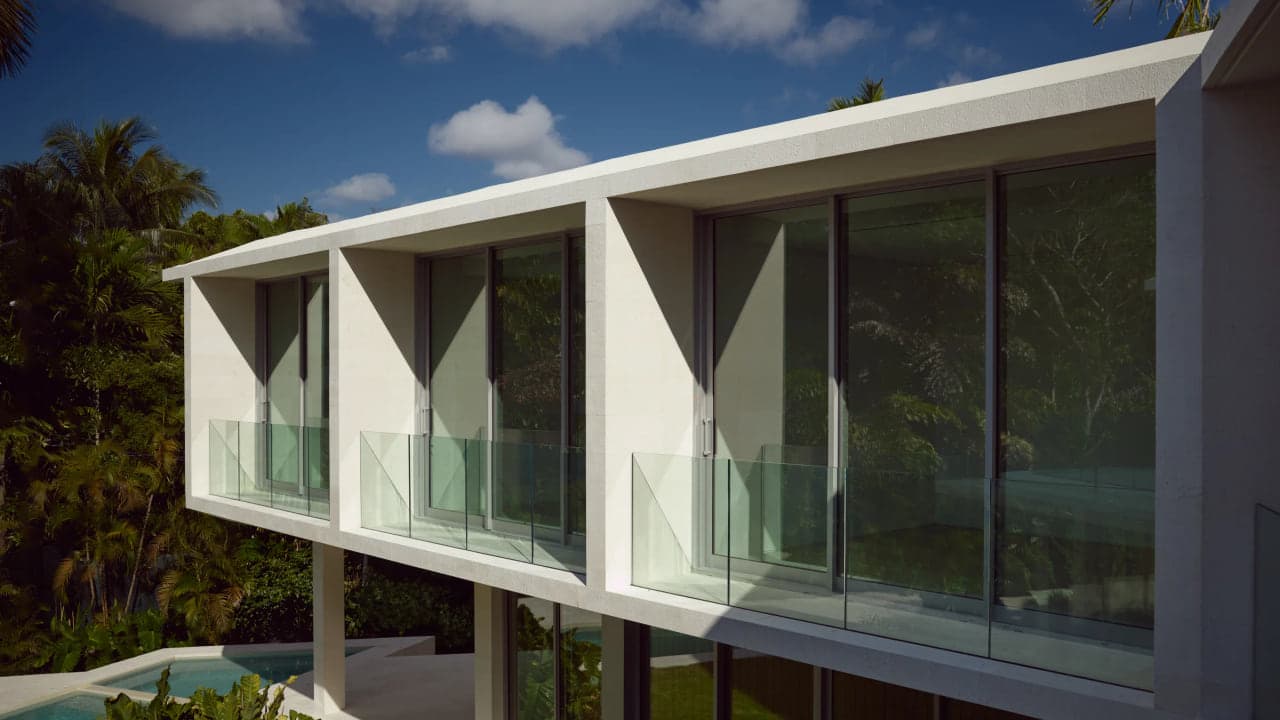
The transferable part is not the petal shape. It is the sequence behind it: figure out what a surface has to do, block sun, shed water, protect privacy, before deciding how it looks. On a Coconut Grove lot that produces a fin or an overhang angled to the sun path it actually blocks at a specific hour, not a generic shade structure pulled from a catalog. It produces a pool or courtyard positioned to do real cooling work, the way the Lotus Temple's nine pools do, instead of sitting there as a view feature alone. It produces glazing sized and oriented for the light and privacy the lot actually needs, the same vocabulary, massing, fenestration, cantilever, defined against a real house in architecture terms every Coconut Grove buyer should know.
This is the same argument from a different material language in Zaha Hadid's only building in Miami, where the exterior concrete frame carries its own structural load instead of hiding it behind a finished skin. The Lotus Temple, Gaudi's catenary arches, and Hadid's exoskeleton look nothing alike. All three answer the same question: does the structure decide the form, or does decoration get applied after the structure is already settled.
A simple test for your own architect
Ask what decided the angle of a shading fin, an overhang, or a curved ceiling you are being shown. If the honest answer is "it blocks the sun at a specific hour" or "it carries the roof load," the structure decided the form. If the answer is "it looked interesting," that feature is decoration layered over a frame that was already resolved before the shape was chosen.
The Lotus Temple answers that question with 27 marble shells and a decade of engineering. A Coconut Grove house answers it with a fin, an overhang, and a plan built around the sun and the lot instead of decorated against them afterward. The scale is different. The decision is not.
Pull quote
A petal on the Lotus Temple is not there to look like a flower. It is there because that angle sheds heat and carries its own weight.
Filed under
Questions about flower inspired architecture and what transfers to a Coconut Grove home
01What building is known as flower shaped architecture?
The clearest documented example is the Bahai House of Worship in New Delhi, commonly called the Lotus Temple. Per its entry on Wikipedia, it is built from 27 free standing, marble clad petals arranged in clusters of three, forming nine sides, and it opened in 1986. The shape is not surface pattern; it is explained further in inside the Lotus Temple's twenty seven petals.
02Who designed the Lotus Temple?
The architect was Fariborz Sahba. Per his entry on Wikipedia, he led the design and construction of the building in New Delhi, working the petal geometry as a structural and climate decision rather than a decorative one.
03What is the flower aesthetic called in design and architecture?
In architecture, borrowing a natural form for structural reasons is usually described as organic architecture or biomimicry, not a flower aesthetic. Per the Wikipedia overview of organic architecture, the approach ties a building's form to function and to its site rather than to applied pattern. We cover the interior design side of this same material and palette question in organic modern interior design.
04What are some examples of architecture inspired by flowers?
The Lotus Temple is the most documented built example; see inside the Lotus Temple's twenty seven petals for how its shells work. Most other results for this search are wedding decor, art installations, or styling content rather than buildings, which is the gap what is monument scale, not house scale addresses directly.
05How does Luxom apply flower inspired architecture in a Coconut Grove home?
Not through a carved marble petal, which belongs to a monument's budget and schedule. The transferable part is deciding a shading angle, an overhang, or a facade fin by the sun and view it actually has to manage, the same sequence we describe in what Gaudi's structural principle means for a Miami house and in architecture terms every Coconut Grove buyer should know. See what does transfer to a Coconut Grove home for specifics.
Explore the portfolio
Projects to see


Talk to the studio
If this belongs in your home, our studio will draw the plan.
Initial conversation, 30 minutes. We listen to the brief and respond with a scoped proposal within five working days. You can also read the services page for typical timelines and fees.
Written by Luxom Studio · LUXOM Developments
The design and development studio behind LUXOM residences in Coconut Grove, Miami
Keep reading
From the journal
Architecture · Sep 29, 2026 · 6 min
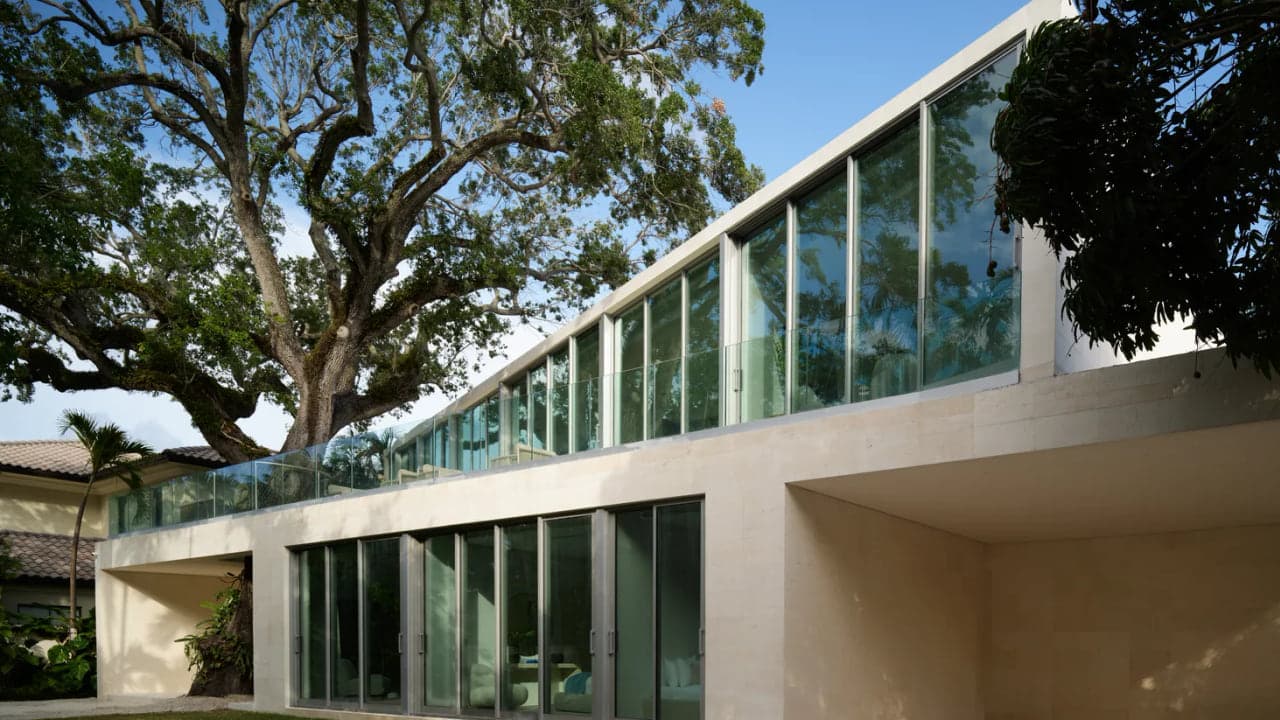
Architecture Terms Every Coconut Grove Buyer Should Know
Massing, fenestration, cantilever. A working vocabulary for the words that show up on a real set of drawings, defined against an actual Coconut Grove house instead of a textbook page.
Architecture · Oct 1, 2026 · 5 min
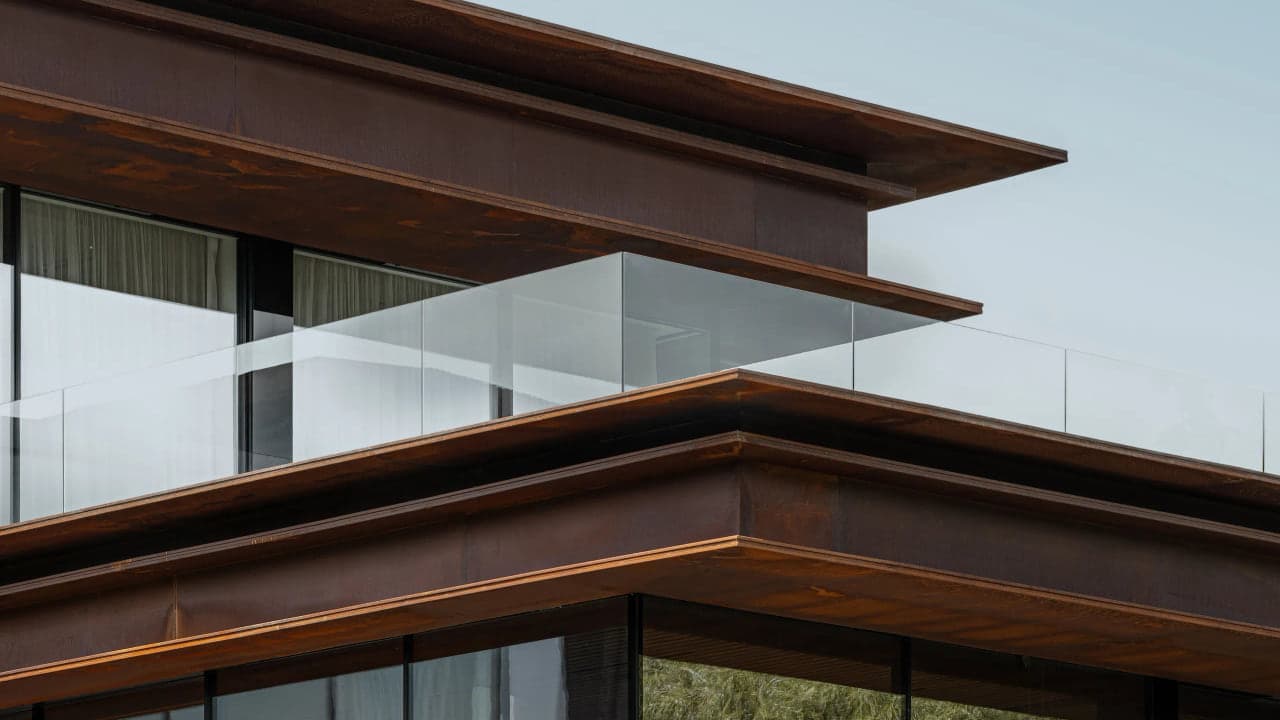
What Gaudí's Structural Principle Means for a Miami House
Gaudí's buildings get read as curves and ornament. The actual design decision underneath them is about structure, and part of it scales down to a Coconut Grove house.
Architecture · Sep 27, 2026 · 5 min
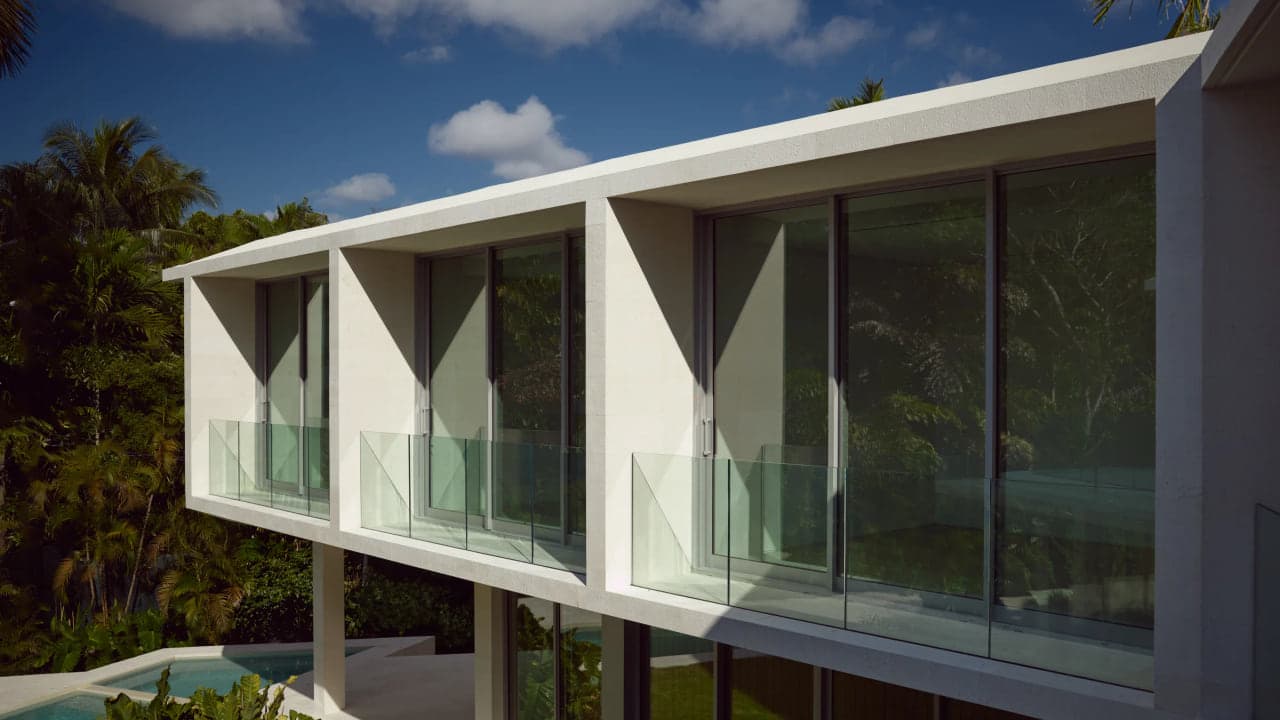
What Zaha Hadid's Miami Tower Teaches About Structure as Form
One Thousand Museum is the only Zaha Hadid building in Miami, a tower whose structure is also its ornament. Here is what that idea actually carries over to a custom home, and what does not.